GS 3: Environment & EcologyGS 1: Indian GeographyPrelims
Loggerhead turtles facing threats from climate change, PgII
Climate change threatens loggerhead turtles: Reduced egg production, smaller size, and altered breeding patterns observed in West Africa.
Practice MCQs
869 Students attempted
Key Highlights:
- A 17-year study in Cabo Verde reveals that loggerhead turtles are nesting earlier, producing fewer eggs, breeding less often, and decreasing in size due to climate change.
- Ocean warming and dwindling marine food sources are impacting the reproductive output of these turtles.
- Female loggerheads are now breeding every four years instead of every two years.
- Scientists express concern that these changes, while seemingly adaptive, may have long-term negative consequences for the species.
Detailed Insights:
- The study highlights that loggerhead turtles, named for their large heads, are facing multiple threats from global warming, impacting their nesting behavior and physical attributes.
- Satellite estimates indicate a decline in chlorophyll, suggesting a reduction in food supply in the ocean, which is crucial for these "capital breeders" that rely on stored energy for reproduction.
- The decrease in turtle size further reduces reproductive output, as smaller females produce smaller clutch sizes, exacerbating the impact of climate change.
- Rising sea levels erode nesting beaches, reducing suitable nesting sites, emphasizing the need for conservation strategies beyond shoreline protection, extending to feeding and foraging grounds.
- Conservation efforts must recognize that climate change can undermine reproduction even in seemingly thriving populations, requiring a broader approach to protect sea turtles.
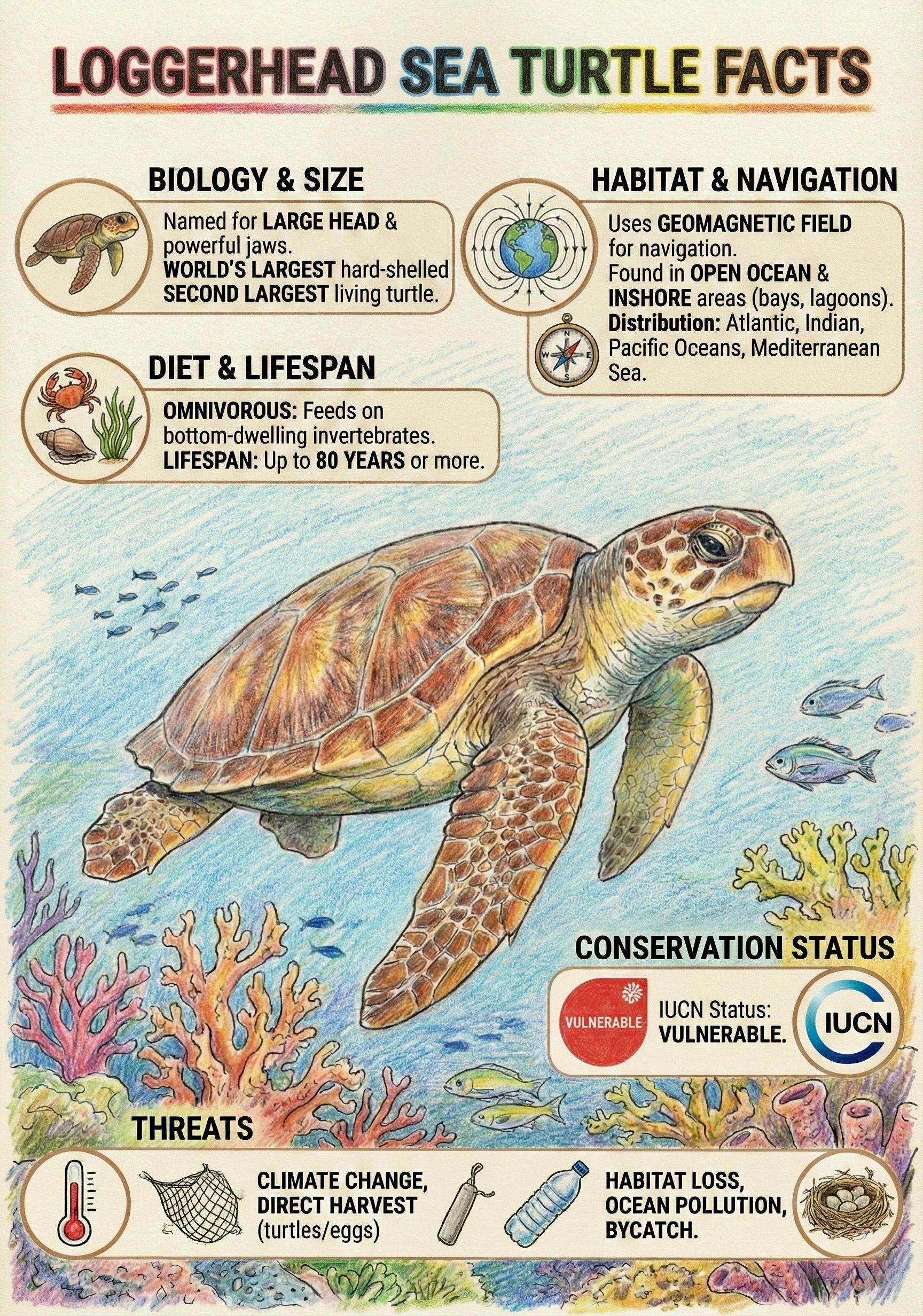
Loggerhead Sea turtles
Scientific/Technical Concepts Involved:
- Chlorophyll: A pigment in plants and algae that absorbs light energy to drive photosynthesis.
- Capital Breeders: Animals that rely on stored energy reserves to fuel reproduction.
Previous12/12

SuperKalam is your personal mentor for UPSC preparation, guiding you at every step of the exam journey.
Download the App


STUDY RESOURCES
CONTACT US
ⓒ Snapstack Technologies Private Limited