GS 2: International RelationsGS 3: EconomyPrelims
UK-INDIA Trade Pact to come into force on July 15, Pg1
India-UK trade pact launches July 15, resolving steel curbs with carve-outs, promising significant boost for Indian farmers, workers, and MSMEs.
Practice MCQs
891 Students attempted
Key Highlights:
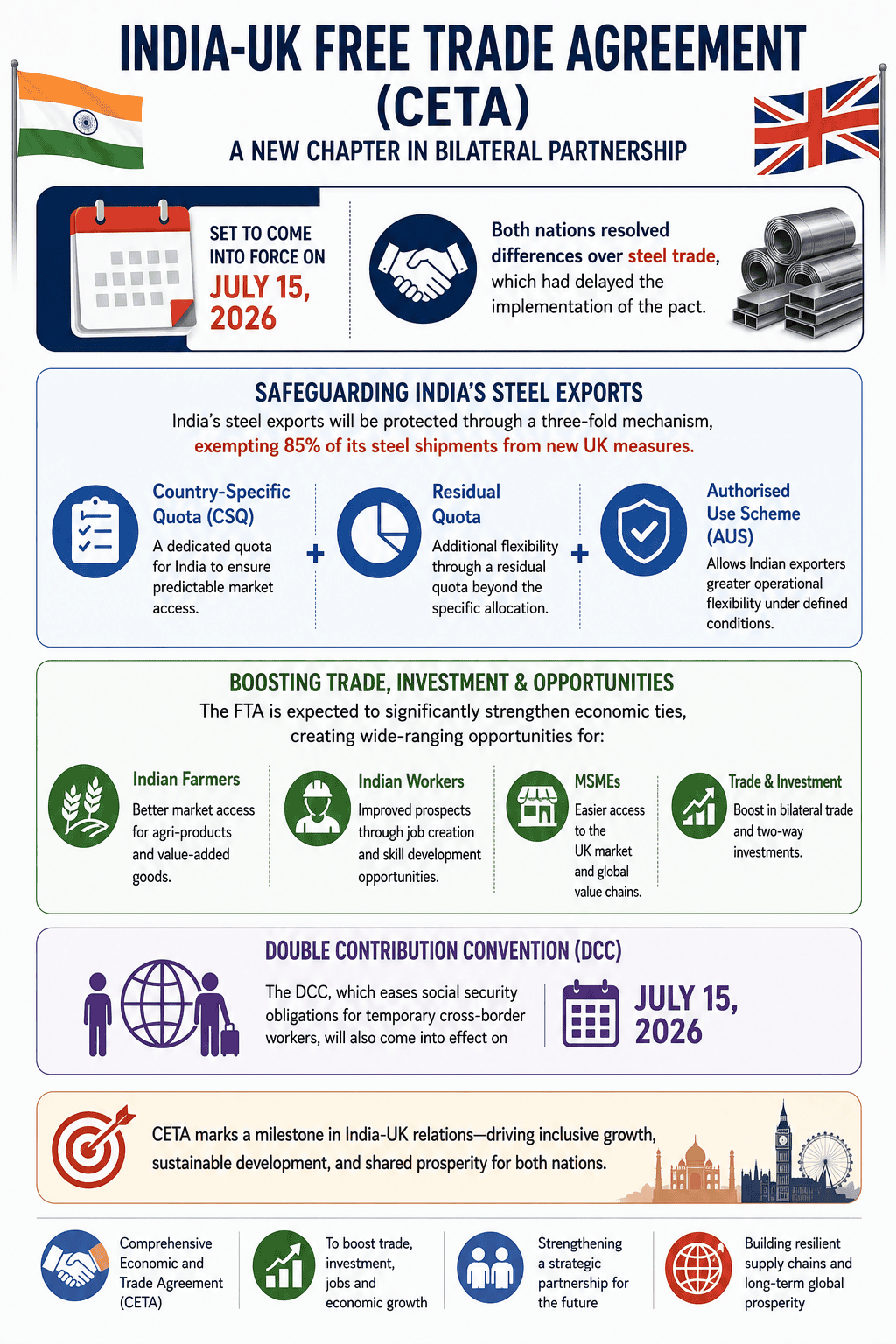
- The India-UK Free Trade Agreement (FTA), officially known as the Comprehensive Economic and Trade Agreement (CETA), is set to come into force on July 15, 2026.
- Both nations resolved differences over steel trade, which had delayed the implementation of the pact.
- India's steel exports will be safeguarded through a mix of Country-Specific Quota (CSQ), residual quota, and the Authorised Use Scheme (AUS), exempting 85% of its steel shipments from new UK measures.
- The agreement is expected to significantly boost bilateral trade and investment, creating opportunities for Indian farmers, workers, and MSMEs.
- The Double Contribution Convention (DCC), easing social security obligations for temporary cross-border workers, will also take effect on the same date.
India-UK.png
Detailed Insights:
- The CETA aims to increase bilateral trade by £25.5 billion annually and add £4.8 billion to the UK's GDP.
- The UK's new steel measures, effective July 1, 2026, will reduce overall tariff-free import quotas by 60% and impose a 50% tariff on imports exceeding these limits.
- India successfully negotiated a carveout to protect its steel industry, ensuring continued market access despite the UK's new curbs.
- The agreement will provide duty-free access for a wide range of Indian exports to the UK, including textiles, leather, engineering goods, marine products, and processed foods.
- Tariffs on British whisky exports to India will be reduced from 150% to 40%, and duties on automobiles from 100% to 10% under a quota system.
- India has strategically protected sensitive domestic sectors such as dairy products, cereals, millets, edible oils, and apples from tariff liberalization.
- The DCC will exempt Indian workers and employers from making dual social security contributions in the UK during temporary assignments, with the exemption period extended from 3 to 5 years.
Key Concepts Involved:
- Comprehensive Economic and Trade Agreement (CETA): A broad trade pact aiming to reduce tariffs, enhance market access, and foster economic cooperation between two countries.
- Country-Specific Quota (CSQ): A designated volume of imports for a specific product that a particular country can export to another at a reduced or zero tariff rate.
- Authorised Use Scheme (AUS): A customs procedure allowing traders to import certain goods at a reduced or zero rate of duty if used for a specific, authorized purpose.
- Double Contribution Convention (DCC): An agreement designed to prevent individuals from having to pay social security contributions in two countries simultaneously.

SuperKalam is your personal mentor for UPSC preparation, guiding you at every step of the exam journey.
Download the App


STUDY RESOURCES
CONTACT US
ⓒ Snapstack Technologies Private Limited