GS 3: EconomyGS 2: PolityGS 2: GovernancePrelims
The RBI and its growing fiscal role, Pg8
RBI's record ₹2.87 lakh crore surplus transfer to Union government sparks debate on fiscal centralisation and central bank's evolving role.
Practice MCQs
891 Students attempted
Key Highlights:
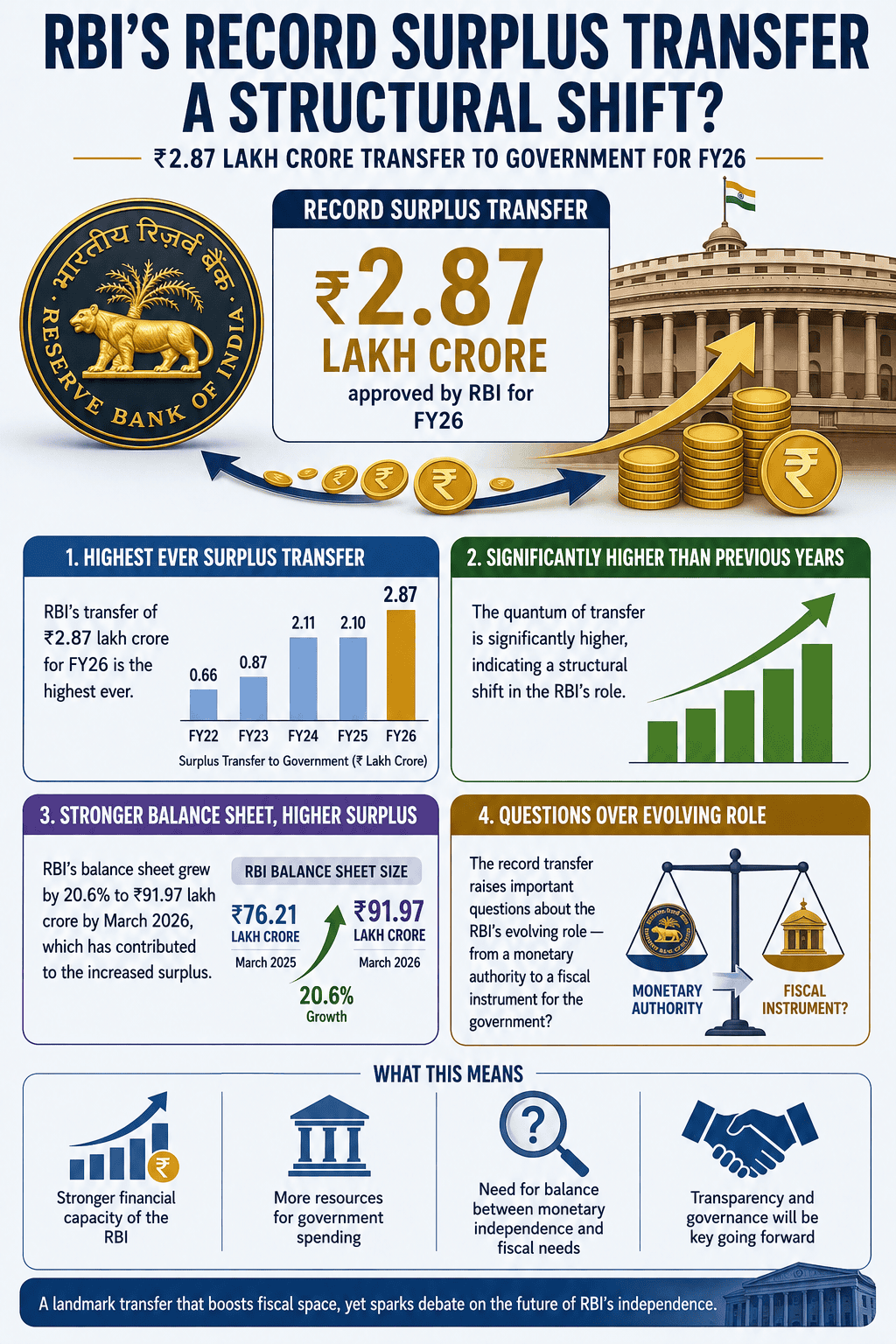
- The Reserve Bank of India (RBI) approved a record surplus transfer of ₹2.87 lakh crore to the Union government for FY26.
- This transfer is significantly higher than previous years, indicating a structural shift in the RBI's role.
- The RBI's balance sheet grew by 20.6% to ₹91.97 lakh crore by March 2026, contributing to the increased surplus.
- The move raises questions about the RBI's evolving role from a monetary authority to a fiscal instrument for the government.
RBI Transfer.png
Detailed Insights:
- Previous RBI surplus transfers typically ranged from ₹30,000 crore to ₹65,000 crore annually.
- The record transfer aligns with the Economic Capital Framework implemented in 2019.
- The RBI's gross income increased over 26% due to gains from foreign assets and exchange transactions.
- Central bank transfers provide fiscal space for the government without new taxes, borrowing, or economic growth.
- Unlike advanced economies' Quantitative Easing, India's link is through the fiscal value of RBI earnings.
- The transfer is non-tax revenue for the Union government and is not part of the divisible pool shared with states.
- States face borrowing restrictions under Article 293 and have less fiscal flexibility than the Union government.
- Increased reliance on RBI transfers contributes to fiscal centralisation, impacting fiscal federalism.
- The debate highlights the intertwining of monetary institutions and fiscal outcomes, challenging central bank independence.
Key Concepts Involved:
- Reserve Bank of India (RBI): India's central bank, responsible for monetary policy, financial stability, and currency management.
- Economic Capital Framework: A framework determining the capital reserves the RBI maintains and the surplus it transfers to the government.
- Fiscal Federalism: The division of financial powers and responsibilities between central and state governments.
- Central Bank Independence: The autonomy of a central bank from political interference in its monetary policy decisions.
- Article 293: A constitutional provision restricting the borrowing powers of state governments.
- Divisible Pool: The portion of central government taxes and duties shared with states as per the Finance Commission.
- Non-tax revenue: Government revenue from sources other than taxes, such as profits from public sector undertakings or central bank transfers.
- Quantitative Easing: A monetary policy where a central bank buys financial assets to increase money supply and stimulate economic activity, especially when interest rates are low.

SuperKalam is your personal mentor for UPSC preparation, guiding you at every step of the exam journey.
Download the App


STUDY RESOURCES
CONTACT US
ⓒ Snapstack Technologies Private Limited