GS 2: PolityGS 2: GovernancePrelims
Constitution Amendment Bill, part of delimitation package, defeated, Pg1
Opposition defeats Constitution Amendment Bill aimed at women's reservation implementation, triggering political clash over delimitation and representation concerns.
Practice MCQs
876 Students attempted
Key Highlights:
- The Constitution (131st Amendment) Bill, 2026, aimed at redistributing Lok Sabha seats based on the 2011 Census to facilitate women's reservation, was defeated in the Parliament.
- 298 members voted in favor, and 230 voted against, failing to reach the required two-thirds majority of 352.
- Following the defeat of the Constitution Amendment Bill, the government withdrew the Union Territories Laws (Amendment) Bill, 2026, and the Delimitation Bill, 2026.
- Amit Shah stated the Bills aimed to implement women’s reservation by the 2029 general election and uphold the principle of “one person, one vote, and one value”.
Detailed Insights:
- The defeat occurred due to the Opposition's concerns that the Bill lacked a guarantee of uniform 50% increase in representation for all States in the Lok Sabha.
- The government argued that delimitation based on the 1971 Census has led to disparities in constituency sizes, citing Malkajgiri in Telangana with approximately 48 lakh voters.
- The government accused the Opposition of creating a north-south divide by alleging that southern States would lose Parliamentary representation due to delimitation.
- The debate also touched upon the issue of caste count and reservations, with the government criticizing the Congress party's historical stance on OBC reservations.
Key Concepts Involved:
- Delimitation: The process of redrawing the boundaries of parliamentary or assembly constituencies to ensure equal representation.
- Constitutional Amendment Bill: A legislative proposal to modify the Constitution of India, requiring a special majority in Parliament for passage.
- Women's Reservation Bill: A proposed law to reserve a certain percentage of seats in the Lok Sabha and state legislative assemblies for women.
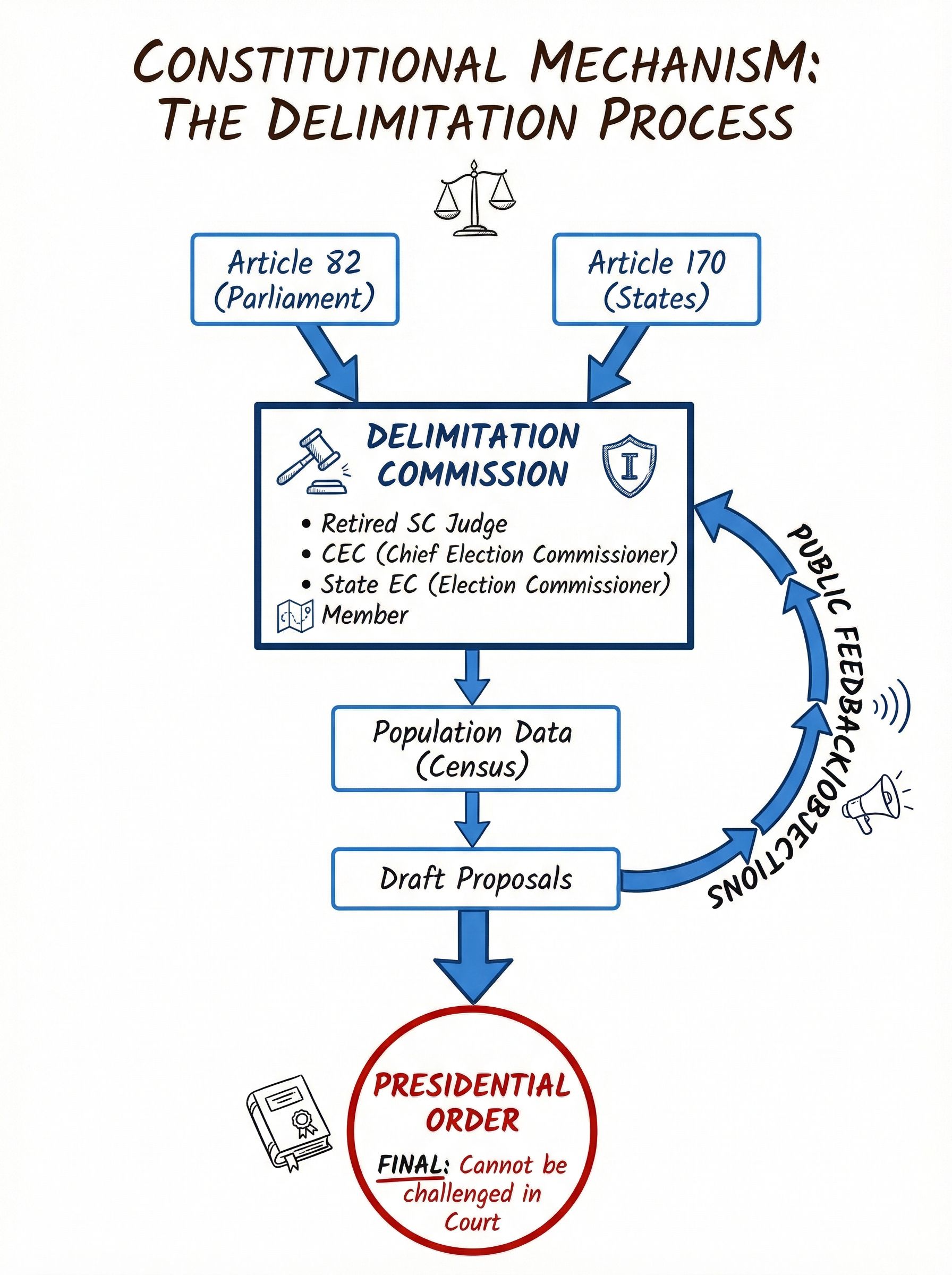
The Delimitation Process

SuperKalam is your personal mentor for UPSC preparation, guiding you at every step of the exam journey.
Download the App


STUDY RESOURCES
CONTACT US
ⓒ Snapstack Technologies Private Limited