GS 1: Art & CultureGS 1: Modern HistoryGS 2: PolityPrelims
ASI approves excavation at 8 sites in Tamil Nadu, Pg14
ASI approves excavation at 8 Tamil Nadu sites, including Keeladi, amid political debate over historical narratives and central clearances.
Practice MCQs
869 Students attempted
Key Highlights:
- The Archaeological Survey of India (ASI) approved excavations at eight sites in Tamil Nadu on March 13, following a proposal by the Tamil Nadu State Department of Archaeology (TNSDA) submitted in July 2025.
- Keeladi, near Madurai, will enter its 11th phase of excavation, with previous findings dating back to the 6th century BCE.
- The sites include Vellalore in Coimbatore, Nagapattinam, Pattinamarudur, Manikkollai, Thelungarpalayam, Adichanallur, and Karivalamvanthanallur, representing diverse historical periods and activities.
- The Tamil Nadu government has allocated Rs 7 crore in its 2025-26 budget for archaeological work, including advanced scientific analyses.
Detailed Insights:
- The excavation approval followed months of discussions between the Tamil Nadu government and the Centre, with Chief Minister M K Stalin emphasizing the state's persistent efforts to secure the clearances.
- The approved sites offer a chance to connect various aspects of Tamil Nadu's history, from burial sites and early metallurgy to urban settlements and maritime trade, showcasing a civilization rooted regionally and connected globally.
- Keeladi has revealed evidence of an urban settlement with Tamil-Brahmi inscriptions, brick structures, and drainage systems, challenging previous assumptions about the Sangam era's chronology.
- Vellalore suggests trade links with the Mediterranean world through findings like Roman coins, while Nagapattinam reflects Chola-era port activity and Buddhist influences.
- Manikkollai shows long-distance trade to Southeast Asia via Indo-Pacific glass beads, and Thelungarpalayam is significant for Iron Age metallurgy, with studies suggesting early iron usage in Tamil Nadu.
- Adichanallur, an Iron Age burial site, and Karivalamvanthanallur contribute to understanding early settlement patterns and mortuary practices in the region.
Key Concepts Involved:
- Archaeological Survey of India (ASI): An Indian government agency attached to the Ministry of Culture that is responsible for archaeological research and the conservation and preservation of cultural monuments in the country.
- Sangam Era: A period in the history of ancient Tamil Nadu, spanning roughly from the 3rd century BCE to the 4th century CE, known for its rich literary and cultural output.
- Tamil-Brahmi: An early form of the Brahmi script used to write the Tamil language, found in inscriptions dating back to the early centuries BCE.
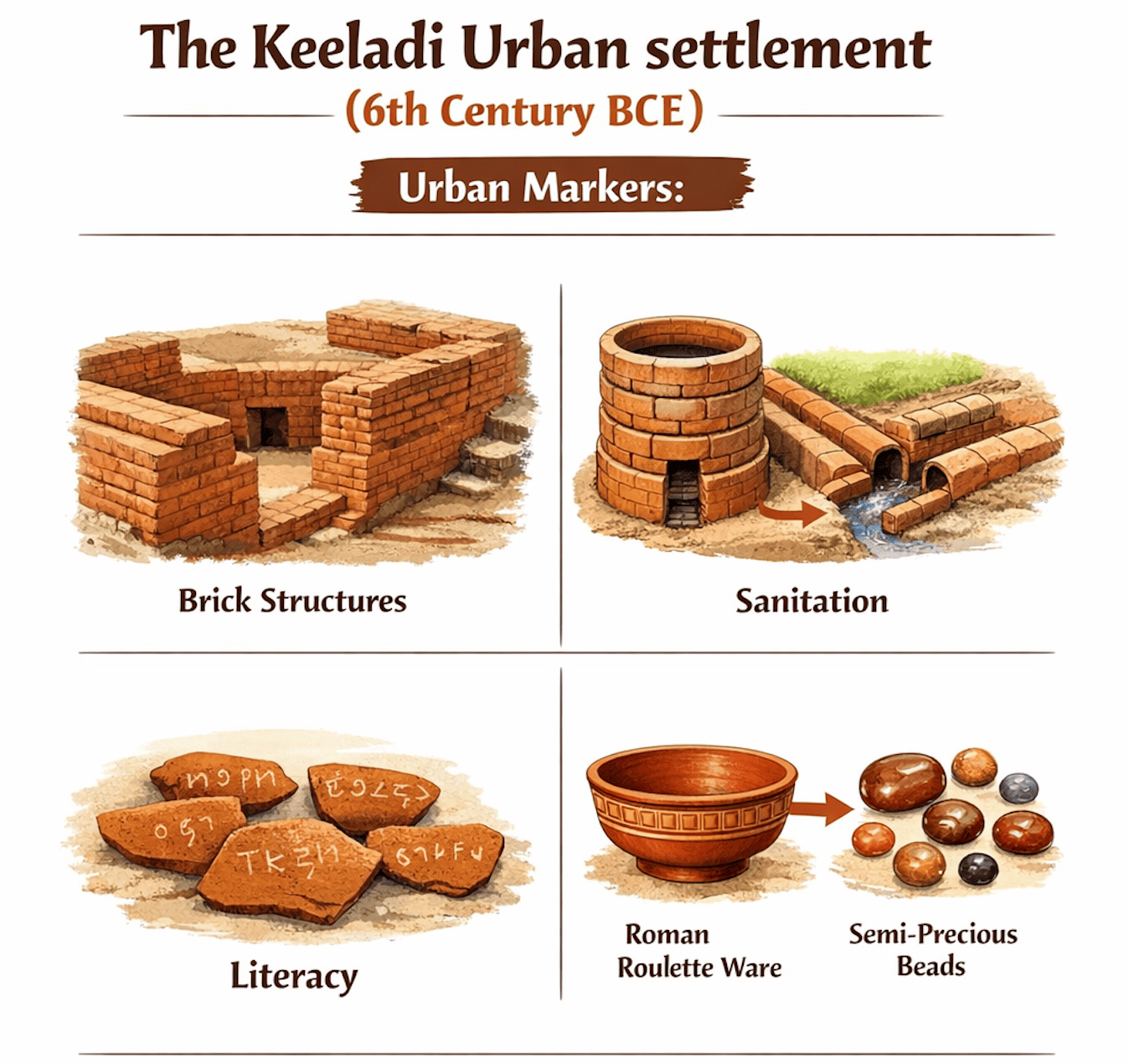
Keeladi

SuperKalam is your personal mentor for UPSC preparation, guiding you at every step of the exam journey.
Download the App


STUDY RESOURCES
CONTACT US
ⓒ Snapstack Technologies Private Limited