GS 2: International RelationsGS 3: EconomyPrelims
India seeks $900-mn steel quota to end UK trade deal logjam, Pg3
India pushes for a $900 million steel quota in the UK market, aiming to resolve the bilateral FTA deadlock by July 2025.
Practice MCQs
883 Students attempted
Key Highlights:
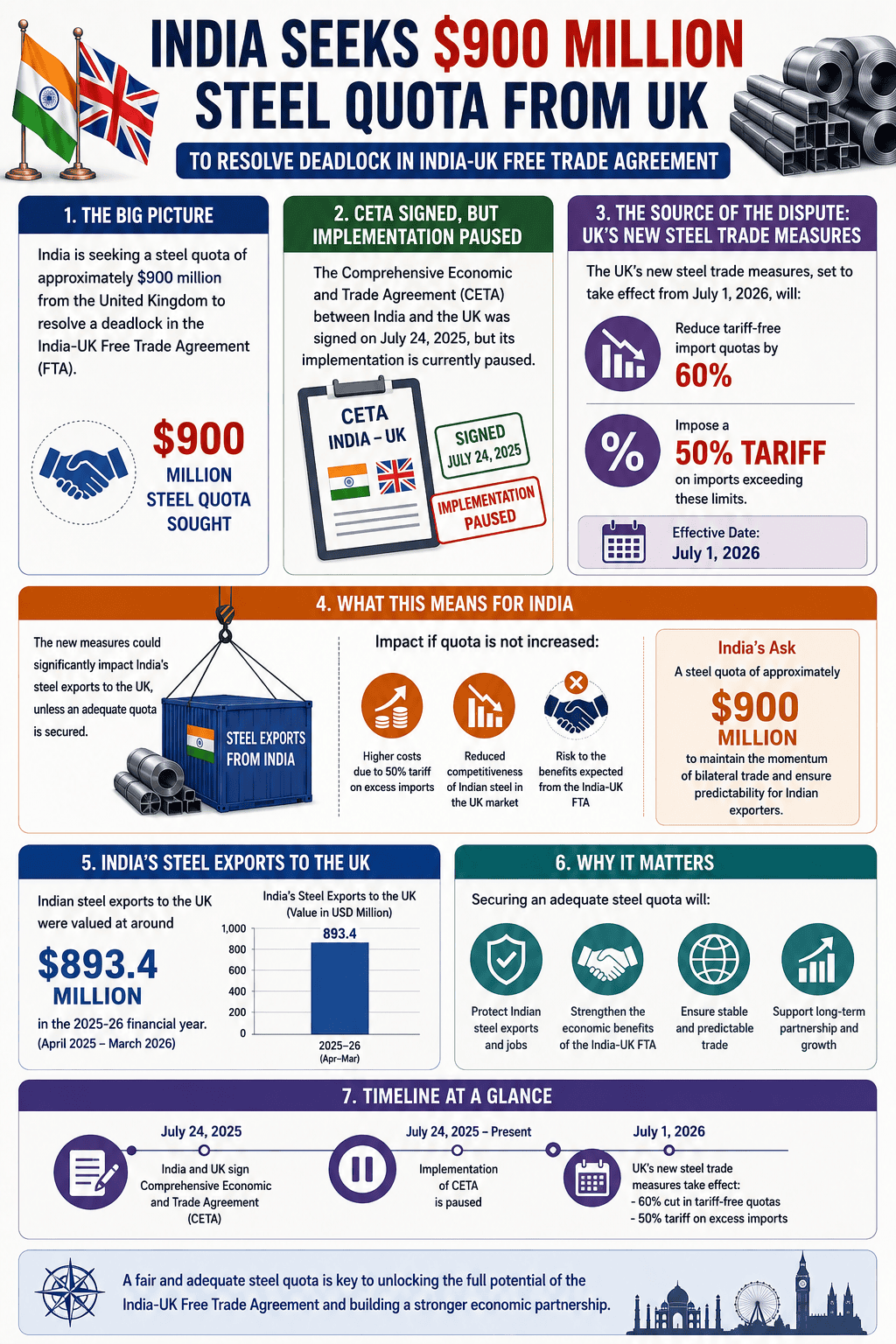
- India is seeking a steel quota of approximately $900 million from the United Kingdom to resolve a deadlock in the India-UK Free Trade Agreement (FTA).
- The Comprehensive Economic and Trade Agreement (CETA) between India and the UK was signed on July 24, 2025, but its implementation is currently paused.
- The dispute stems from the UK's new steel trade measures, set to take effect from July 1, 2026, which will reduce tariff-free import quotas by 60% and impose a 50% tariff on imports exceeding these limits.
- Indian steel exports to the UK were valued at around $893.4 million in the 2025-26 financial year.
India-UK.png
Detailed Insights:
- The UK's new steel safeguard measures are perceived by India as significantly restricting its current steel and steel product exports, thereby undermining the benefits of the signed FTA.
- India's demand for a $900 million quota aims to ensure that its existing levels of steel exports to the UK are maintained, protecting its domestic industry.
- In addition to steel quotas, the UK's planned Carbon Border Adjustment Mechanism (CBAM), scheduled for implementation from 2027, is another point of contention, potentially impacting Indian exports in sectors like iron and steel.
- India has indicated that it might consider retaliatory measures, such as restrictions on imports of specific UK products like Scotch whisky, if the steel dispute remains unresolved.
- While the UK views its steel measures as distinct from the FTA, India considers them directly detrimental to the agreement's intended economic advantages.
- The FTA aims to significantly boost bilateral trade, which was approximately $60 billion in 2024, with projections to double to $100 billion by 2030.
Key Concepts Involved:
- Free Trade Agreement (FTA): A pact between two or more countries to reduce or eliminate barriers to imports and exports among them.
- Quota: A government-imposed trade restriction that limits the quantity or monetary value of goods that can be imported or exported during a specific period.
- Safeguard Measures: Temporary restrictions on imports of a particular product to protect a domestic industry from serious injury caused by a surge in imports.
- Carbon Border Adjustment Mechanism (CBAM): A tariff on carbon-intensive products imported from countries with less stringent climate policies, designed to prevent carbon leakage.

SuperKalam is your personal mentor for UPSC preparation, guiding you at every step of the exam journey.
Download the App


STUDY RESOURCES
CONTACT US
ⓒ Snapstack Technologies Private Limited