GS 3: EconomyGS 1: Indian GeographyPrelims
After Iran war, what below-average rains could mean for inflation, Pg18
Below-average monsoon forecast raises inflation concerns amid West Asia war, potentially impacting food prices and farm incomes significantly.
Practice MCQs
869 Students attempted
Key Highlights:
- The India Meteorological Department (IMD) forecasts a below-average monsoon in 2026, at 92% of the Long Period Average (LPA).
- India's wholesale inflation rate has surged to 3.88%, a three-year high, driven by rising petroleum prices.
- The Reserve Bank of India (RBI) projects retail inflation to average 4.6% in 2026-27, assuming a normal monsoon.
- El Niño conditions could further reduce rainfall, impacting Kharif output and potentially raising CPI inflation above 6%.
Detailed Insights:
- A weak monsoon can increase inflation through higher food prices, but the correlation between rainfall and agricultural production is not always direct.
- Spatial distribution (rainfall in major crop-producing regions) and temporal distribution (timing of rains) are critical factors influencing agricultural output.
- Below-normal monsoon could limit reservoir replenishment, impacting irrigation and potentially affecting agricultural production.
- Historical data shows that during El Niño years, monsoon rainfall has been significantly below LPA, leading to declines in Kharif output.
- Reduced agricultural output combined with higher food inflation could negatively impact the rural economy, which has benefited from good monsoons in recent years.
- Concurrent war in West Asia and weak rainfall could exacerbate inflation, potentially pushing CPI inflation above 6%, depending on the severity of El Niño and oil prices.
Key Concepts Involved:
- Long Period Average (LPA): The average rainfall received over a 50-year period, used as a benchmark for monsoon forecasts.
- Kharif Output: Agricultural crops sown during the monsoon season (June-October) and harvested in the autumn.
- El Niño: A climate pattern characterized by unusual warming of surface waters in the central and eastern tropical Pacific Ocean, often associated with weaker monsoons in India.
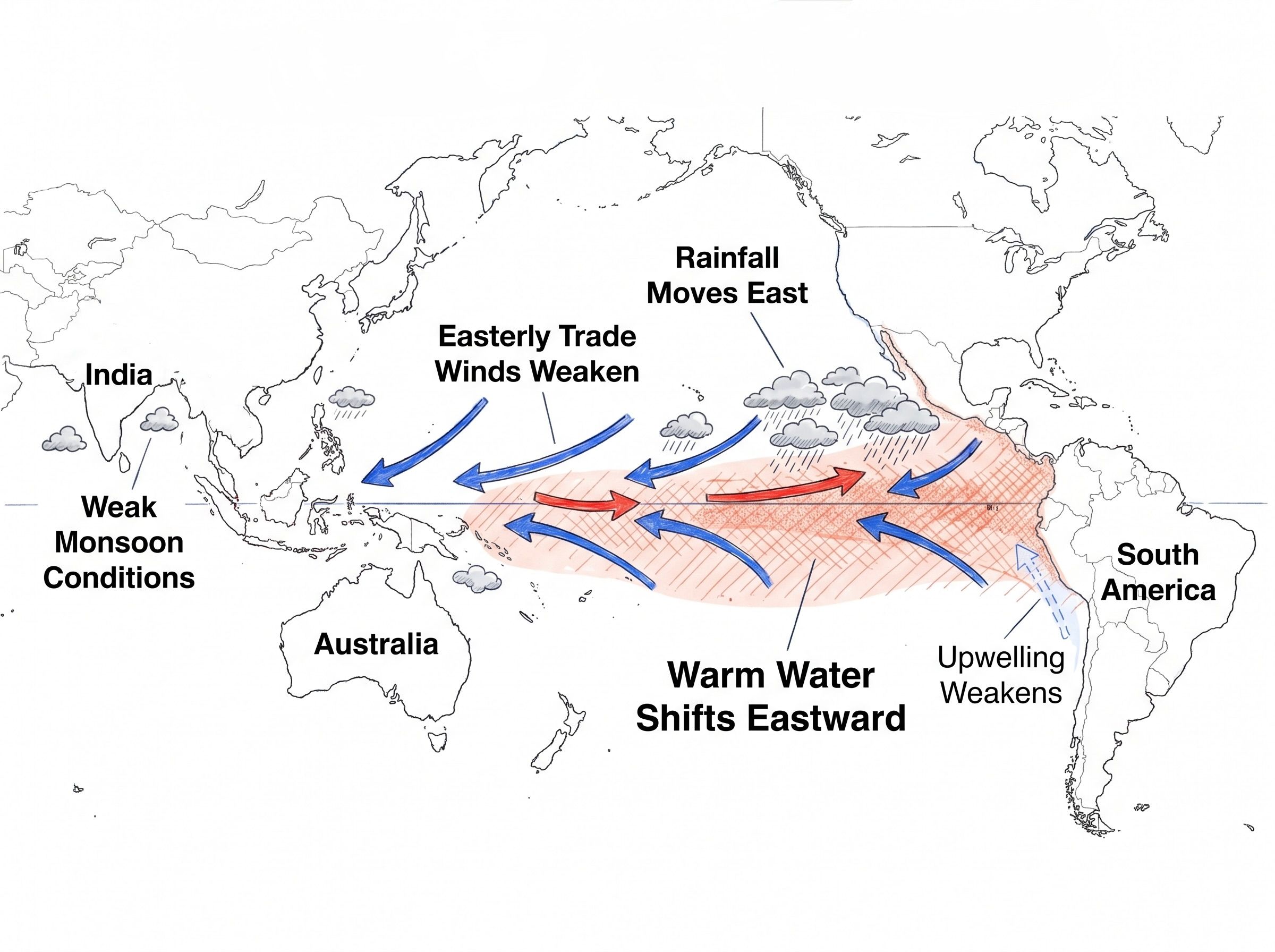
El Nino

SuperKalam is your personal mentor for UPSC preparation, guiding you at every step of the exam journey.
Download the App


STUDY RESOURCES
CONTACT US
ⓒ Snapstack Technologies Private Limited