GS 2: PolityGS 1: Indian SocietyPrelims
Women’s entry at Sabarimala temple: 9-judge SC Bench to commence review hearings from April 7, Pg1
Supreme Court's nine-judge bench to review Sabarimala verdict from April 7, 2026, addressing essential religious practices and women's rights.
Practice MCQs
855 Students attempted
Key Highlights:
- A nine-judge Supreme Court Bench will commence hearings on April 7, 2026, regarding the review of the Sabarimala temple entry case.
- The case concerns a September 2018 judgment that allowed women of menstruating age to enter the Sabarimala temple in Kerala.
- The hearings will address review and writ petitions challenging the 2018 judgment, with specific dates allocated for different parties to present their arguments.
- A previous nine-judge Bench in 2019, constituted by then Chief Justice Sharad A. Bobde, had already decided on the maintainability of the review petitions.
Detailed Insights:
- The COVID-19 pandemic caused the abrupt termination of hearings before the Bench constituted in 2019.
- In November 2019, a five-judge Constitution Bench led by then Chief Justice Ranjan Gogoi referred the Sabarimala review petitions to a seven-judge Bench.
- Over 60 review and writ petitions challenged the Sabarimala judgment, but the 2019 judgment did not stay the 2018 verdict.
- The 2019 majority judgment also clubbed similar petitions concerning essential religious practices, such as Muslim women's entry into mosques and female genital mutilation in the Dawoodi Bohra community, with the Sabarimala case.
- Legal questions framed in 2019 include whether essential religious practices should receive constitutional protection and the extent of judicial intervention allowed in such practices.
Key Concepts Involved:
- Writ Petition: A formal written order issued by a court to a government body or official.
- Amicus Curiae: An impartial advisor, often voluntary, to a court of law in a particular case.
- Essential Religious Practice: A religious practice considered fundamental and integral to a religion.
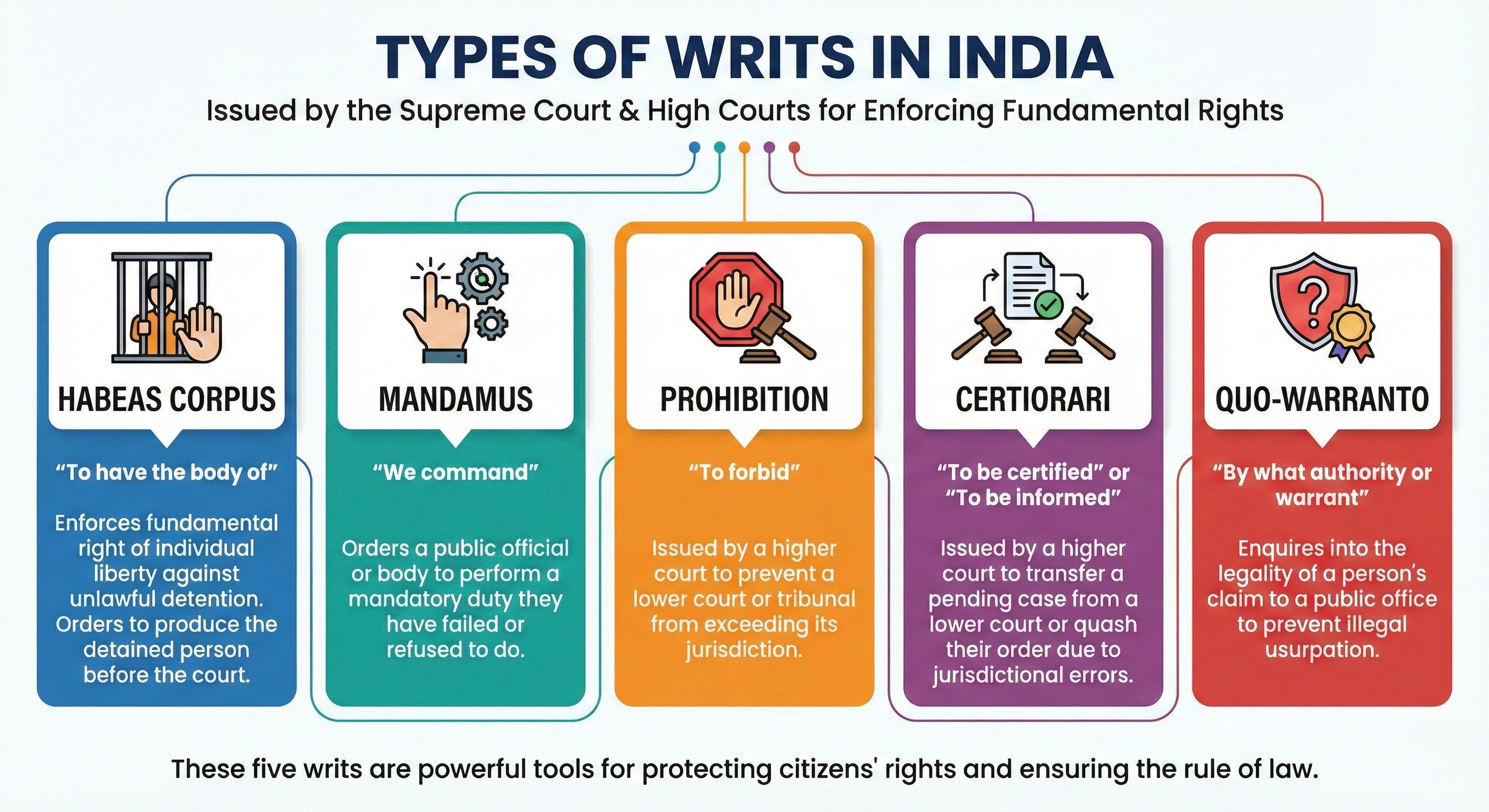
Types of Writs

SuperKalam is your personal mentor for UPSC preparation, guiding you at every step of the exam journey.
Download the App


STUDY RESOURCES
CONTACT US
ⓒ Snapstack Technologies Private Limited