GS 3: Environment & EcologyGS 2: GovernancePrelims
NGT clears ₹92,000-cr. Great Nicobar project, Pg1
NGT greenlights ₹92,000-cr Great Nicobar project, directs strict compliance with environmental norms amid ecological concerns and local objections.
Practice MCQs
855 Students attempted
Key Highlights:
- The National Green Tribunal (NGT) cleared the ₹92,000-crore Great Nicobar Island mega-infrastructure project on Monday.
- The project includes a transshipment port, airport, power plant, and township.
- The NGT directed authorities to ensure strict compliance with the Environment Clearance (EC) conditions granted in 2022.
- An earlier NGT Bench in 2023 had called for a high-powered committee (HPC) to address environmental concerns.
- The NGT noted the project's strategic, defence, and national importance in its order.
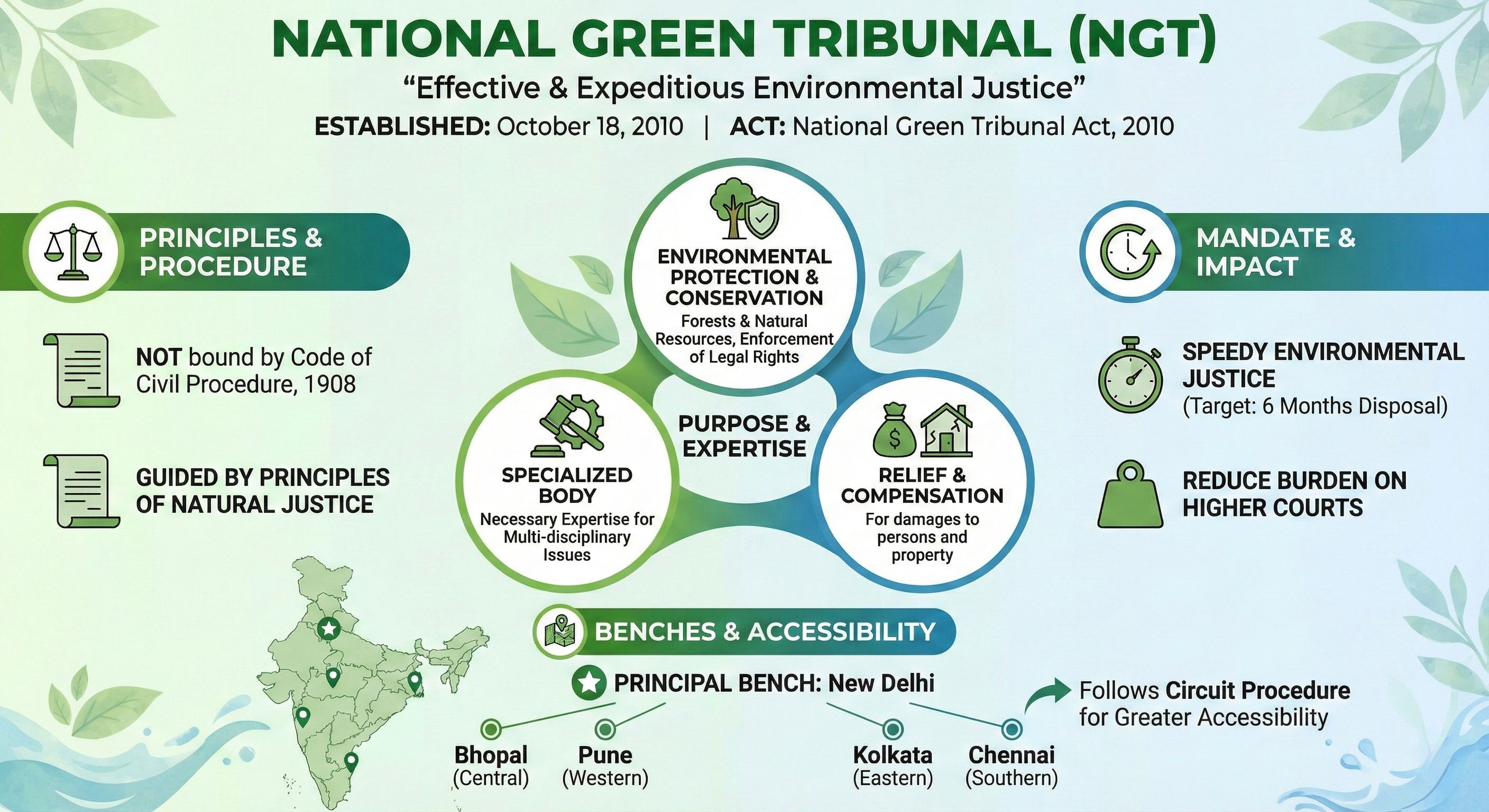
NGT
Detailed Insights:
- The NGT disposed of applications related to the EC, emphasizing the need for a balanced approach between development and environmental protection under the ICRZ Notification, 2019.
- Applicants argued that the government had erred in limiting the terms of reference for the HPC, but the NGT found no error in the drafting of the terms.
- The Union government opposed public disclosure of the HPC report due to its strategic importance and confidential information.
- The Environment Ministry will undertake measures to protect coral reefs and ensure coral regeneration through scientific methods, preparing an implementation plan for this purpose.
- The NGT has assigned responsibility to the Environment Ministry to prevent shoreline erosion due to proposed constructions, including foreshore development.
- Aspects of the project's forest clearance are currently under challenge before the Calcutta High Court.
- Locals have objected to the project's approval, alleging that their consent was not lawfully obtained and that their rights on forest lands have not been settled.
Key Concepts Involved:
- Environment Clearance (EC): A process for assessing the environmental impact of a project before it can proceed.
- ICRZ Notification, 2019: Regulations governing activities in coastal regulation zones to protect coastal environments.
- High-Powered Committee (HPC): A committee formed to address specific issues, often involving multiple stakeholders and expert opinions.

SuperKalam is your personal mentor for UPSC preparation, guiding you at every step of the exam journey.
Download the App


STUDY RESOURCES
CONTACT US
ⓒ Snapstack Technologies Private Limited