GS 3: Environment & EcologyGS 3: Science & TechnologyGS 1: Indian GeographyPrelims
Heatwaves, ozone raise cardiac death risk: study, Pg14
New study reveals heatwaves significantly elevate surface ozone levels, causing hundreds of additional cardiac and respiratory deaths across India, exceeding WHO limits.
Practice MCQs
876 Students attempted
Key Highlights:
- A new study published in npj Clean Air indicates that heatwaves significantly elevate surface ozone levels across India.
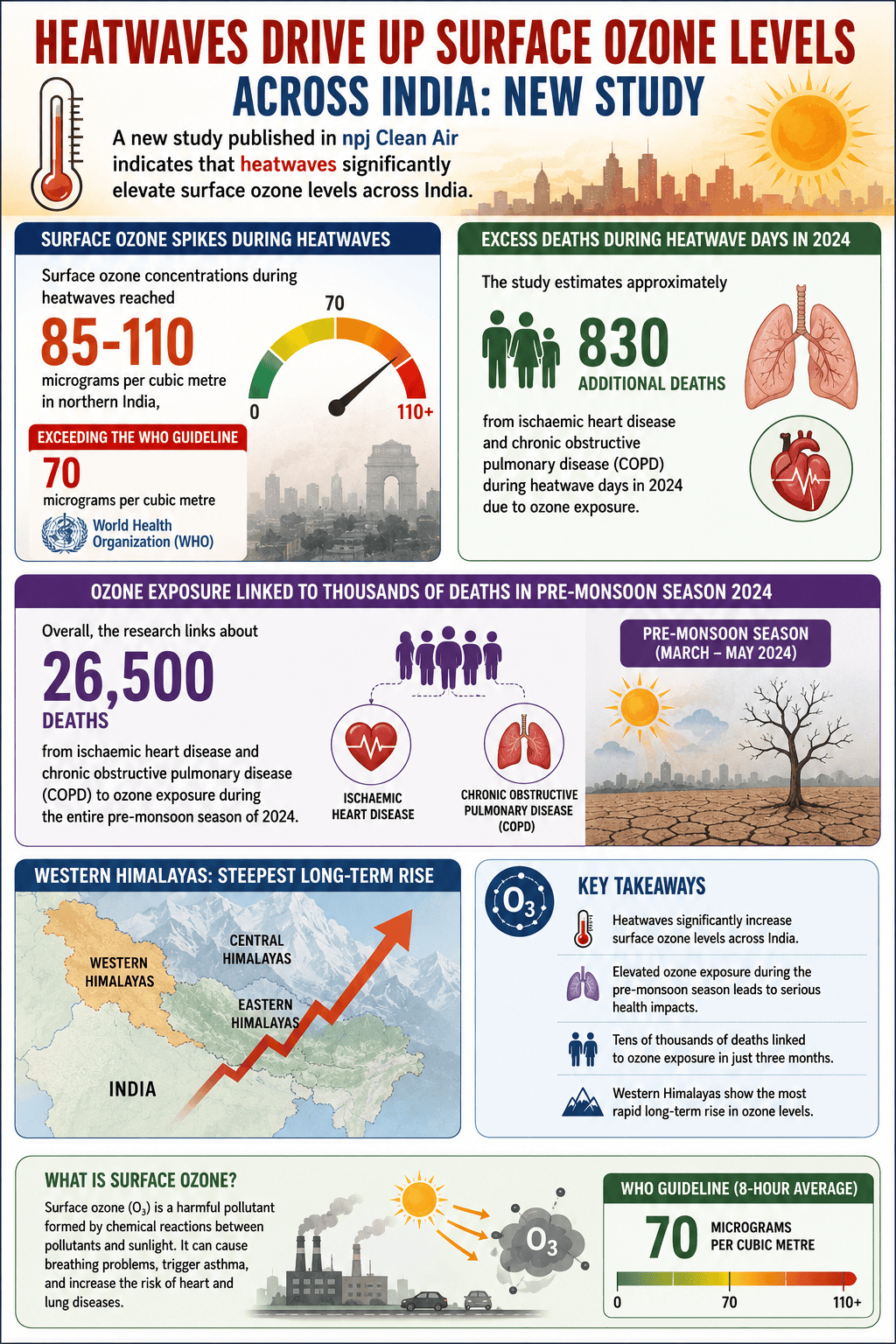
- Surface ozone concentrations during heatwaves reached 85-110 micrograms per cubic metre in northern India, exceeding the World Health Organization (WHO) guideline of 70 micrograms per cubic metre.
- The study estimates approximately 830 additional deaths from ischaemic heart disease and chronic obstructive pulmonary disease (COPD) during heatwave days in 2024 due to ozone exposure.
- Overall, the research links about 26,500 deaths from these conditions to ozone exposure during the entire pre-monsoon season of 2024.
- The Western Himalayas have recorded the steepest long-term rise in ozone levels.
Heatwave.png
Detailed Insights:
- Surface ozone is a harmful air pollutant that forms when sunlight drives chemical reactions among other pollutants like nitrogen dioxide (NO₂) and formaldehyde (HCHO).
- This formation process is accelerated by higher temperatures, establishing a direct link between heatwaves and increased ozone concentrations.
- The study represents the first comprehensive, long-term, and country-wide assessment of surface ozone levels during heatwaves in India.
- Mortality figures were derived through modelling, as continuous ground-level ozone measurements were unavailable for specific heatwave days in many cities.
- The research identified 188 heatwave events over two decades, with severe years such as 2010, 2016, 2019, and 2024 following strong El Niño episodes.
- The substantial overall death toll is attributed to applying a small increase in individual risk across India's large population and two prevalent diseases.
Key Concepts Involved:
- Surface Ozone: A secondary air pollutant formed in the lower atmosphere through photochemical reactions involving sunlight and precursor gases.
- Ischaemic Heart Disease: A condition characterized by reduced blood flow to the heart muscle, often caused by the narrowing of coronary arteries.
- Chronic Obstructive Pulmonary Disease (COPD): A progressive lung disease that obstructs airflow from the lungs, making breathing difficult.
- El Niño: A climate pattern involving the periodic warming of sea surface temperatures in the central and eastern tropical Pacific Ocean, influencing global weather.

SuperKalam is your personal mentor for UPSC preparation, guiding you at every step of the exam journey.
Download the App


STUDY RESOURCES
CONTACT US
ⓒ Snapstack Technologies Private Limited