GS 1: World GeographyGS 2: International RelationsGS 3: EconomyPrelims
Why is the Strait of Hormuz critical to global energy flows?, Pg10
Strait of Hormuz tensions disrupt global energy flows, threatening economic stability and highlighting geopolitical vulnerabilities in critical maritime chokepoints.
Practice MCQs
862 Students attempted
Key Highlights:
- The Strait of Hormuz has become the center of an energy and security crisis following strikes on Iran and subsequent restrictions on the waterway.
- A U.S. naval blockade of vessels sailing to or from Iranian ports further intensified the situation, significantly reducing daily transits.
- The Strait of Hormuz is a critical maritime chokepoint connecting the Persian Gulf to the Gulf of Oman and the Indian Ocean.
- Approximately 21 million barrels of oil, about one-fifth of global consumption, pass through the Strait of Hormuz daily under normal circumstances.
Detailed Insights:
- Maritime chokepoints are narrow sea routes essential for global trade, and disruptions can lead to increased energy prices, shipping costs, and supply chain issues.
- Besides the Strait of Hormuz, other key global chokepoints include the Strait of Malacca, the Bab el-Mandeb Strait, the Suez Canal, and the Panama Canal, each serving vital trade routes.
- The Strait of Malacca connects the Indian Ocean and the South China Sea, facilitating trade between West Asia, Africa, and East Asia.
- The Bab el-Mandeb Strait links the Arabian Peninsula and the Horn of Africa, serving as a gateway to the Red Sea and the Suez Canal for trade between Asia and Europe.
- The Suez Canal, an artificial waterway in Egypt, connects the Red Sea to the Mediterranean, eliminating the need to circumnavigate Africa.
- The Panama Canal links the Atlantic and Pacific Oceans, crucial for trade between Asia, the Americas, and Europe, avoiding sailing around South America.
- The UN Convention on the Law of the Sea governs the movement of ships through international chokepoints, ensuring the right of "transit passage" for all nations.
Key Concepts Involved:
- Maritime Chokepoint: A narrow waterway critical for global trade, where disruptions can significantly impact supply chains.
- Transit Passage: The right of all nations to continuously and unobstructed passage through straits used for international navigation.
- UN Convention on the Law of the Sea: International agreement governing maritime activities and rights, including navigation through straits.
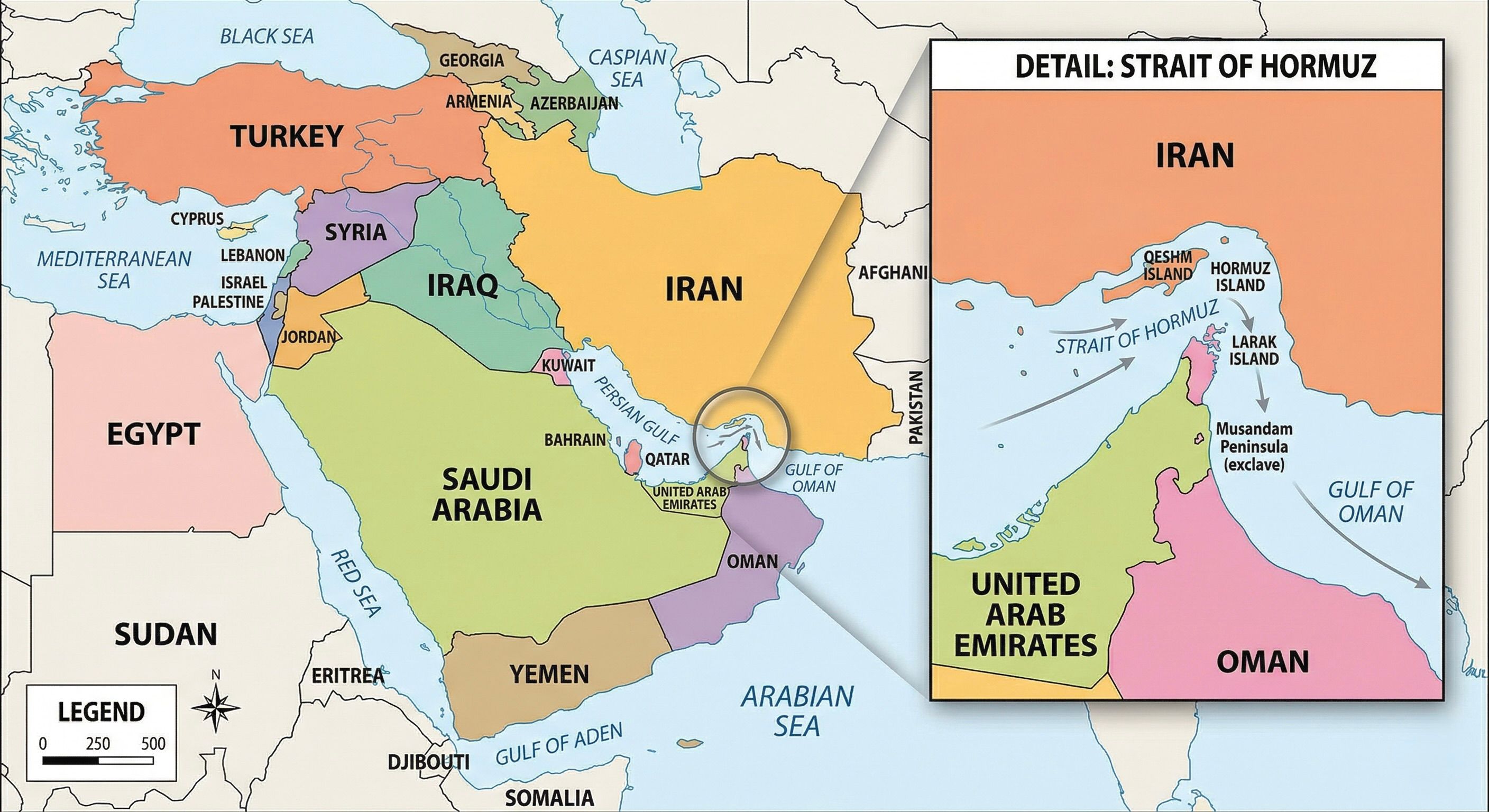
Strait of Hormuz

SuperKalam is your personal mentor for UPSC preparation, guiding you at every step of the exam journey.
Download the App


STUDY RESOURCES
CONTACT US
ⓒ Snapstack Technologies Private Limited