GS 1: Indian GeographyGS 3: EconomyGS 3: Disaster ManagementPrelims
Dry days, Pg8
IMD forecasts deficient monsoon with 8% deficit, raising concerns over El Nino impact and potential drought-like conditions across India.
Practice MCQs
862 Students attempted
Key Highlights:
- The India Meteorological Department (IMD) forecasts an 8% deficit in rainfall during the upcoming June-September monsoon season.
- This "below normal" rainfall prediction has a 5% margin of error.
- The IMD anticipates a weaker monsoon in August and September due to weather models indicating an El Nino event.
- The government is advised to prepare for potential shortages of gas and fertilizer, and ensure equitable water distribution.
Detailed Insights:
- Historical data suggests that when the IMD forecasts a monsoon deficit in April, India often experiences drought conditions.
- The IMD officially terms a deficit below 90% of the Long Period Average (LPA) as "deficient."
- In 2015, the IMD predicted 93% of the LPA, but India received only 86%, indicating the potential for significant deviations from forecasts.
- The impact of El Nino on the monsoon depends on its timing; heating outside monsoon months has less impact.
- The Indian Ocean Dipole may counter the drying effects of El Nino this year.
- Potential gas and fertilizer shortages, combined with weak rains, could negatively impact farmer sentiment.
- The government should focus on fertilizer stock management, equitable water distribution, and providing timely advice to farmers.
Scientific/Technical Concepts Involved:
- El Nino: A cyclical phenomenon involving the heating of the central equatorial Pacific Ocean, often associated with deficient monsoons in India.
- Long Period Average (LPA): The average rainfall over a long period (typically 30-50 years), used as a benchmark for monsoon forecasts.
- Indian Ocean Dipole: A difference in sea surface temperature between the eastern and western tropical Indian Ocean, which can influence the Indian monsoon.
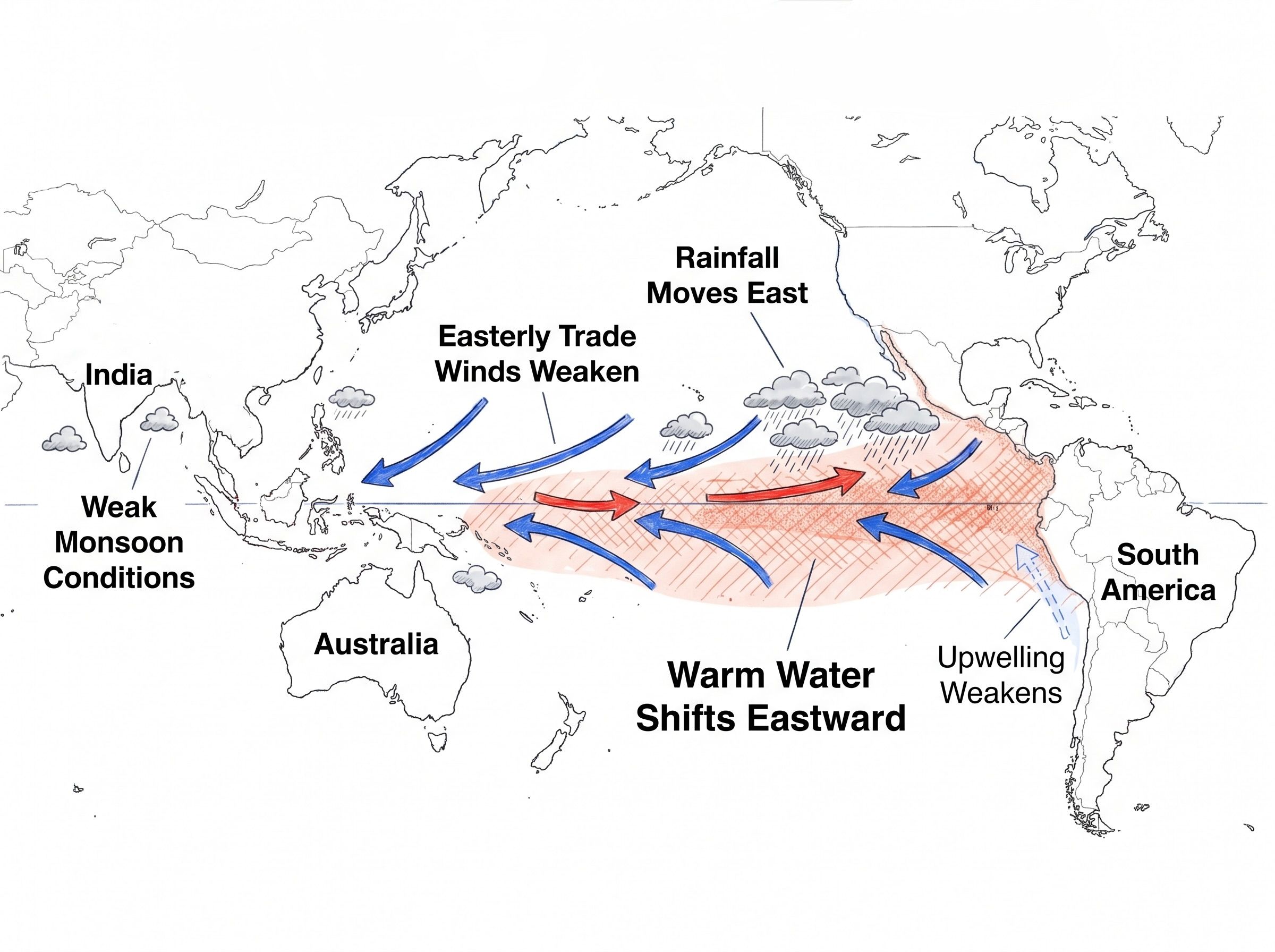
El Nino

SuperKalam is your personal mentor for UPSC preparation, guiding you at every step of the exam journey.
Download the App


STUDY RESOURCES
CONTACT US
ⓒ Snapstack Technologies Private Limited