GS 2: PolityGS 2: Governance
House decorum, Pg6
Lok Sabha rejects Speaker Om Birla's removal amidst uproar over parliamentary decorum and Opposition's concerns about suppressed voices.
Practice MCQs
855 Students attempted
Key Highlights:
- The Lok Sabha rejected a resolution on March 11 to remove Speaker Om Birla under Article 94(C) of the Constitution.
- The resolution was triggered by concerns over the Speaker's impartiality and alleged denial of opportunities to Opposition MPs to raise issues.
- The government defended the Speaker, citing high productivity and opportunities given to the Opposition during his tenure.
- The debate highlighted a deep divide between the government and the Opposition regarding the functioning of the Lok Sabha.
Detailed Insights:
- The rejection of the resolution underscores the ongoing tensions between the ruling party and the opposition regarding parliamentary procedures and the Speaker's role.
- Concerns raised by the Opposition include the alleged denial of opportunities to raise substantive issues, frequent switching off of microphones, and interruptions during debates.
- The government countered these claims by presenting statistics on the allocation of time and opportunities to both ruling and opposition party members.
- The incident involving Rahul Gandhi being disallowed from quoting General M.M. Naravane's memoir further fueled the Opposition's concerns about restricted expression.
- The debate also touched upon the broader issue of single-party dominance and its impact on the functioning of legislatures at all levels.
- The resolution reflects a growing trend of dragging the chairs of both the Lok Sabha and Rajya Sabha into political conflicts, raising questions about the impartiality of these positions.
Key Concepts Involved:
- Article 94(C): Constitutional provision related to the removal of the Speaker of the Lok Sabha.
- Zero Hour: The time immediately following the Question Hour in Parliament.
- Motion of Thanks: A motion moved in Parliament thanking the President for their address.
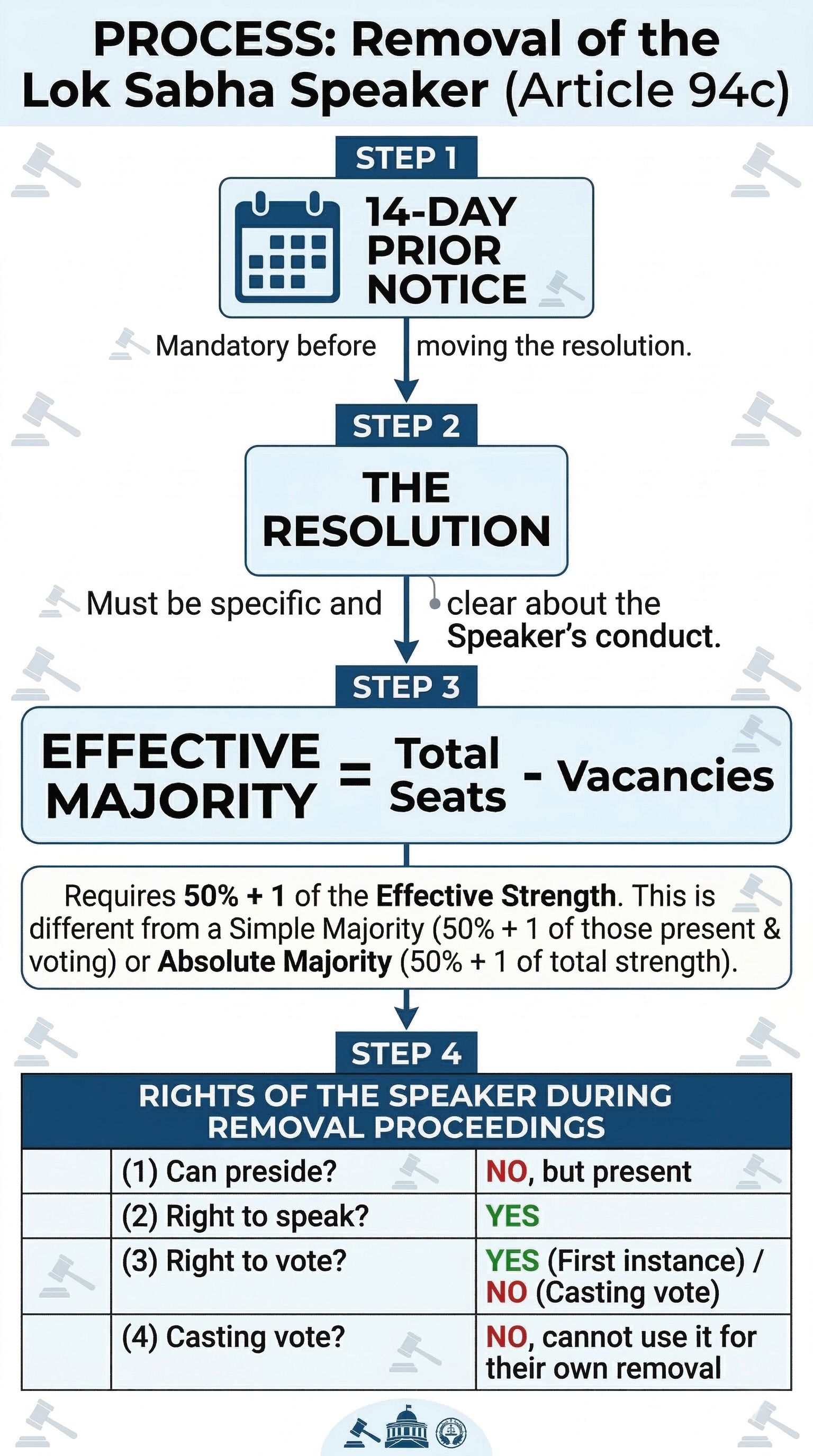
Removal of Speaker

SuperKalam is your personal mentor for UPSC preparation, guiding you at every step of the exam journey.
Download the App


STUDY RESOURCES
CONTACT US
ⓒ Snapstack Technologies Private Limited