GS 3: EconomyGS 3: Science & TechnologyGS 3: Environment & EcologyPrelims
What are bio-based chemicals and enzymes?, Pg8
India poised to boost bio-based chemical production, reducing import dependence and fostering sustainable industrial growth through BioE3 policy.
Practice MCQs
847 Students attempted
Key Highlights:
- Bio-based chemicals are industrial chemicals made from biological sources like sugarcane and corn.
- Enzymes are biological catalysts used across industries to reduce energy consumption.
- India's BioE3 policy prioritizes bio-based chemicals and enzymes.
- India imported approximately $479.8 million worth of acetic acid in 2023.
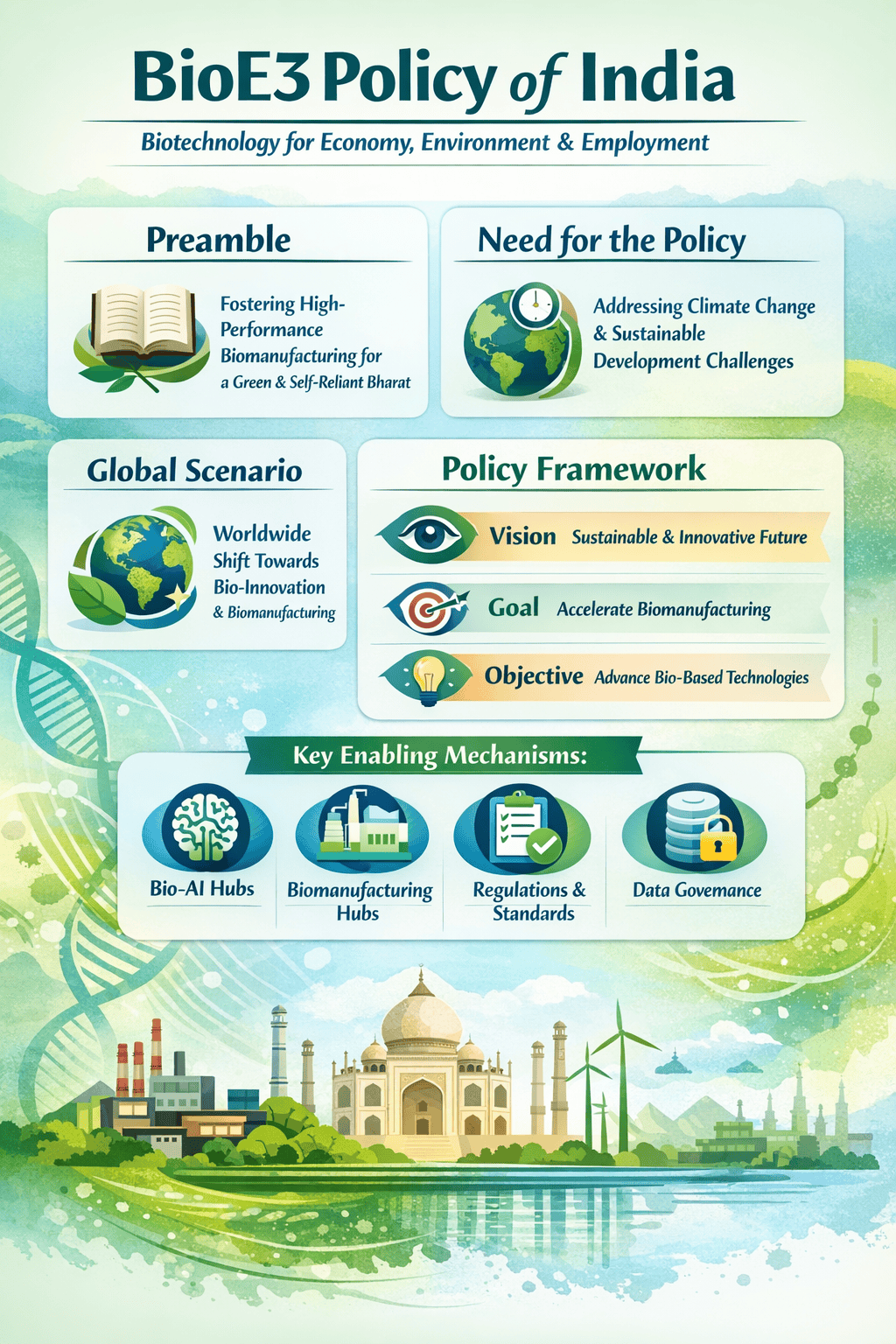
BioE3 Policy
Detailed Insights:
- India's large agricultural base and expertise in fermentation make it well-suited for scaling bio-based chemicals and enzymes, reducing import dependence on petrochemicals.
- Key Indian companies in this sector include Praj Industries, Godrej Industries, Godavari Biorefineries, Jubilant Ingrevia, and StringBio.
- The Indian enzymes market is dominated by players like Novozymes India, DuPont, and BASF SE, accounting for over 75% of the market share.
- Other countries support this sector through initiatives like the EU Bioeconomy Strategy, the USDA BioPreferred Program, and China's bioeconomy development plans.
- Risks include the higher cost of bio-based products, feedstock availability, infrastructure needs, and market adoption challenges.
- Scaling shared biomanufacturing infrastructure and establishing clear standards and procurement policies can build investor confidence.
Key Concepts Involved:
- Bio-based chemicals: Industrial chemicals produced from renewable biological sources.
- Enzymes: Biological catalysts that speed up chemical reactions in various industries.
- Petrochemicals: Chemicals derived from petroleum, often used as industrial inputs.
- Bioeconomy: Economic activities derived from bio-based products and resources.

SuperKalam is your personal mentor for UPSC preparation, guiding you at every step of the exam journey.
Download the App


STUDY RESOURCES
CONTACT US
ⓒ Snapstack Technologies Private Limited