GS 3: EconomyGS 3: Internal SecurityGS 3: Science & TechnologyGS 2: GovernancePrelims
What is drop shipping, and what are the risks for online shoppers?, Pg11
Unmasking drop shipping: The hidden e-commerce model where middlemen sell products they don't own, posing significant risks for unsuspecting online shoppers.
Practice MCQs
869 Students attempted
Key Highlights:
- Dropshipping is a business model where an online seller takes customer orders and passes them to a third-party supplier who directly ships the product.
- The seller, or dropshipper, acts as a middleman, not holding any inventory themselves.
- This model is prevalent on platforms like Amazon, Shopify, Instagram, and Facebook.
- While legal, dropshipping poses risks to consumers, including scams, counterfeit products, long delivery times, and lack of transparency.
- Consumers may unknowingly share payment information with multiple parties, raising concerns about data privacy and potential cyber-crimes.
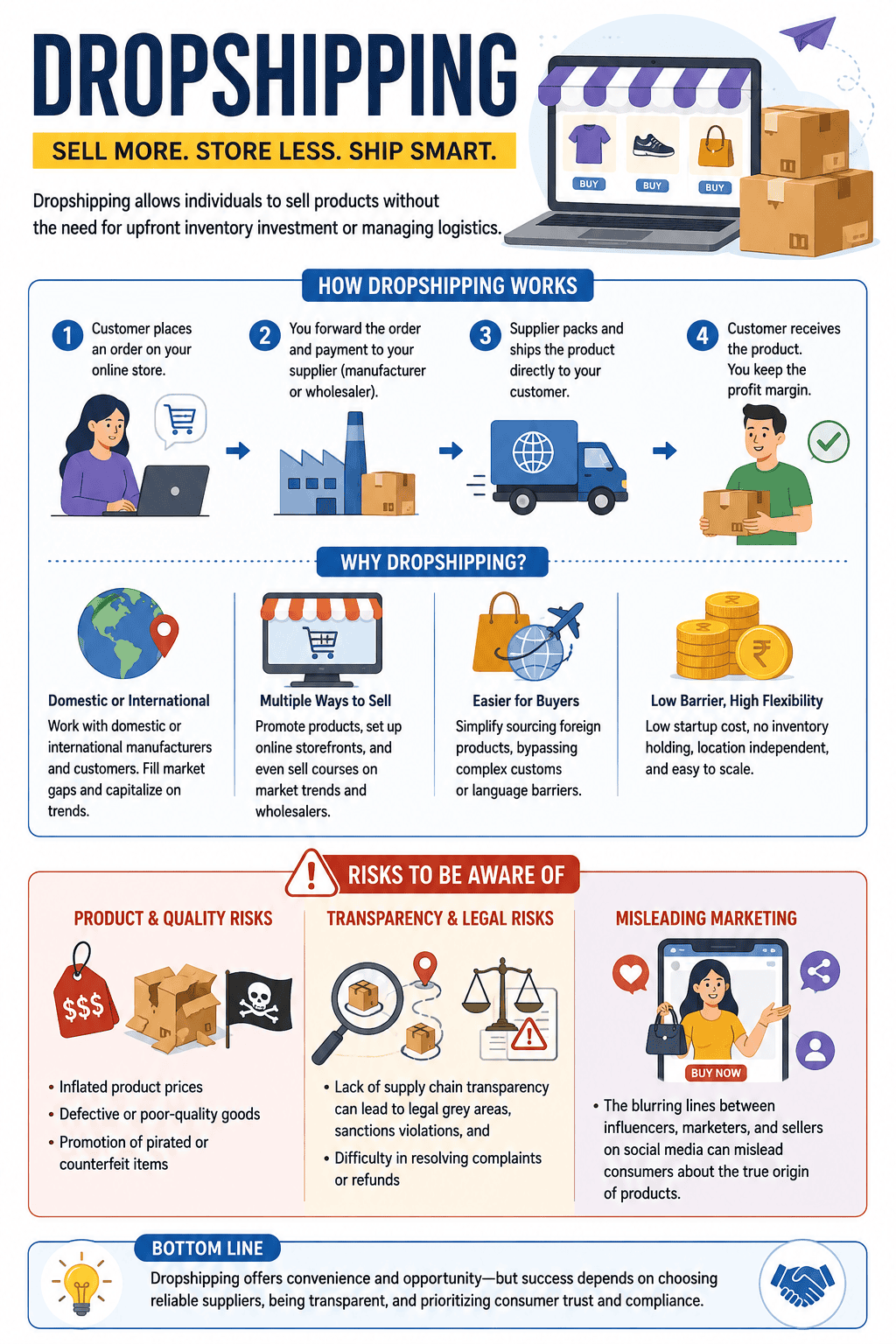
Dropshipping.png
Detailed Insights:
- Dropshipping allows individuals to sell products without the need for upfront inventory investment or managing logistics.
- The model can involve domestic or international manufacturers and customers, often filling market gaps or capitalizing on trends.
- Dropshippers may promote products, set up online storefronts, and even sell courses on market trends and wholesalers.
- For buyers, dropshipping can simplify sourcing foreign products, bypassing complex customs or language barriers.
- Risks include inflated product prices, defective goods, and the promotion of pirated or counterfeit items.
- Lack of supply chain transparency can lead to legal grey areas, sanctions violations, and difficulty in resolving complaints or refunds.
- The blurring lines between influencers, marketers, and sellers on social media can mislead consumers about the true origin of products.
Key Concepts Involved:
- Dropshipping: A retail fulfillment method where the seller does not keep products in stock but transfers customer orders to a third-party supplier.
- E-commerce: Commercial transactions conducted electronically on the internet, facilitating online buying and selling of goods and services.
- Supply Chain Transparency: The ability to track products and components through all stages of the supply chain, from raw materials to the end consumer.
- Counterfeit Products: Goods made in exact imitation of something else, especially when intended to deceive or defraud.

SuperKalam is your personal mentor for UPSC preparation, guiding you at every step of the exam journey.
Download the App


STUDY RESOURCES
CONTACT US
ⓒ Snapstack Technologies Private Limited