GS 2: Social JusticeGS 2: GovernanceGS 1: Indian SocietyPrelims
The ‘seven-point IQ opportunity’ for Indian children, Pg8
India pivots Anganwadi system for holistic early childhood development, aiming for a seven-point IQ boost in future generations through integrated nutrition and stimulation.
Practice MCQs
869 Students attempted
Key Highlights:
- India aims to increase the IQ of its future generations by seven points through a pivot in early childhood development under the Anganwadi system.
- The traditional focus on health, nutrition, immunization, and sanitation is expanding to include psychosocial stimulation and early learning.
- New national frameworks like Aadharshila and Navchetana are redefining Anganwadis as early childhood education centers.
- The Poshan Bhi Padhai Bhi program and Poshan Pakhwada campaign emphasize holistic development, including play-based education and parental engagement.
- Research indicates that structured preschool attendance can lead to significantly higher cognitive scores, even accounting for socio-economic factors.
Anganwadi.png
Detailed Insights:
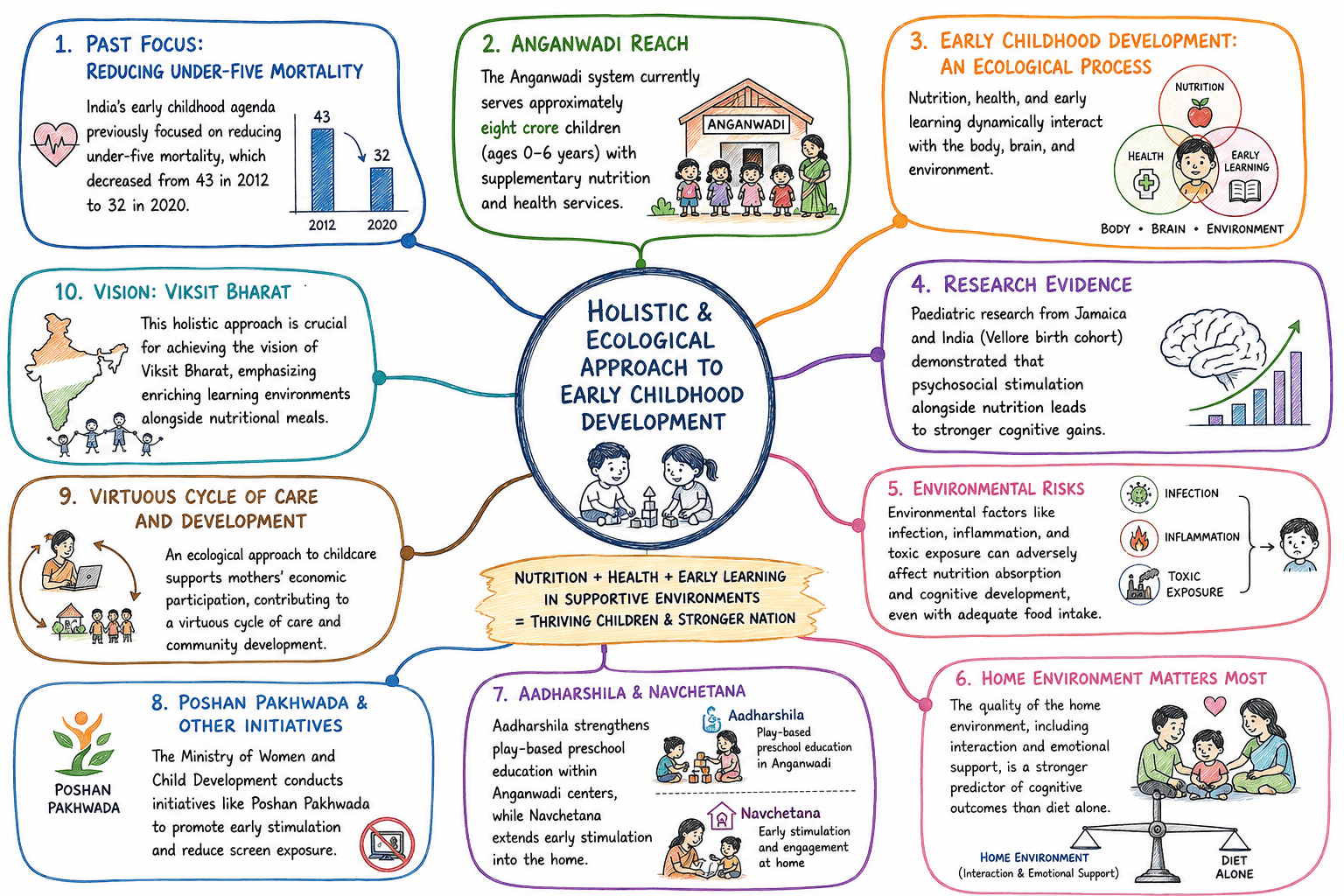
- India's early childhood agenda previously focused on reducing under-five mortality, which decreased from 43 in 2012 to 32 in 2020.
- The Anganwadi system currently serves approximately eight crore children (ages 0-6 years) with supplementary nutrition and health services.
- Early childhood development is an ecological process where nutrition, health, and early learning dynamically interact with the body, brain, and environment.
- Paediatric research from Jamaica and India (Vellore birth cohort) demonstrated that psychosocial stimulation alongside nutrition leads to stronger cognitive gains.
- Environmental factors like infection, inflammation, and toxic exposure can adversely affect nutrition absorption and cognitive development, even with adequate food intake.
- The quality of the home environment, including interaction and emotional support, is a stronger predictor of cognitive outcomes than diet alone.
- Aadharshila strengthens play-based preschool education within Anganwadi centers, while Navchetana extends early stimulation into the home.
- The Ministry of Women and Child Development conducts initiatives like Poshan Pakhwada to promote early stimulation and reduce screen exposure.
- An ecological approach to childcare supports mothers' economic participation, contributing to a virtuous cycle of care and community development.
- This holistic approach is crucial for achieving the vision of Viksit Bharat, emphasizing enriching learning environments alongside nutritional meals.
Key Concepts Involved:
- Anganwadi System: A government-sponsored child-care and mother-care development program in India.
- Early Childhood Development (ECD): A holistic approach encompassing a child's physical, social, emotional, cognitive, and language development from birth to age eight.
- Psychosocial Stimulation: Activities and interactions that promote a child's cognitive, social, and emotional growth through responsive caregiving and play.
- Viksit Bharat: A vision for India to become a developed nation by 2047, emphasizing comprehensive societal progress.

SuperKalam is your personal mentor for UPSC preparation, guiding you at every step of the exam journey.
Download the App


STUDY RESOURCES
CONTACT US
ⓒ Snapstack Technologies Private Limited