GS 3: EconomyGS 3: Science & TechnologyGS 2: GovernancePrelims
India's push beyond E20 fuel: Reasons, and pitfalls, Pg14
India exempts higher ethanol blends from excise duty, pushing beyond E20, but sparking concerns among consumers and automakers over engine damage and costs.
Practice MCQs
869 Students attempted
Key Highlights:
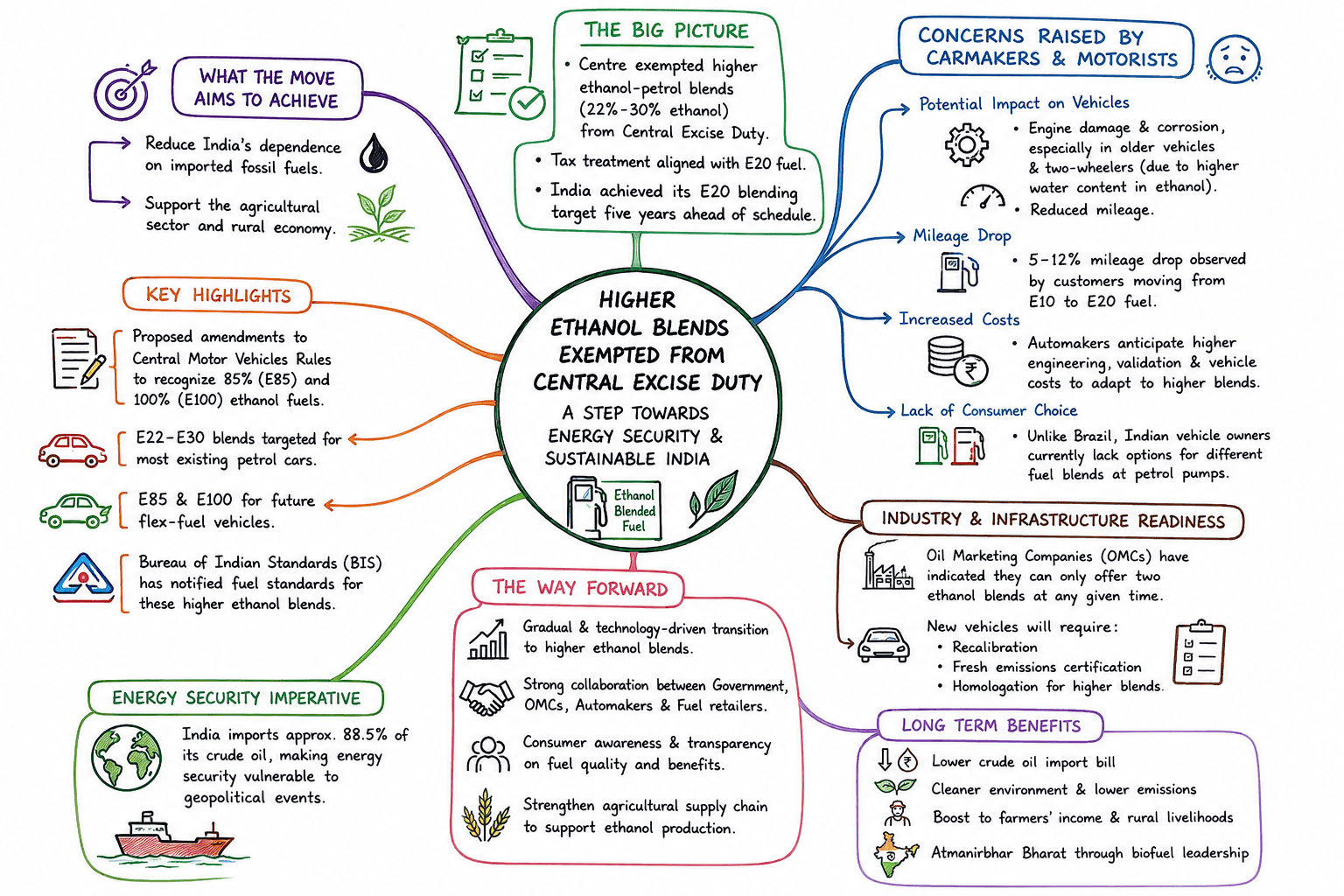
- The Centre exempted higher ethanol-petrol blends (22%-30% ethanol) from Central Excise Duty, aligning their tax treatment with E20 fuel.
- Proposed amendments to the Central Motor Vehicles Rules aim to recognize 85% and 100% ethanol fuels.
- India achieved its E20 blending target five years ahead of schedule.
- The move aims to reduce India's dependence on imported fossil fuels and support the agricultural sector.
- Carmakers and motorists have raised concerns regarding potential engine damage, reduced mileage, and increased costs with higher ethanol blends.
EBP.png
Detailed Insights:
- The exemption for E22-E30 blends targets most existing petrol cars, while E85 and E100 are for future flex-fuel vehicles.
- Consumers face issues like engine corrosion, especially in older vehicles and two-wheelers, due to ethanol's higher water content.
- A mileage drop of 5-12% has been observed by customers transitioning from E10 to E20 fuel.
- Unlike Brazil, Indian vehicle owners currently lack options for different fuel blends at petrol pumps.
- Automakers anticipate increased engineering, validation, and vehicle costs for adapting to higher ethanol blends.
- Oil Marketing Companies (OMCs) have indicated they can only offer two ethanol blends at any given time.
- India imports approximately 88.5% of its crude oil, making energy security vulnerable to geopolitical events.
- The Bureau of Indian Standards (BIS) has notified fuel standards for these higher ethanol blends.
- New vehicles will require recalibration, fresh emissions certification, and homologation for higher blends.
Key Concepts Involved:
- E20 fuel: A blend of petrol containing 20% ethanol, currently the standard in India.
- Flex-fuel vehicles: Automobiles designed to operate on varying proportions of petrol and ethanol, or 100% ethanol.
- Homologation: The process of certifying a vehicle or component to meet specific regulatory standards for roadworthiness.
- Central Excise Duty: An indirect tax levied by the central government on goods manufactured or produced within India.

SuperKalam is your personal mentor for UPSC preparation, guiding you at every step of the exam journey.
Download the App


STUDY RESOURCES
CONTACT US
ⓒ Snapstack Technologies Private Limited