GS 3: EconomyPrelimsGS 2: International Relations
Fuller expression, Pg8
India's May retail inflation hits 3.93%, a 15-month high, driven by soaring food and fuel; RBI maintains neutral stance, rupee depreciates amid Mideast tensions.
Practice MCQs
869 Students attempted
Key Highlights:
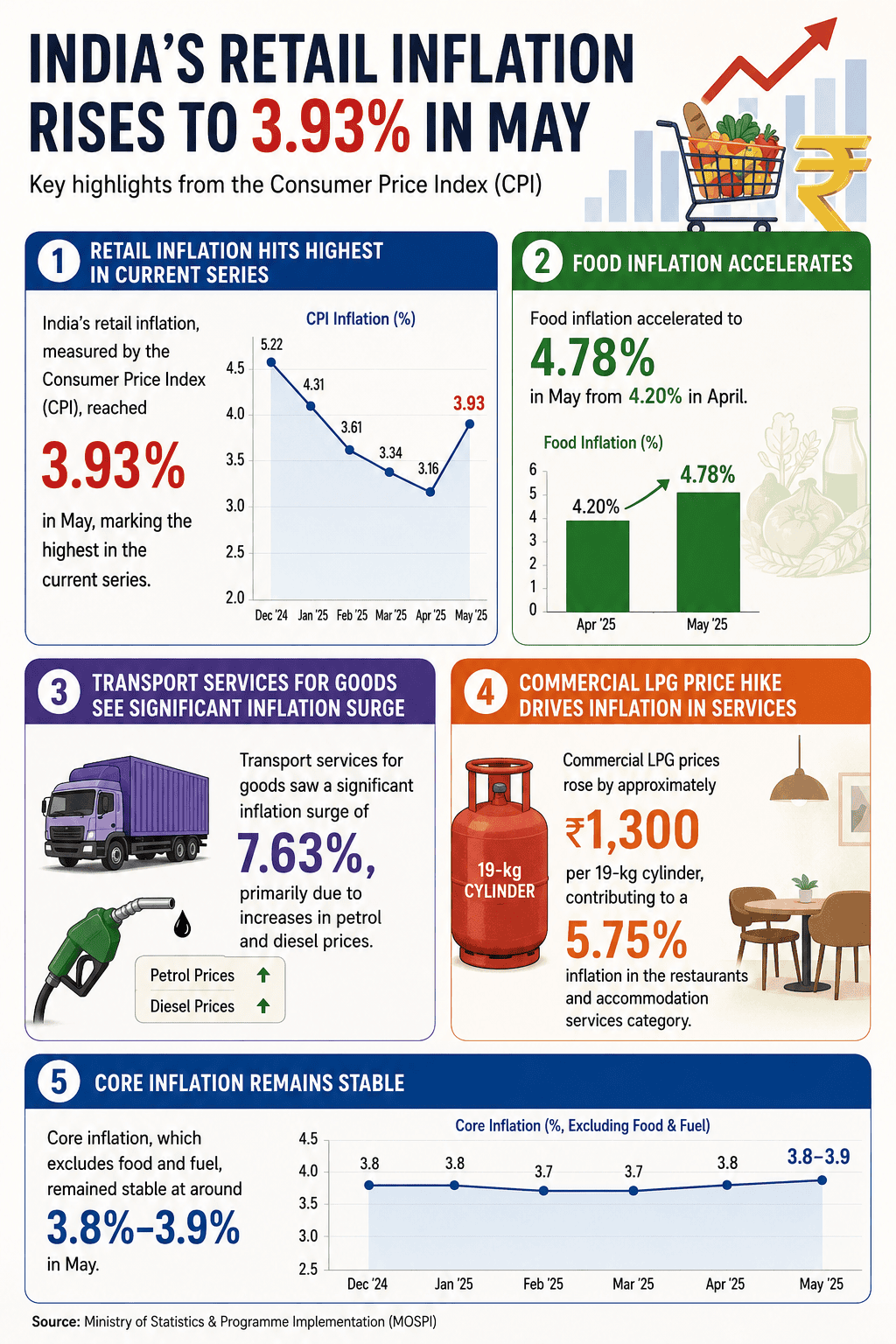
- India's retail inflation, measured by the Consumer Price Index (CPI), reached 3.93% in May, marking the highest in the current series.
- Food inflation accelerated to 4.78% in May from 4.20% in April.
- Transport services for goods saw a significant inflation surge of 7.63%, primarily due to increases in petrol and diesel prices.
- Commercial LPG prices rose by approximately ₹1,300 per 19-kg cylinder, contributing to a 5.75% inflation in the restaurants and accommodation services category.
- Core inflation, which excludes food and fuel, remained stable at around 3.8%-3.9% in May.
CPI.png
Detailed Insights:
- The May inflation figures clearly reflect the pass-through effects of rising food and fuel costs into consumer prices.
- Upcoming Wholesale Price Index (WPI) and India's first Producer Price Index (PPI) data will indicate the extent of price shock absorbed by producers and wholesalers.
- The Reserve Bank of India (RBI) maintained a neutral monetary policy stance, signaling concerns about potential future price pressures despite inflation being within its 2%-6% tolerance band.
- RBI's intervention through dollar sales in the foreign exchange market helped stabilize the rupee, which had weakened due to geopolitical tensions.
- Geopolitical developments, including a potential U.S.-Iran rapprochement, could influence global fuel prices, but uncertainty remains regarding transit through the Strait of Hormuz.
- Oil marketing companies are expected to delay reversing retail price increases to recover past losses, and LPG prices may also remain elevated.
Key Concepts Involved:
- Consumer Price Index (CPI): A measure that examines the weighted average of prices of a basket of consumer goods and services.
- Wholesale Price Index (WPI): An index that measures and tracks the changes in the price of goods in the stages before the retail level.
- Producer Price Index (PPI): An index that measures the average change over time in the selling prices received by domestic producers for their output.
- Core Inflation: A measure of inflation that excludes volatile items such as food and energy prices to provide a clearer picture of underlying price trends.
- Neutral Stance (Monetary Policy): A monetary policy stance by the RBI indicating that interest rates could move in either direction depending on economic data.
- Strait of Hormuz: A narrow, strategically vital waterway connecting the Persian Gulf to the Arabian Sea, crucial for global oil shipments.

SuperKalam is your personal mentor for UPSC preparation, guiding you at every step of the exam journey.
Download the App


STUDY RESOURCES
CONTACT US
ⓒ Snapstack Technologies Private Limited