GS 2: International RelationsGS 3: EconomyGS 3: Internal Security
U.S. military ‘blockades’ Iran ports; Tehran threatens ports in region, Pg14
U.S. imposes naval blockade on Iranian ports, escalating tensions and threatening global trade routes; Iran warns of regional port disruptions.
Practice MCQs
847 Students attempted
Key Highlights:
- U.S. President Donald Trump announced a U.S. military blockade of Iranian ports on April 13, 2026, aiming to pressure Iran to negotiate an end to the ongoing conflict.
- Iran responded by threatening all ports in the Persian Gulf and the Gulf of Oman, raising concerns for U.S.-allied countries and global economic stability.
- The U.S. military’s Central Command (CENTCOM) will enforce the blockade against all vessels entering or departing Iranian ports and coastal areas.
- Talks to end the conflict, which began on February 28, 2026, with U.S. and Israeli strikes on Iran, have stalled.
Detailed Insights:
- The U.S. blockade aims to force Iran to open the Strait of Hormuz and agree to a deal to end the six-week-long war.
- The U.K. Maritime Trade Operations agency issued a notice to mariners, specifying that the restrictions encompass the entire Iranian coastline, including ports and energy infrastructure.
- CENTCOM's decision allows ships traveling between non-Iranian ports to transit the Strait of Hormuz, a moderation from Trump's initial threat to blockade the waterway completely.
- Iran's response indicates a willingness to disrupt maritime security in the region if its own ports are blockaded, potentially impacting global trade routes.
Key Concepts Involved:
- Blockade: An act of war where a nation uses naval forces to prevent vessels from entering or leaving an enemy's ports or coasts.
- Strait of Hormuz: A narrow waterway between Oman and Iran connecting the Persian Gulf and the Gulf of Oman, crucial for global oil transportation.
- CENTCOM: A U.S. military command responsible for U.S. operations in the Middle East, including maritime security.
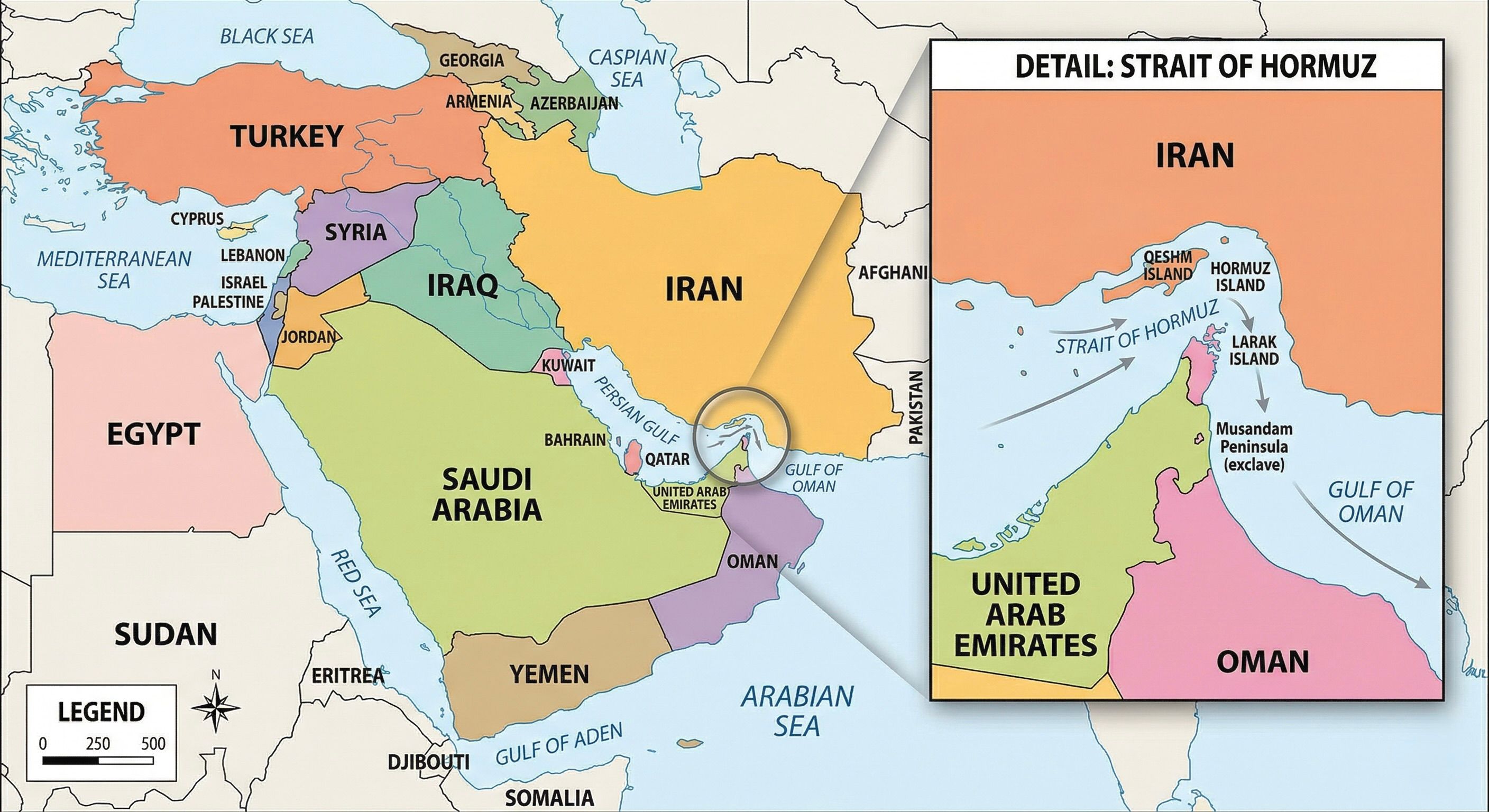
Strait of Hormuz

SuperKalam is your personal mentor for UPSC preparation, guiding you at every step of the exam journey.
Download the App


STUDY RESOURCES
CONTACT US
ⓒ Snapstack Technologies Private Limited