GS 3: EconomyPrelims
Price pressures, Pg6
India's retail inflation surges to 3.2% in February 2026, driven by food inflation, precious metal prices and El Nino effect.
Practice MCQs
840 Students attempted
Key Highlights:
- Retail inflation in India rose to a 10-month high of 3.2% in February 2026, driven by food inflation and precious metal prices.
- Food and beverage inflation increased to 3.35% in February, with tomato prices rising over 45%.
- Gold jewellery inflation reached 48.2% in February, while silver jewellery inflation exceeded 160%.
- The El Niño effect is predicted to return, potentially weakening the monsoon and raising food prices.
Detailed Insights:
- The new Consumer Price Index (CPI) series lacks sufficient historical data for robust comparisons but offers insights into future trends.
- Last year's low inflation was partly due to a statistical base effect, which is no longer present.
- Continued conflict in West Asia could constrain natural gas supplies, impacting fertilizer production and subsequently food prices.
- Rising oil prices and LPG/LNG shortages are increasing input costs for industries, which will eventually be passed on to consumers.
- The Reserve Bank of India’s (RBI) Monetary Policy Committee faces the challenge of addressing supply-driven inflation, where raising interest rates may have limited impact and could hurt growth.
- Government efforts to expedite alternative fuel sources are crucial to mitigate the impact of rising fuel costs on inflation.
Key Concepts Involved:
- Consumer Price Index (CPI): A measure that examines the weighted average of prices of a basket of consumer goods and services, such as transportation, food, and medical care.
- Inflation: The rate at which the general level of prices for goods and services is rising, and subsequently, purchasing power is falling.
- Monetary Policy Committee (MPC): A committee of the Reserve Bank of India (RBI) that is responsible for setting the policy interest rates to control inflation and achieve economic growth.
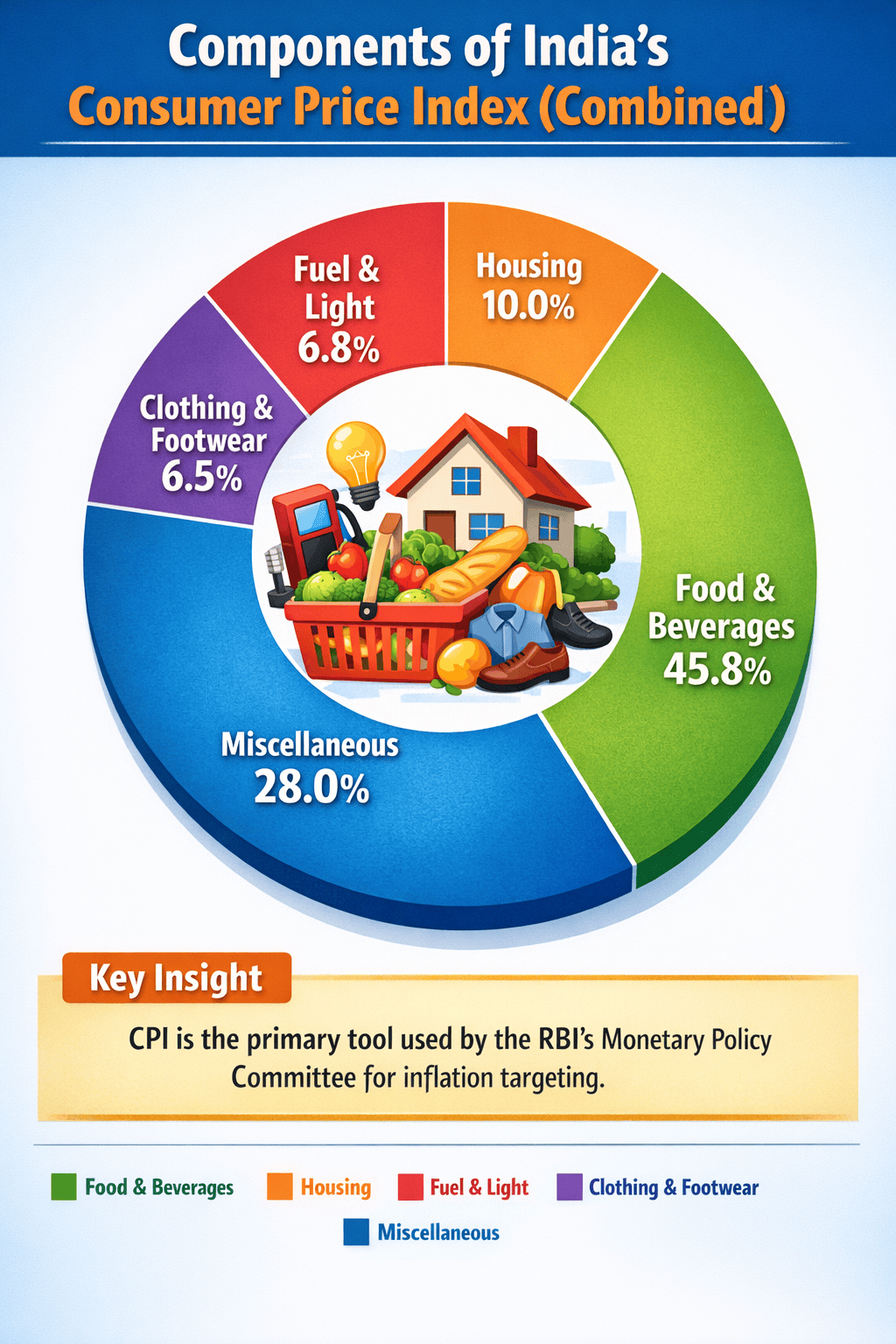
Components of CPI Basket

SuperKalam is your personal mentor for UPSC preparation, guiding you at every step of the exam journey.
Download the App


STUDY RESOURCES
CONTACT US
ⓒ Snapstack Technologies Private Limited