GS 2: PolityPrelims
193 INDIA bloc MPs submit notice for removal of CEC, Pg8
INDIA bloc moves to impeach CEC Gyanesh Kumar citing 'partisan conduct' and 'electoral fraud' with 193 MPs support.
Practice MCQs
840 Students attempted
Key Highlights:
- INDIA bloc MPs submitted a notice in both Houses of Parliament on Friday seeking the removal of Chief Election Commissioner (CEC) Gyanesh Kumar.
- The 10-page notice lists seven charges against Mr. Kumar, including partisan conduct and obstruction of electoral fraud investigation.
- Opposition parties accuse the CEC of aiding the ruling BJP, particularly during the Special Intensive Revision (SIR).
- The notice has signatures from 130 MPs in the Lok Sabha and 63 in the Rajya Sabha, exceeding the required numbers.
Detailed Insights:
- The opposition alleges the Special Intensive Revision (SIR) is being used to benefit the ruling party, citing examples from West Bengal and Bihar.
- Article 324(5) of the Constitution provides that the CEC can only be removed in the same manner as a Supreme Court Judge.
- The Judges (Inquiry) Act, 1968 outlines the procedure for investigating such motions, requiring admission in both Houses before a committee is formed.
- The Trinamool Congress considered moving the notice in only one House but ultimately decided to include members from both Houses to register a stronger protest.
Key Concepts Involved:
- Chief Election Commissioner (CEC): The authority responsible for superintendence, direction, and control of elections.
- Special Intensive Revision (SIR): An electoral process for updating and revising voter lists.
- Article 324(5): Constitutional provision detailing the removal process for the Chief Election Commissioner.
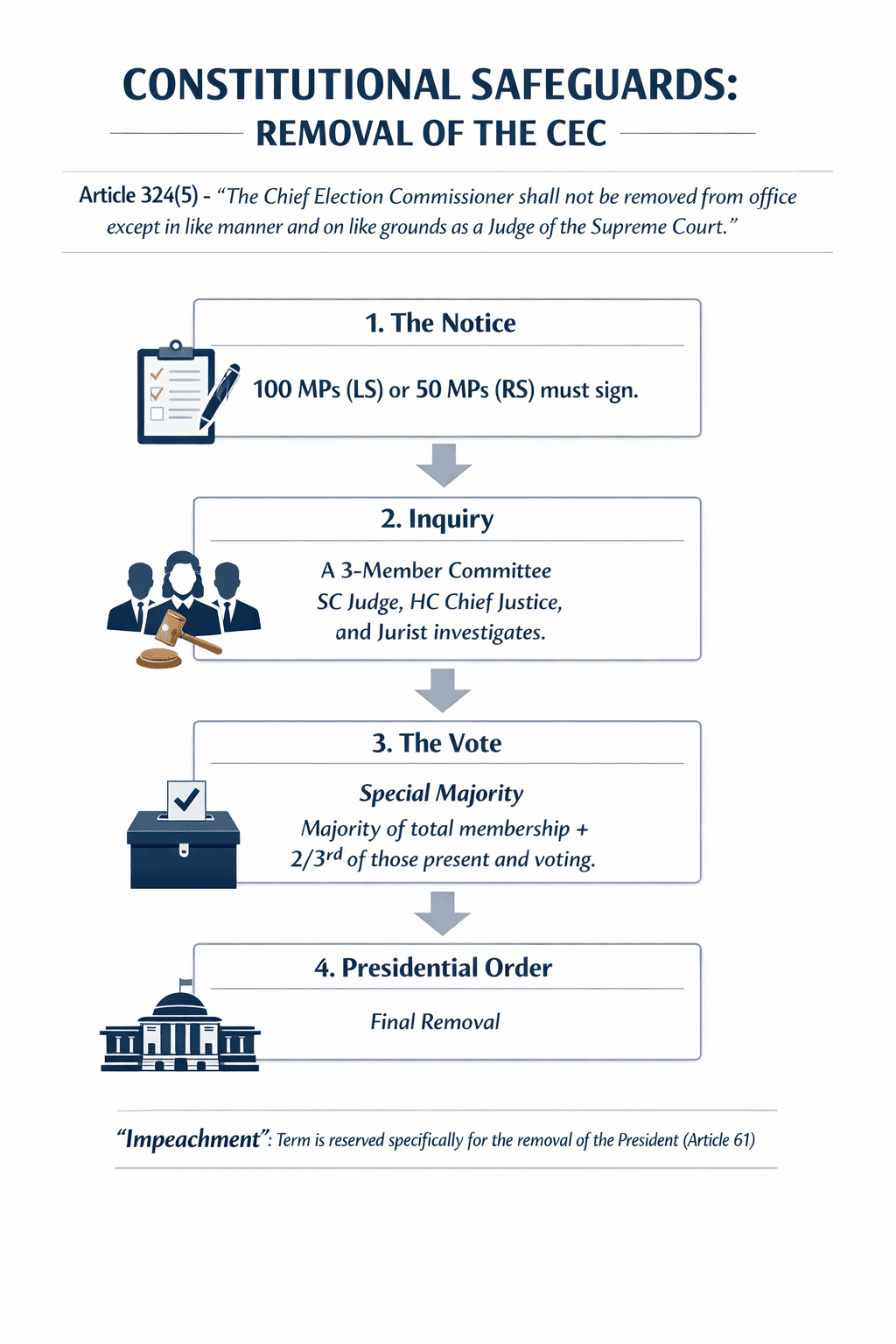
Removal of CEC

SuperKalam is your personal mentor for UPSC preparation, guiding you at every step of the exam journey.
Download the App


STUDY RESOURCES
CONTACT US
ⓒ Snapstack Technologies Private Limited