GS 2: GovernanceGS 3: EconomyGS 2: Social Justice
The labour codes redefine wages, empower the worker, Pg8
Labour codes redefine wages, mandate 50% basic pay, expand social security, and empower workers financially, boosting consumption and inclusive growth.
Practice MCQs
833 Students attempted
Key Highlights:
- India's labour codes aim to boost financial inclusion by integrating social security and income protection into employment.
- The codes consolidate fragmented laws to modernize labour governance and equitably share economic growth benefits with workers.
- A reformed wage definition mandates that wages constitute at least 50% of total remuneration, increasing social security contributions.
- Fixed-term employees are now entitled to gratuity after one year of service, converting short-term employment into asset creation.
- Social security coverage is expanded to include gig, platform, and unorganized workers, providing access to insurance and PF.
- The Code on Wages ensures statutory minimum wages across sectors, limiting deductions and mandating timely payments.
Detailed Insights:
- The reform of the wage definition will lead to higher provident fund (PF) accumulation, pension, and gratuity, enhancing long-term social security for workers.
- Extending gratuity coverage converts short-term employment into a mechanism for asset creation and income security, reducing vulnerability during job transitions.
- Increased financial liability for corporations due to gratuity provisions translates into enhanced income security for workers, boosting their financial capacity and purchasing power.
- Expansion of social security coverage to gig, platform, and unorganized workers formally recognizes them within India’s labour law framework.
- Portability of benefits across States and employment is significant for migrant and informal workers, historically excluded from stable financial systems.
- Enhanced income security increases workers’ purchasing power, leading to higher consumption, improved savings, and greater engagement with formal financial institutions.
- Consolidated labour codes simplify compliance, improve transparency, and create a more predictable regulatory environment benefiting both workers and employers.
Key Concepts Involved:
- Gratuity: A sum of money paid to an employee at the end of a period of employment as a token of appreciation for their services.
- Provident Fund (PF): A retirement savings scheme where employees and employers contribute regularly, providing financial security post-retirement.
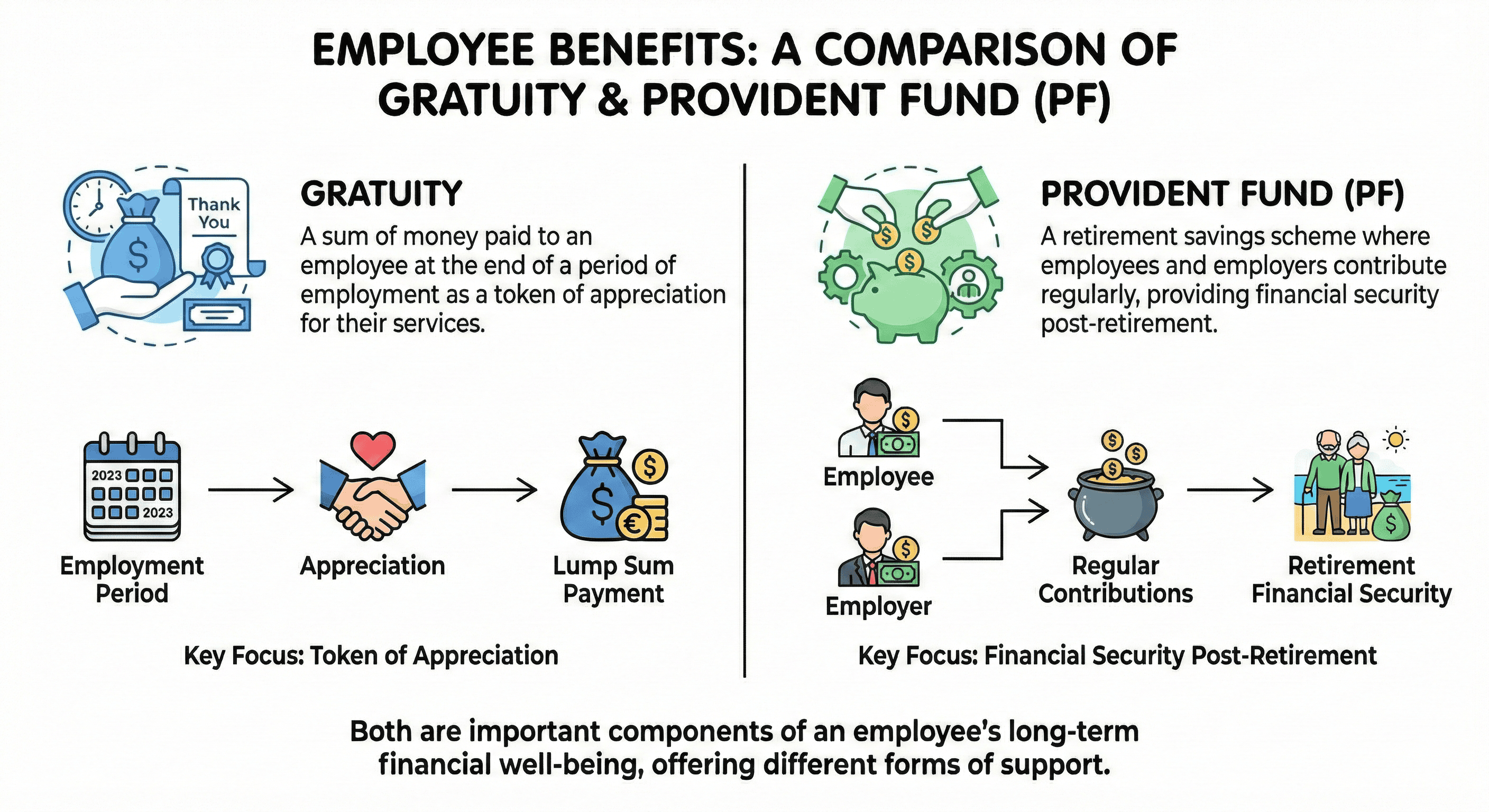
Gratuity vs PF
- Financial Inclusion: The delivery of financial services at affordable costs to disadvantaged and low-income segments of society.

SuperKalam is your personal mentor for UPSC preparation, guiding you at every step of the exam journey.
Download the App


STUDY RESOURCES
CONTACT US
ⓒ Snapstack Technologies Private Limited