GS 3: Environment & EcologyGS 2: GovernanceGS 1: Indian GeographyGS 1: Indian Society
Tourism and trade, Pg6
Great Nicobar Island mega-project raises concerns over environmental impact, indigenous rights, and strategic value amidst rapid development plans.
Practice MCQs
840 Students attempted
Key Highlights:
- The Union government is advancing a ₹92,000 crore mega-infrastructure project for the holistic development of Great Nicobar Island (GNI).
- The project aims to transform GNI into a tourism and trade-led economy, featuring an International Container Transhipment Port (ICTP), airport, and power plants.
- The draft master plan envisions a projected population of 3.36 lakh by 2055, with an expected tourist inflow of one million per year.
- Local communities, including the Nicobarese and Shompen tribes, have been opposing the project since 2022, citing unsettled forest rights.
Detailed Insights:
- The GNI project is strategically important due to its location at the western entrance to the Malacca Strait, aiming to enhance India's share in global sea trade.
- The draft master plan includes developing GNI as a "seaside destination" with business, adventure, and biodiversity tourism, along with social infrastructure.
- Concerns persist regarding the project's impact on the island's ecology, the rights of local populations, and potential contradictions in relocation plans.
- The National Green Tribunal has addressed concerns about biodiversity impact by citing the project's "strategic importance," but challenges remain in the Calcutta High Court.
Key Concepts Involved:
- International Container Transhipment Port (ICTP): A port that handles the transfer of containers between ships, serving as a hub for international trade.
- Malacca Strait: A narrow waterway between the Malay Peninsula and Sumatra, Indonesia, crucial for global shipping and trade routes.
- National Green Tribunal: A specialized judicial body in India that handles environmental disputes.
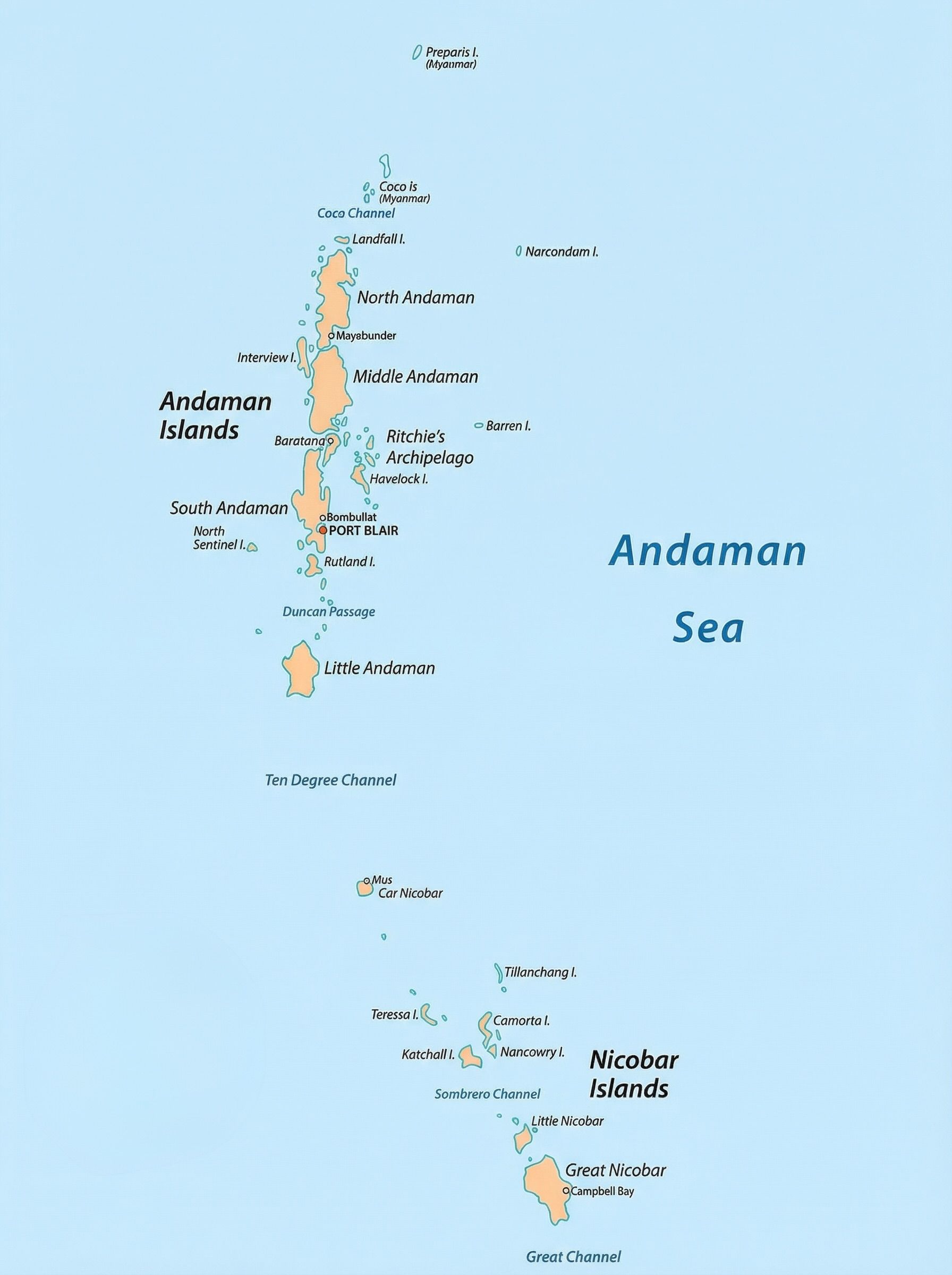
Andaman and Nicobar Islands

SuperKalam is your personal mentor for UPSC preparation, guiding you at every step of the exam journey.
Download the App


STUDY RESOURCES
CONTACT US
ⓒ Snapstack Technologies Private Limited