GS 3: Environment & EcologyGS 3: Science & TechnologyPrelims
Nature’s signals, PgII
Sentinel species like frogs and emperor penguins serve as early indicators of environmental threats, signaling ecosystem decline and climate change impacts.
Practice MCQs
840 Students attempted
Key Highlights:
- Sentinel species are organisms whose health reflects the condition of their ecosystem, providing early warnings of environmental decline.
- Frogs are common sentinel species due to their permeable skin, which makes them highly sensitive to pollutants and pathogens in their environment.
- The International Union for Conservation of Nature (IUCN) declared the emperor penguin an endangered species on April 9, 2026, as they serve as sentinel species for warming in the Antarctic region.
- Climate change is projected to halve the emperor penguin population by the 2080s.
Detailed Insights:
- Sentinel species occupy fixed territories, live long, and accumulate toxins, amplifying the effects of environmental changes, thus quickly indicating habitat issues.
- Frogs are susceptible to pesticides and pathogens, making declining frog populations indicators of broader ecological stress, sometimes before other indicators detect problems.
- Historically, canaries were used in coal mines as sentinel species; their faster metabolism made them succumb to carbon monoxide before humans noticed it.
- Researchers use various sentinel species, including honeybees to track agricultural chemicals, polar bears to monitor Arctic contaminants, and certain fish to detect industrial runoff.
- The emperor penguin's endangered status highlights the impact of climate change in Antarctica, with projections indicating a significant population decline due to warming temperatures.
Key Concepts Involved:
- Sentinel Species: A species whose health indicates the condition of its ecosystem, providing early warnings of environmental issues.
- IUCN: A global authority on the status of the natural world and measures needed to safeguard it.
- Ecosystem: A biological community of interacting organisms and their physical environment.
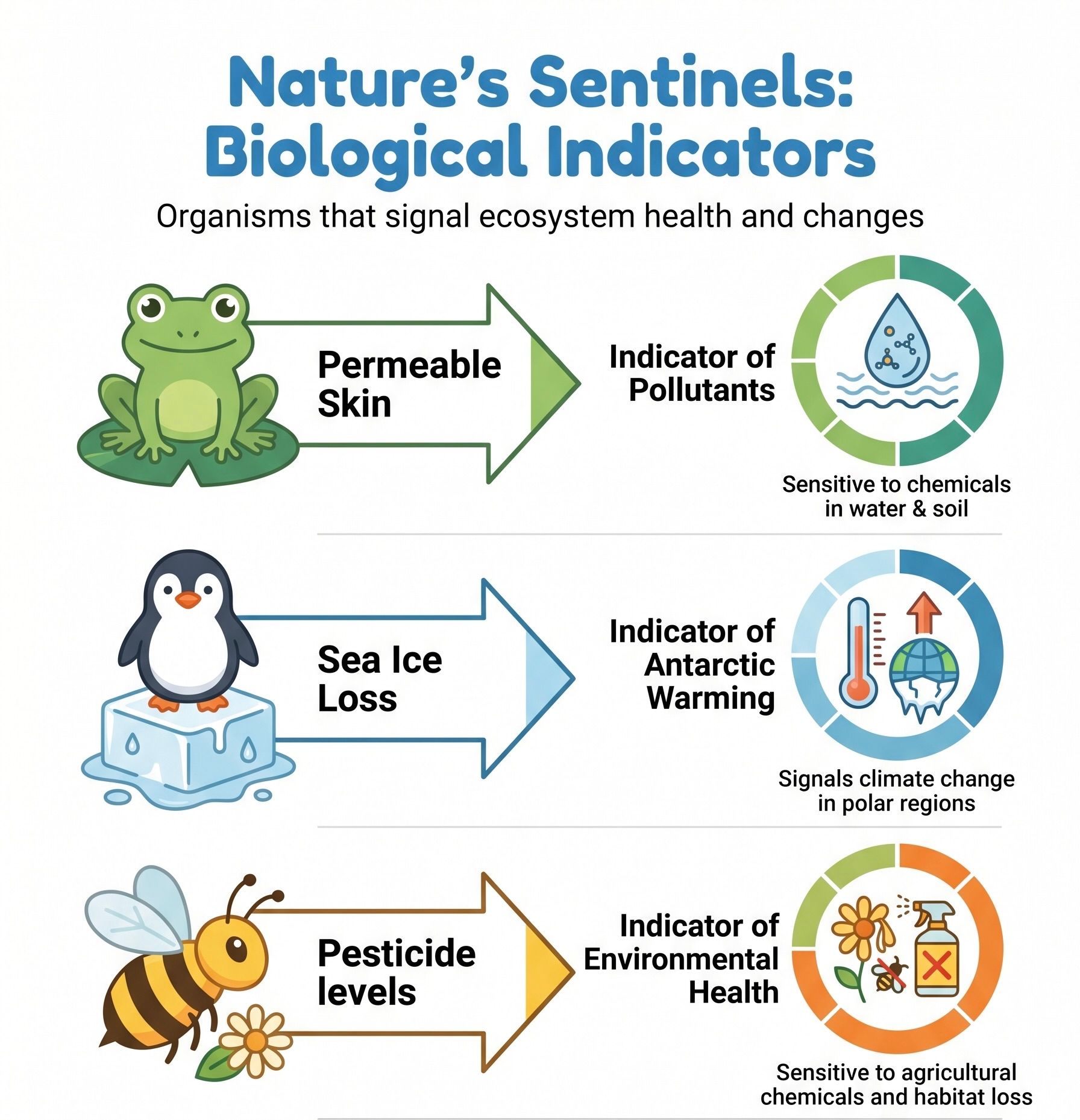
Nature's Sentinels
Previous8/8

SuperKalam is your personal mentor for UPSC preparation, guiding you at every step of the exam journey.
Download the App


STUDY RESOURCES
CONTACT US
ⓒ Snapstack Technologies Private Limited