GS 3: EconomyGS 2: International RelationsGS 2: Governance
Farmers’ pulse, Pg10
India's pulse self-sufficiency mission faces challenges amid import pressures and procurement gaps, risking farmer distress and trade sensitivities.
Practice MCQs
826 Students attempted
Key Highlights:
- India's pulse production is around 2.5 crore tonnes, while demand is 3 crore tonnes, with imports filling the gap.
- Pulses contribute to approximately a quarter of non-cereal protein intake and support 5 crore farmer families.
- Government procurement under the Price Support Scheme fluctuated between 2.9% and 12.4% of production during 2019-24.
- The October 2025 self-sufficiency Mission aims for 310 lakh hectares of cultivation and 350 lakh tonnes of production by 2030-31 with an outlay of ₹11,440 crore.
Detailed Insights:
- India uses import policies, price stabilization, and MSP procurement to manage pulse demand, with imports being sensitive due to their impact on farmers.
- Farmers face challenges like weak procurement, rain-fed cultivation risks, and lower yields, leading to underinvestment in pulse cultivation.
- Many states lack adequate procurement centers, forcing farmers to sell to private traders below the official MSP, disincentivizing pulse cultivation.
- The inclusion of pulses in trade agreements with the U.S. could depress domestic prices and contradict the government's self-sufficiency mission.
- Addressing the procurement deficit, providing MSP guarantees, investing in productivity, and creating market systems are crucial for pulse farmers.
- Structural reforms are needed to reduce import dependence, enhance food security, and alleviate political sensitivity around trade agreements.
Key Concepts Involved:
- MSP (Minimum Support Price): A guaranteed price set by the government to protect farmers from price fluctuations.
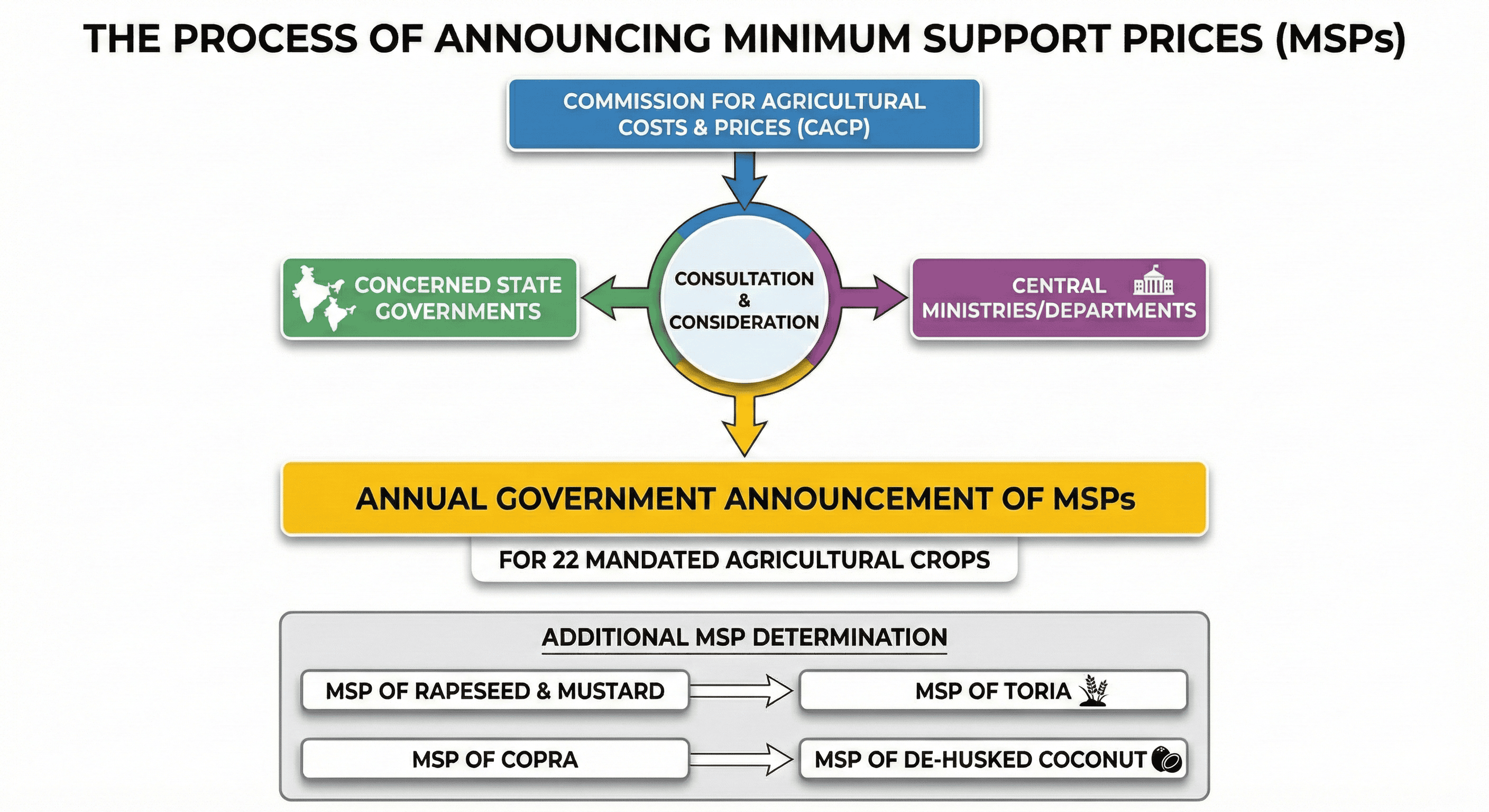
MSP
- Price Support Scheme: Government intervention to stabilize agricultural prices and ensure fair returns to farmers.
- Procurement: The process by which the government purchases crops from farmers, often at the MSP.

SuperKalam is your personal mentor for UPSC preparation, guiding you at every step of the exam journey.
Download the App


STUDY RESOURCES
CONTACT US
ⓒ Snapstack Technologies Private Limited