GS 2: International RelationsGS 1: Post-Independence IndiaPrelims
Indus Treaty and strategy, Pg14
India-Pakistan Indus Water Treaty faces turbulence after India puts it in abeyance post-Pahalgam attack, signaling shift in strategy.
Practice MCQs
862 Students attempted
Key Highlights:
- India has put the Indus Waters Treaty (IWT) in abeyance following a terrorist attack in Pahalgam in April, after previously asking for a review, modification, and renegotiation of the treaty.
- The IWT, which has lasted for 65 years, divides the waters of the six rivers of the Indus system, allocating approximately 80% to Pakistan and 20% to India.
- The division of water was based on geography, terrain, gravity, and the natural course of the rivers.
- India aims to finish water projects in Jammu & Kashmir (J&K) and fully utilize its rights on the western rivers.
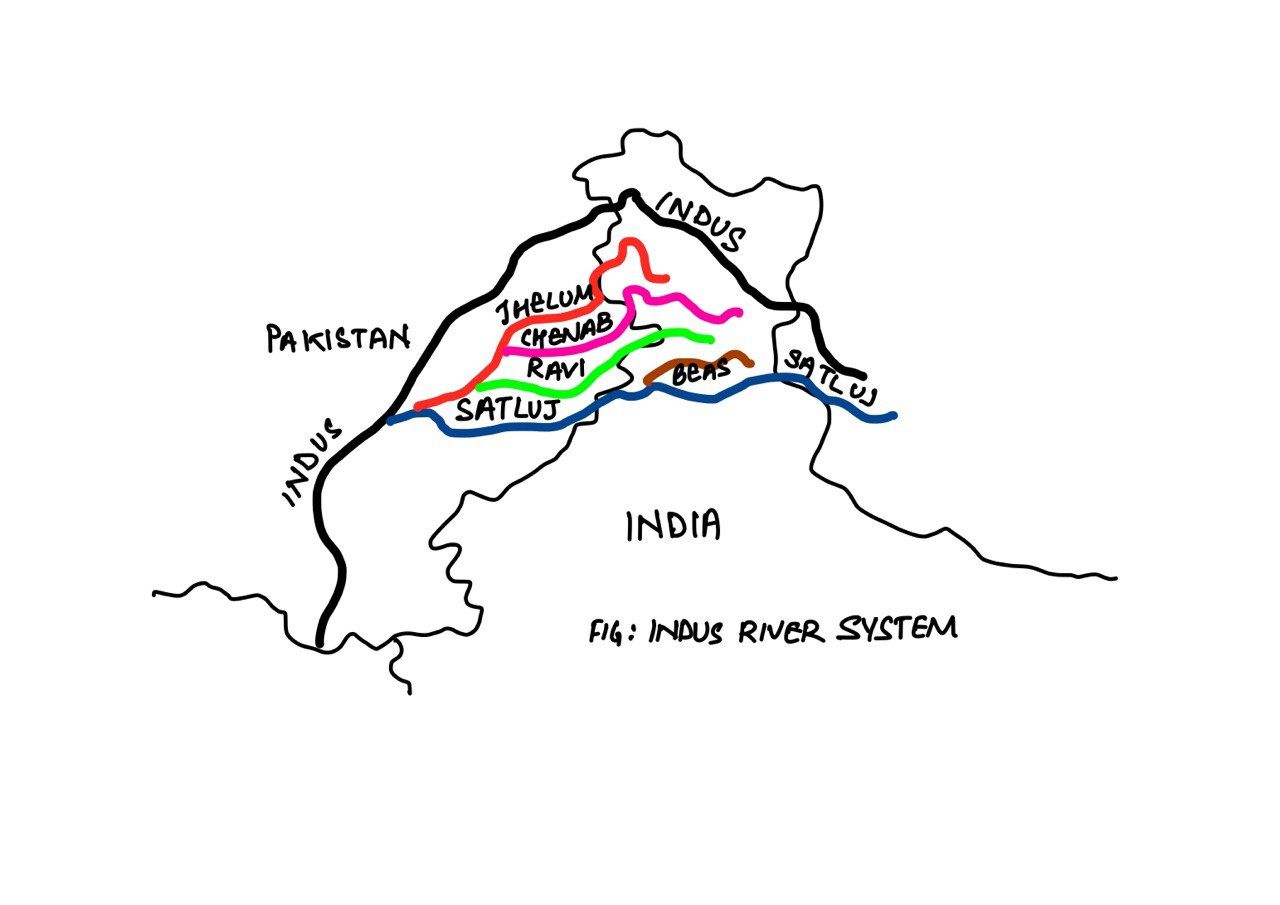
Indus River System.jpg
Detailed Insights:
- Jawaharlal Nehru viewed the IWT as a stabilizing gesture for regional peace, while Pakistan saw it as a matter of security due to the upper riparian state's leverage.
- Pakistan has strategically used Article IX of the IWT (dispute redressal mechanism) to obstruct Indian water projects in J&K, seeking control over river flows due to insecurity.
- The IWT has survived wars and tensions because India, as the upper riparian, ensures minimum flows and shares data with Pakistan.
- India may insist on bilateral renegotiation of the IWT, excluding third parties like the World Bank, while Pakistan may seek to include China and Afghanistan in any renegotiation.
- By keeping the Treaty in abeyance, India aims to exercise its strategic advantage as the upper riparian and potentially force Pakistan to address cross-border terrorism.
Key Concepts Involved:
- Upper Riparian: A state located upstream on a river, with control over the water flow.
- Lower Riparian: A state located downstream on a river, dependent on the upstream state for water.
- Indus Waters Treaty (IWT): A water-sharing agreement between India and Pakistan, signed in 1960, regarding the distribution of the Indus River and its tributaries.

SuperKalam is your personal mentor for UPSC preparation, guiding you at every step of the exam journey.
Download the App


STUDY RESOURCES
CONTACT US
ⓒ Snapstack Technologies Private Limited