GS 3: Science & TechnologyGS 3: EconomyPrelims
India developing three types of small modular reactors: Centre, Pg10
India developing three Small Modular Reactors (SMRs) including 5MWth high-temperature gas-cooled reactor for hydrogen generation, costing ₹5,960 crore.
Practice MCQs
826 Students attempted
Key Highlights:
- India is developing three types of Small Modular Reactors (SMRs).
- The Department of Atomic Energy will construct lead units of these SMRs at existing sites.
- Tarapur Atomic Power Station in Maharashtra will host the lead units of BSMR-200 and SMR-55.
- A 5 MWth high-temperature gas-cooled reactor (HTGCR) will be constructed in Vizag, Andhra Pradesh.
- Development and construction of BSMR-200 will cost Rs 5,960 crore.
Detailed Insights:
- The three SMR types include the 220 MWe Bharat Small Modular Reactor (BSMR-200), the 55 MWe SMR (SMR-55), and a 5 MWth high-temperature gas-cooled reactor (HTGCR) for hydrogen generation.
- Small Modular Reactors (SMRs) offer advantages like reduced size, lower upfront capital cost, enhanced safety features, and suitability for deployment in locations unsuitable for large nuclear power plants.
- The HTGCR in Vizag aims to explore efficient hydrogen production methods, aligning with India's focus on green hydrogen and renewable energy sources.
- The development of SMRs is part of India's broader strategy to expand its nuclear power capacity and diversify its energy mix to ensure energy security and reduce carbon emissions.
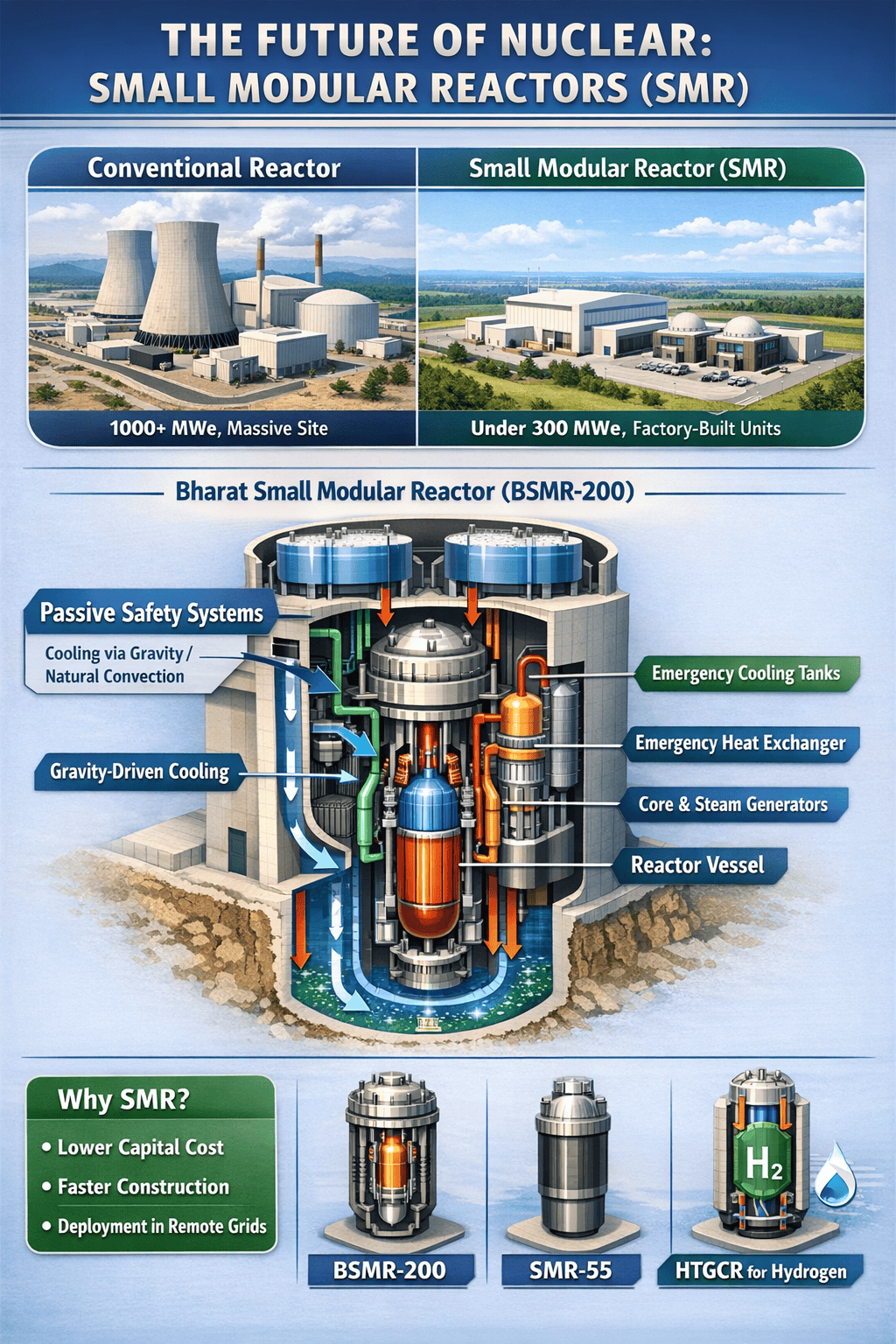
SMR
Scientific/Technical Concepts Involved:
- Small Modular Reactor (SMR): A nuclear fission reactor that is smaller than conventional reactors, manufactured in a factory, and transported as a unit for installation.
- High-Temperature Gas-Cooled Reactor (HTGCR): A type of nuclear reactor that uses helium as a coolant and graphite as a moderator to achieve high thermal efficiency.
- MWe (Megawatt electrical): A unit of electrical power, representing one million watts, often used to measure the output of power plants.

SuperKalam is your personal mentor for UPSC preparation, guiding you at every step of the exam journey.
Download the App


STUDY RESOURCES
CONTACT US
ⓒ Snapstack Technologies Private Limited