GS 2: PolityGS 2: Social JusticeEthics
In a first, SC allows passive euthanasia for man in vegetative state for 13 years, Pg3
Supreme Court permits passive euthanasia for man in vegetative state, urges Centre to enact comprehensive law on end-of-life care.
Practice MCQs
826 Students attempted
Key Highlights:
- The Supreme Court permitted the withdrawal of artificial life support for Harish Rana, a 32-year-old man in a vegetative state for 13 years.
- Rana suffered head injuries in August 2013 after falling from a building in Chandigarh, leading to a permanent vegetative state.
- The court directed AIIMS Delhi to admit Rana to its palliative care department for the withdrawal of treatment.
- The court waived the usual 30-day reconsideration period due to the unanimous consensus among stakeholders.
- The Supreme Court urged the Central Government to enact a comprehensive law on passive euthanasia and end-of-life care.
Detailed Insights:
- This decision marks a historic first in India, highlighting the complexities and ethical considerations surrounding passive euthanasia.
- The court emphasized that the continued administration of Clinically Assisted Nutrition and Hydration (CANH) was no longer in the best interest of the patient.
- The ruling underscores the importance of ensuring that the withdrawal of medical treatment is carried out humanely, preserving the patient's dignity and comfort through palliative care.
- The absence of a comprehensive law on end-of-life care raises concerns that extraneous factors like financial distress could influence decisions, making legislation crucial.
- The right to die with dignity is linked to the right to receive quality palliative and end-of-life care, ensuring the withdrawal process is free from pain and suffering.
Key Concepts Involved:
- Passive Euthanasia: Withholding or withdrawing life-sustaining treatment, allowing a person to die naturally.
- Permanent Vegetative State (PVS): A chronic state of impaired consciousness with no awareness of self or environment.
- Palliative Care: Specialized medical care focused on providing relief from the symptoms and stress of a serious illness.
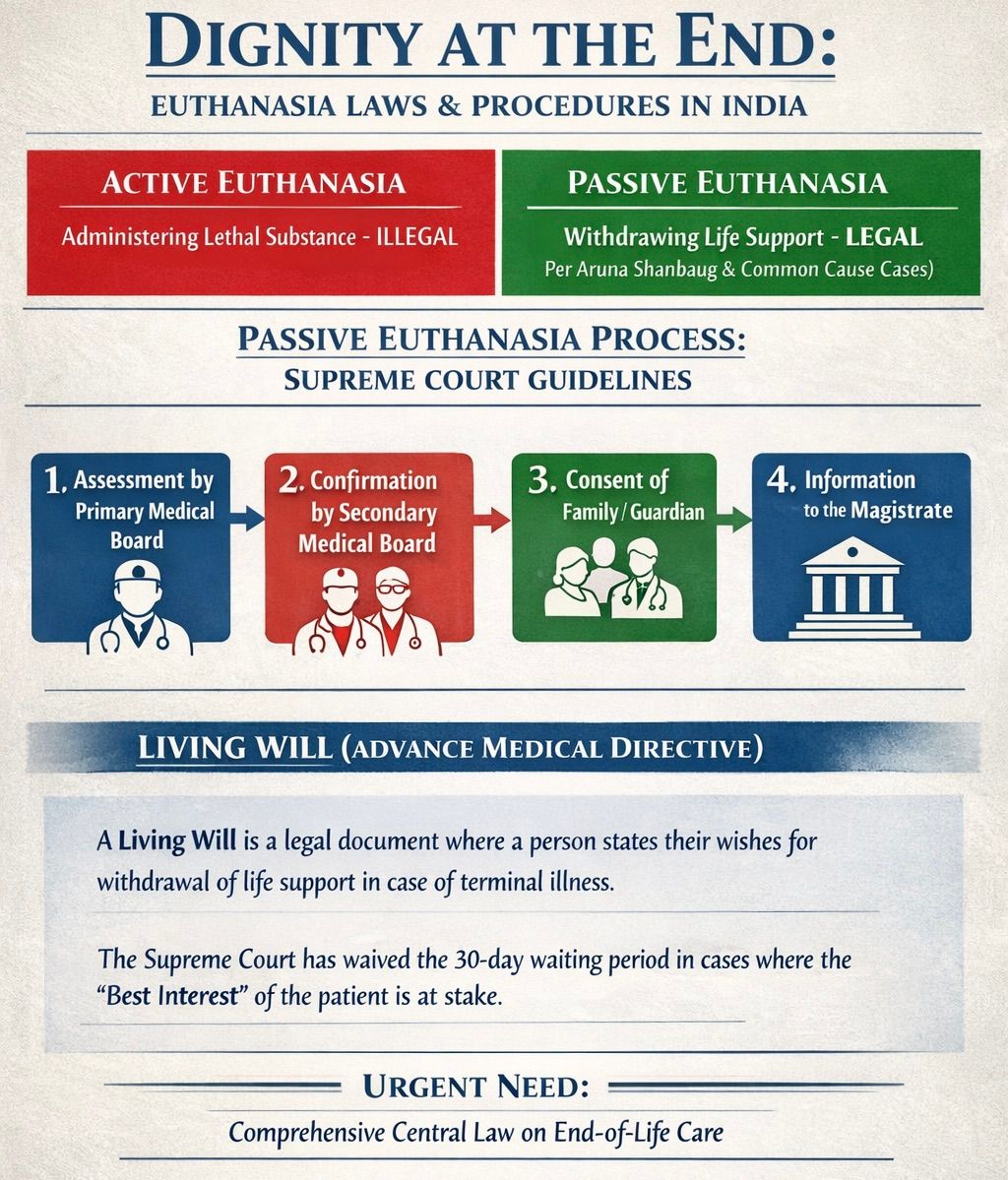
Euthanasia

SuperKalam is your personal mentor for UPSC preparation, guiding you at every step of the exam journey.
Download the App


STUDY RESOURCES
CONTACT US
ⓒ Snapstack Technologies Private Limited