GS 2: International RelationsGS 3: Environment & EcologyPrelims
The way forward on Katchatheevu, Palk Strait disputes, Pg8
India and Sri Lanka revisit Katchatheevu and Palk Strait disputes, emphasizing cooperation, conservation, and humane approaches to resolve the fisheries crisis.
Practice MCQs
855 Students attempted
Key Highlights:
- During PM Modi's visit to Colombo in April 2025, the fisheries crisis in the Palk Straits and the sovereignty of Katchatheevu island were revisited.
- Bottom trawling, banned by Sri Lanka in 2017, continues by Indian vessels, damaging marine ecosystems.
- The 1974 India-Sri Lanka Maritime Boundary Treaty placed Katchatheevu in Sri Lankan waters, a legally binding agreement.
- UNCLOS encourages cooperation in semi-enclosed seas like the Palk Bay and Gulf of Mannar, mandating joint resource management.
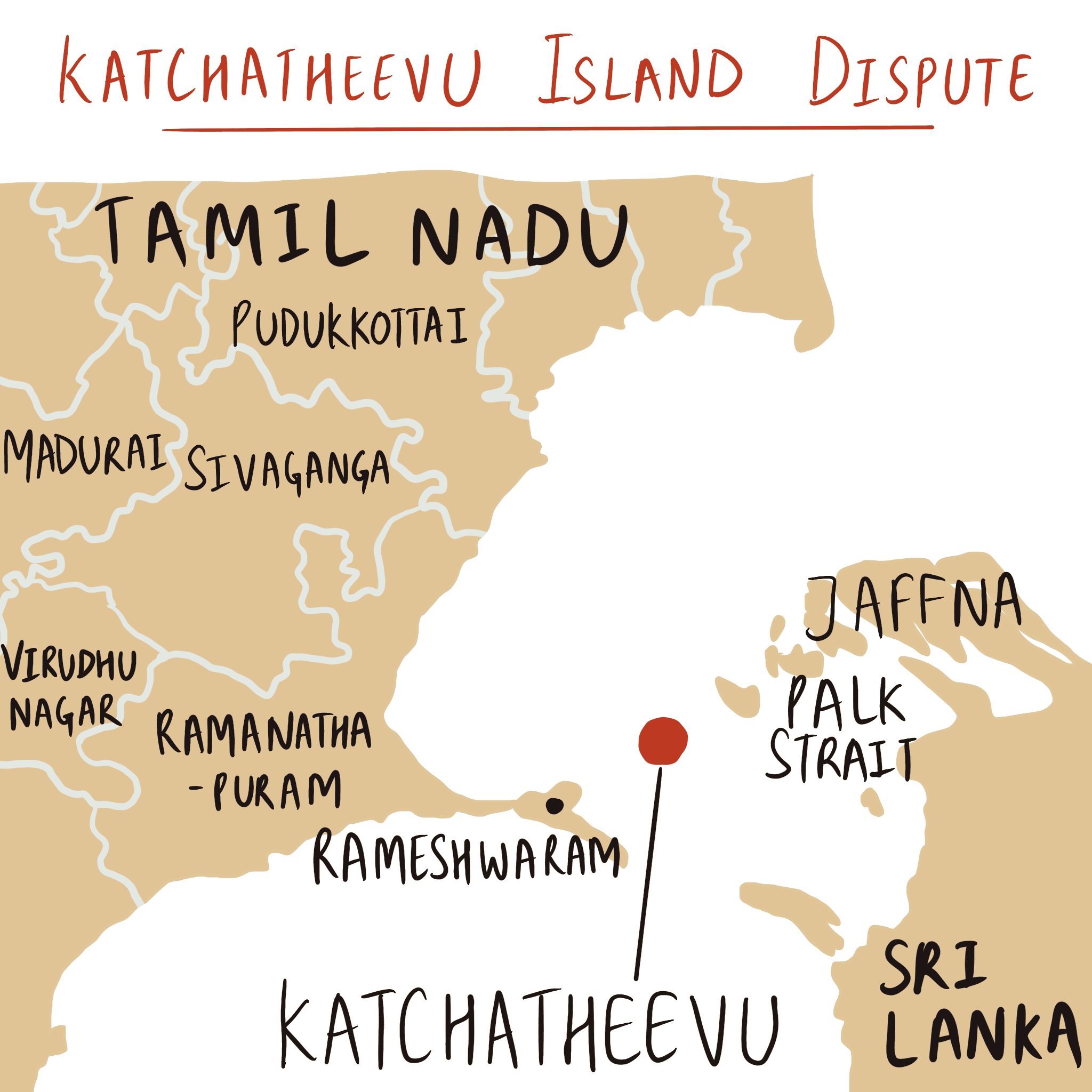
katchatheevu-island-dispute.png
Detailed Insights:
- Fishing communities have shared the Palk Straits for centuries, but disputes are intensified by mechanized bottom trawling by Indian vessels in Sri Lankan waters.
- Tamil Nadu's smaller artisanal fishers suffer due to the depletion of near-shore resources by the trawler industry, forcing them into contested waters.
- A sustainable resolution requires distinguishing between the needs of artisanal fishers and trawler operators, with regulated access for Tamil Nadu’s small fishers until India’s stocks recover.
- Katchatheevu is a tiny uninhabited islet in the Palk Straits, with the 1974 boundary settlement legally placing it in Sri Lankan waters.
- India weighed historic evidence of sovereignty before deciding on Katchatheevu, with records showing Sri Lankan administrative control dating back to Portuguese and Dutch rule.
- The Palk Straits and adjacent waters were recognized as “historic waters” under Indian and Sri Lankan law, with no “right of innocent passage” or third-state fishing rights without explicit consent.
- India and Sri Lanka could implement frameworks such as equitable quotas for fishing days and catch, and promote deep-sea fishing in India’s Exclusive Economic Zone (EEZ).
- The way forward involves government-to-government talks, State/Provincial engagement involving Tamil Nadu and Sri Lanka’s Northern Provincial Council, and community dialogue.
Key Concepts Involved:
- Bottom Trawling: A destructive fishing practice that drags heavy nets across the sea floor, damaging ecosystems.
- Pacta Sunt Servanda: A fundamental principle of international law that treaties are binding and must be performed in good faith.
- Exclusive Economic Zone (EEZ): A sea zone prescribed by UNCLOS where a state has special rights regarding the exploration and use of marine resources.

SuperKalam is your personal mentor for UPSC preparation, guiding you at every step of the exam journey.
Download the App


STUDY RESOURCES
CONTACT US
ⓒ Snapstack Technologies Private Limited