GS 3: Disaster ManagementGS 2: GovernanceGS 2: Social JusticeGS 3: EconomyPrelims
Foreseeable accidents, Pg8
Recent industrial tragedies in Surat and Visakhapatnam expose India's systemic safety failures, 'cost over safety' mindset, and exploitation of contractual labor.
Practice MCQs
840 Students attempted
Key Highlights:
- Recent industrial accidents in Surat and Visakhapatnam resulted in the deaths of four and nine workers, respectively.
- The Surat incident involved confined space entry into a septic tank, while the Visakhapatnam explosion occurred at a steel plant.
- These incidents are indicative of persistent safety failures and organizational weaknesses across Indian industries.
- A central factor contributing to these risks is the increasing reliance on contract labor, who often receive less training and operate with fragmented accountability.
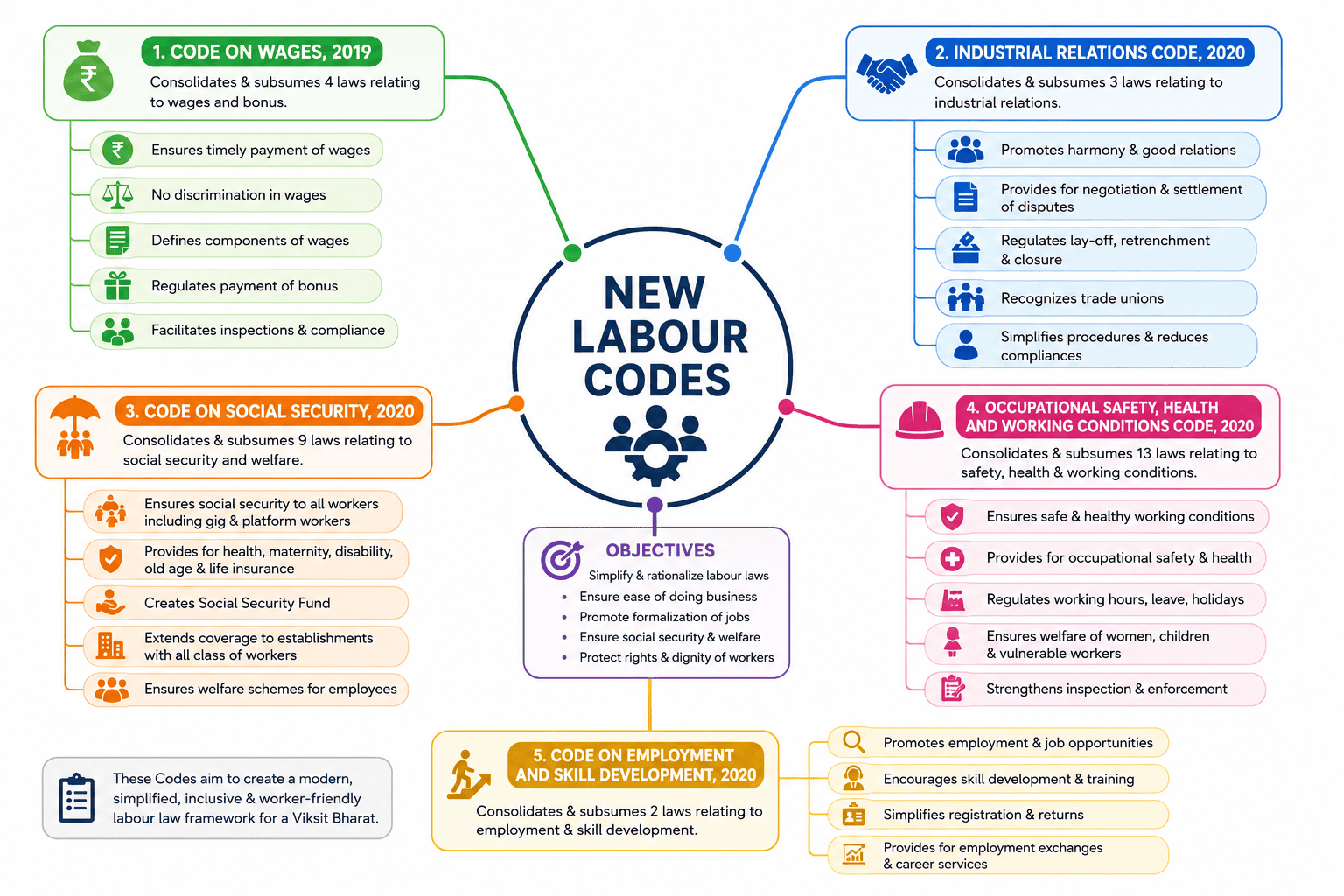
- The accidents highlight challenges during the implementation of India's new Occupational Safety, Health and Working Conditions Code, 2020.
Labour codes.png
Detailed Insights:
- The Surat tragedy, involving workers succumbing to toxic fumes in a septic tank, follows a known pattern of fatalities in confined spaces where rescuers often become victims.
- Despite the inherent dangers of steelmaking, the Visakhapatnam explosion points to systemic issues such as reduced staffing, heavier workloads, aging equipment, and deferred maintenance.
- Trade unions and former employees linked the Visakhapatnam plant's issues to the Centre’s divestment plans and resulting investment constraints, fostering a "cost over safety" mindset.
- Occupational safety research consistently shows that contracted workers face higher risks due to inadequate training and fragmented accountability systems.
- The Occupational Safety, Health and Working Conditions Code, 2020 (OSH Code), which came into full force on November 21, 2025, aims to consolidate and amend 13 old central labor laws.
- Under the new OSH Code, the principal employer now bears primary and non-delegable liability for the safety, welfare, and wage payment of all workers, including contract workers.
- Deaths in septic tanks are often misclassified as accidents, obscuring the underlying failures in basic safety management and the persistence of issues related to manual scavenging.
Key Concepts Involved:
- Occupational Safety and Health (OSH): A multidisciplinary field concerned with protecting the safety, health, and welfare of people engaged in work or employment.
- Confined Space Entry: Working in an enclosed or partially enclosed space not designed for continuous human occupancy, posing risks like toxic atmospheres or engulfment.
- Contract Labour: Workers employed by a contractor to perform work for a principal employer, often characterized by temporary employment and varied working conditions.
- Occupational Safety, Health and Working Conditions Code, 2020: A comprehensive Indian legislation enacted to consolidate and amend laws regulating occupational safety, health, and working conditions in establishments.

SuperKalam is your personal mentor for UPSC preparation, guiding you at every step of the exam journey.
Download the App


STUDY RESOURCES
CONTACT US
ⓒ Snapstack Technologies Private Limited