GS 3: Environment & EcologyGS 1: Indian GeographyGS 3: EconomyGS 2: Governance
What measures are needed to address Delhi’s heat crisis?, Pg10
Delhi grapples with intensifying heatwaves due to urbanization, demanding sustainable solutions and social protection measures to mitigate economic and ecological impacts.
Practice MCQs
833 Students attempted
Key Highlights:
- Delhi-NCR faces increasingly intense and prolonged heatwaves due to rapid urbanisation and loss of green cover.
- Concrete and glass-heavy infrastructure trap heat, raising surface temperatures to 50-60°C during peak hours.
- Cooling systems expel heat, increasing ambient temperatures by 1-2°C, creating a feedback loop of rising energy demand.
- Heat-related productivity decline costs India over $100 billion annually, impacting factories, supply chains, and transport.
Detailed Insights:
- The Urban Heat Island Effect is intensified by materials like concrete and asphalt, which absorb and slowly release heat, preventing nighttime cooling.
- Glass-heavy architecture increases reliance on air conditioning, further contributing to heat expulsion and energy consumption.
- High-density construction and loss of traditional cooling systems like courtyards restrict airflow, exacerbating heat accumulation.
- Addressing the crisis requires shifting to high-albedo surfaces, cool roofs, and expanding green infrastructure like urban forests and water bodies.
- Sustainable transport, energy-efficient appliances, and district cooling systems are crucial for reducing heat generated by human activity.
- Social protection measures like affordable housing upgrades and community cooling centers are necessary for vulnerable populations.
Key Concepts Involved:
- Urban Heat Island Effect: Metropolitan areas are significantly warmer than their surroundings due to human activities.
- High-Albedo Surfaces: Materials that reflect a high percentage of solar radiation, reducing heat absorption.
- Green Infrastructure: Network of natural and semi-natural areas designed to provide ecological services.
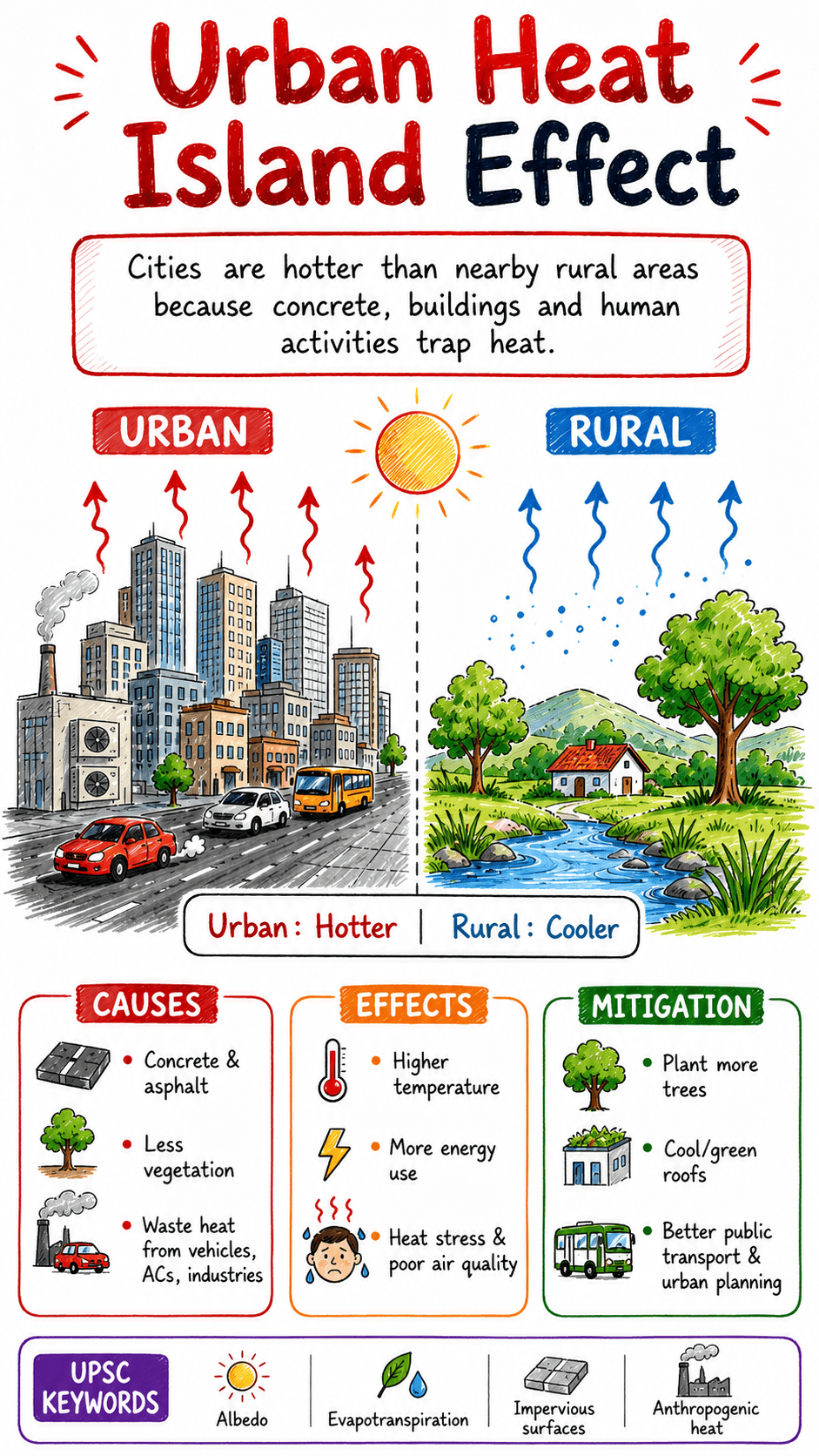
Urban Heat Island

SuperKalam is your personal mentor for UPSC preparation, guiding you at every step of the exam journey.
Download the App


STUDY RESOURCES
CONTACT US
ⓒ Snapstack Technologies Private Limited