GS 2: International RelationsGS 3: EconomyGS 2: PolityPrelims
The strait of high stakes, where law and leverage collide, Pg13
Strait of Hormuz crisis disrupts global energy supply; Iran leverages strategic position amid conflict, impacting India's security and economy.
Practice MCQs
826 Students attempted
Key Highlights:
- The Strait of Hormuz is currently a "war zone" due to a US-Israeli attack on Iran on February 28, severely disrupting global shipping.
- The disruption impacts nearly 20% of the world’s oil and 25% of LNG trade, marking the most significant energy supply crisis since the 1970s.
- Marine insurance premiums have increased by 400-600%, with Iran reportedly demanding tolls of up to $1 per barrel for transit.
- The United Nations Convention on the Law of the Sea (UNCLOS) defines regulations for maritime activities, but its application in the Strait of Hormuz is contested.
Detailed Insights:
- Maritime choke points, like the Strait of Hormuz, are narrow waterways that concentrate shipping traffic, historically amplifying naval power.
- The concept of Transit Passage under UNCLOS grants freedom of navigation through international straits, but Iran's actions challenge this regime.
- Iran's closure of the Strait conflicts with UNCLOS, as the Strait qualifies as a crucial route for international navigation, affecting global commerce.
- Despite military disadvantages, Iran uses the Strait as a strategic lever to seek concessions, given its decapitated leadership and economic embargo.
- For India, the Strait of Hormuz is vital for national security, economic growth, and stability, making its disruption a grave threat.
- India's decision to yield a mediatory role to Pakistan is a puzzling diplomatic choice, considering its ties with the US, Israel, and Iran.
- India should leverage quiet diplomacy to protect its interests and urge compliance with UN laws to prevent regional conflict and economic distress.
Key Concepts Involved:
- Maritime Choke Points: Narrow waterways critical for global shipping that can be controlled to exert naval power.
- Innocent Passage: Allows vessels to pass through a state's territorial waters with restrictions on activities and potential suspension.
- Transit Passage: Grants freedom of navigation through international straits for continuous and expeditious transit, without coastal state interference.
- UNCLOS: The United Nations Convention on the Law of the Sea, which establishes regulations for maritime activities and territorial waters.
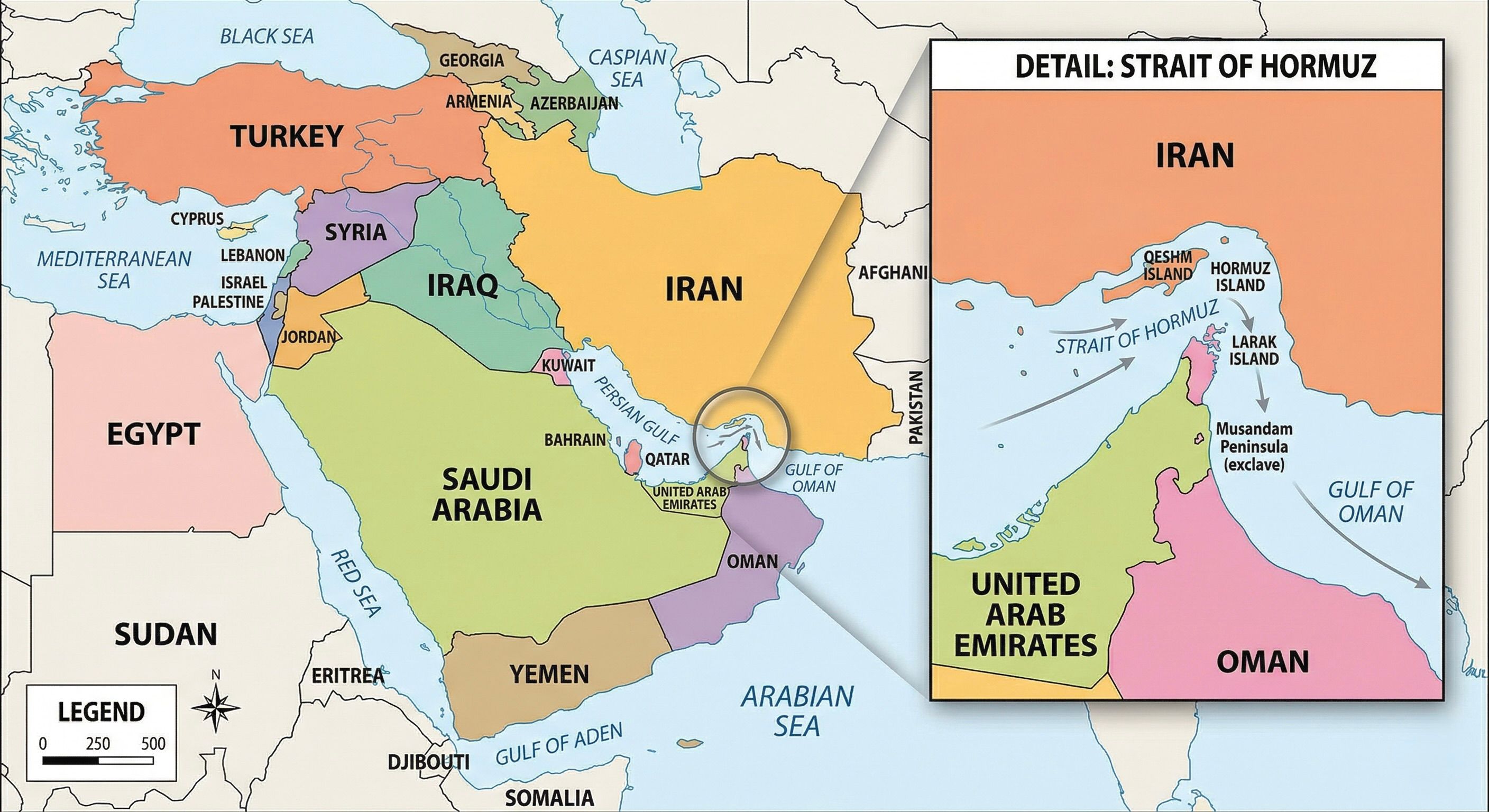
Strait of Hormuz

SuperKalam is your personal mentor for UPSC preparation, guiding you at every step of the exam journey.
Download the App


STUDY RESOURCES
CONTACT US
ⓒ Snapstack Technologies Private Limited