GS 2: Social JusticeGS 3: EconomyPrelims
Catch them young, Pg6
Childhood obesity crisis: India to have 20 million obese children by 2040, necessitating urgent health interventions and policy changes.
Practice MCQs
819 Students attempted
Key Highlights:
- The World Obesity Atlas 2026 reveals alarming rates of childhood obesity in India.
- In 2025, 14.9 million Indian children aged 5-9 and 26.4 million aged 10-19 were overweight or obese.
- By 2040, projections estimate 20 million obese and 56 million overweight children in India.
- An estimated 120 million school-aged children in India may show early signs of chronic illnesses by 2040 due to weight.
Detailed Insights:
- The rise in childhood obesity is attributed to insufficient physical activity and unhealthy food consumption.
- Poor access to healthy school meals and sub-optimal breastfeeding practices contribute to the problem.
- The World Obesity Federation advocates for marketing restrictions and sugar levies on packaged foods.
- Experts recommend stricter marketing regulations, promotion of physical activity, and healthier school food standards.
- Obesity and overweight issues, previously associated with high-income countries, are rapidly increasing in low- and middle-income countries like India.
- Untreated childhood obesity could undermine the nation's expected gains from its youth demographic.
- Early intervention is crucial to prevent the onset of non-communicable diseases in children.
Key Concepts Involved:
- Obesity: A condition characterized by excessive body fat accumulation that may impair health.
- BMI (Body Mass Index): A measure of body fat based on height and weight.
- Non-Communicable Diseases: Diseases that are not infectious and cannot be transmitted from person to person.
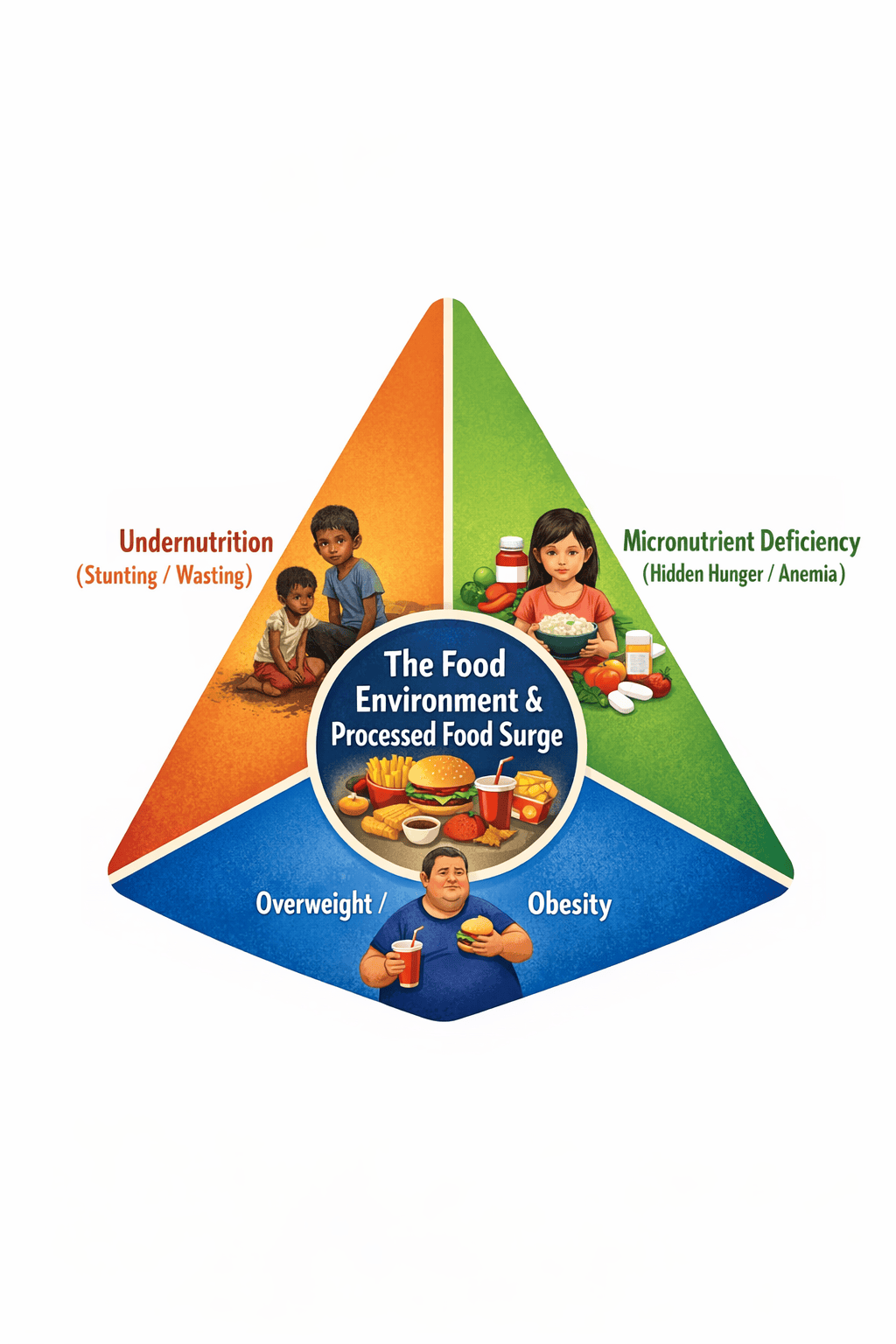
Triple Burden

SuperKalam is your personal mentor for UPSC preparation, guiding you at every step of the exam journey.
Download the App


STUDY RESOURCES
CONTACT US
ⓒ Snapstack Technologies Private Limited