GS 3: EconomyGS 1: Post-Independence IndiaPrelims
Nine years after demonetisation: Currency with public remains high, Pg13.
Despite demonetization, currency with public doubles to ₹37.29 lakh crore by October 2025, but CIC-to-GDP ratio declines.
Practice MCQs
862 Students attempted
Key Highlights:
- Currency with the public has more than doubled since the 2016 demonetization, reaching Rs 37.29 lakh crore as of October 17, 2025, up from Rs 17.97 lakh crore on November 4, 2016.
- Demonetization, announced on November 8, 2016, invalidated Rs 500 and Rs 1,000 notes, which constituted 86% of the currency in circulation.
- The currency-to-GDP ratio in India has decreased to 11.11% in 2025 from 12.1% in March 2016, although it surged to 14.5% in FY21.
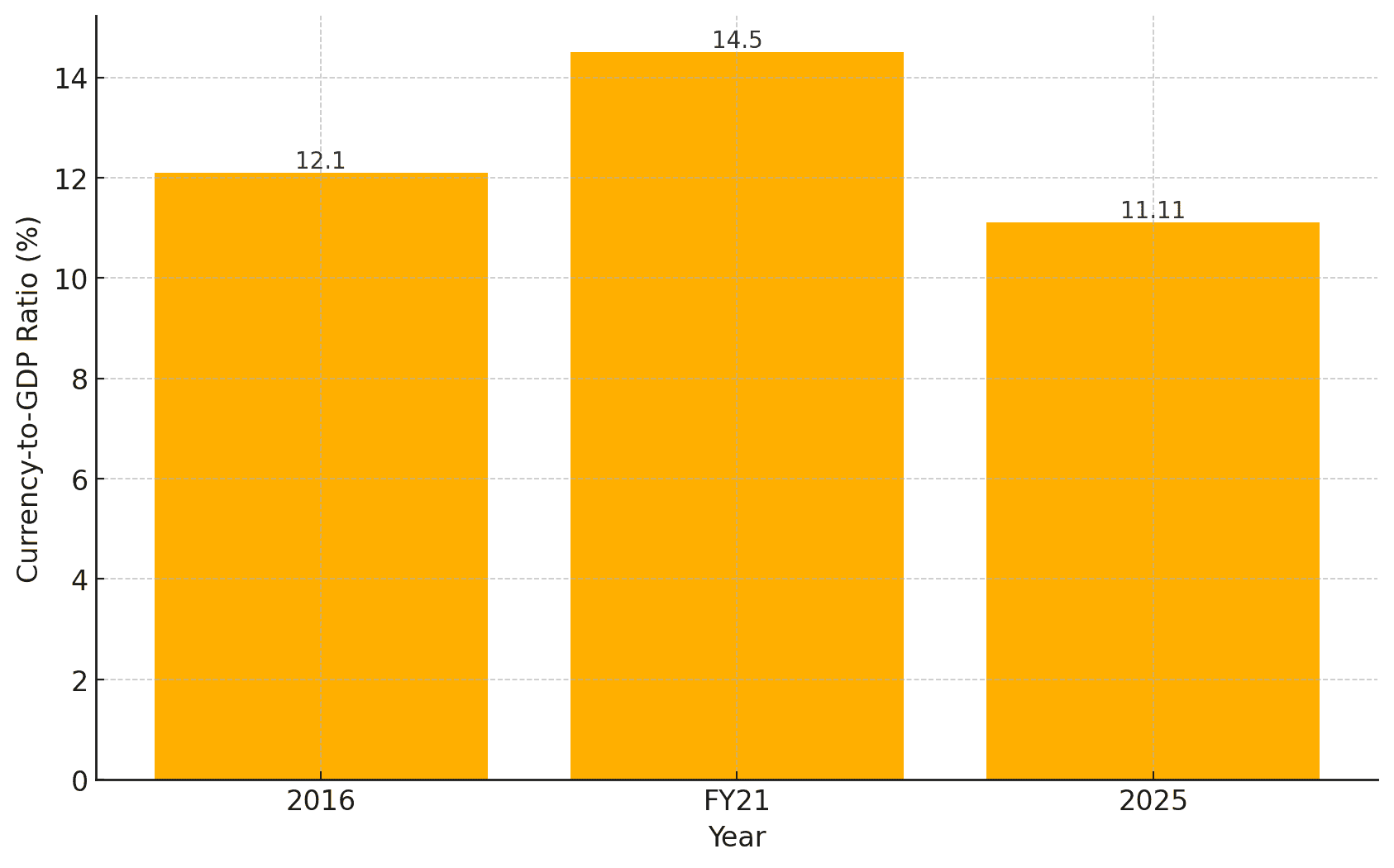
Currency-to-GDP Ratio in India.png
Detailed Insights:
- The 2016 demonetization caused a fall in demand, a crisis for businesses, and a GDP growth decline of nearly 1.5%, with many small units forced to close due to liquidity shortages.
- The increase in cash with the public in 2020-21 was largely due to a rush for cash following the government's announcement of a stringent lockdown to combat the spread of the Covid pandemic.
- Currency with the public is calculated by subtracting cash with banks from the total currency in circulation (CIC); in the fortnight ending October 17, it increased by Rs 30,709 crore year-on-year, up Rs 3.13 lakh crore.
- India's currency-to-GDP ratio is higher compared to countries like Japan, the Eurozone, China, Russia and the US due to its large cash-dependent informal economy and cultural preference for holding cash.
- A high CIC-to-GDP ratio suggests a strong reliance on cash for transactions, while a lower ratio indicates a shift towards digital payments and formal financial systems.
Key Concepts Involved:
- Demonetization: The act of stripping a currency unit of its status as legal tender.
- Currency in Circulation (CIC): The total value of currency notes and coins issued by a country's monetary authority that are currently in use within the economy.
- GDP: The total monetary or market value of all the finished goods and services produced within a country’s borders in a specific time period.

SuperKalam is your personal mentor for UPSC preparation, guiding you at every step of the exam journey.
Download the App


STUDY RESOURCES
CONTACT US
ⓒ Snapstack Technologies Private Limited