GS 3: EconomyGS 3: Science & TechnologyGS 2: GovernanceGS 2: Social Justice
Does India need nutritional transformation?, Pg8
India poised for nutritional transformation via functional foods and smart proteins, demanding regulatory clarity and public-private partnerships for sustainable growth.
Practice MCQs
862 Students attempted
Key Highlights:
- Functional foods and smart proteins are emerging as key components of India's nutritional transformation, addressing issues like stunting and protein deficiency.
- India's BioE3 policy recognizes functional foods and smart proteins, with the DBT and BIRAC initiating funding programs in these areas.
- In 2023, over 70 smart protein brands in India sold an estimated 377 products, including plant-based meat, eggs, and dairy alternatives.
- FSSAI is yet to issue definitive guidance on novel foods like cultivated meat or precision-fermented proteins, creating a regulatory gap.
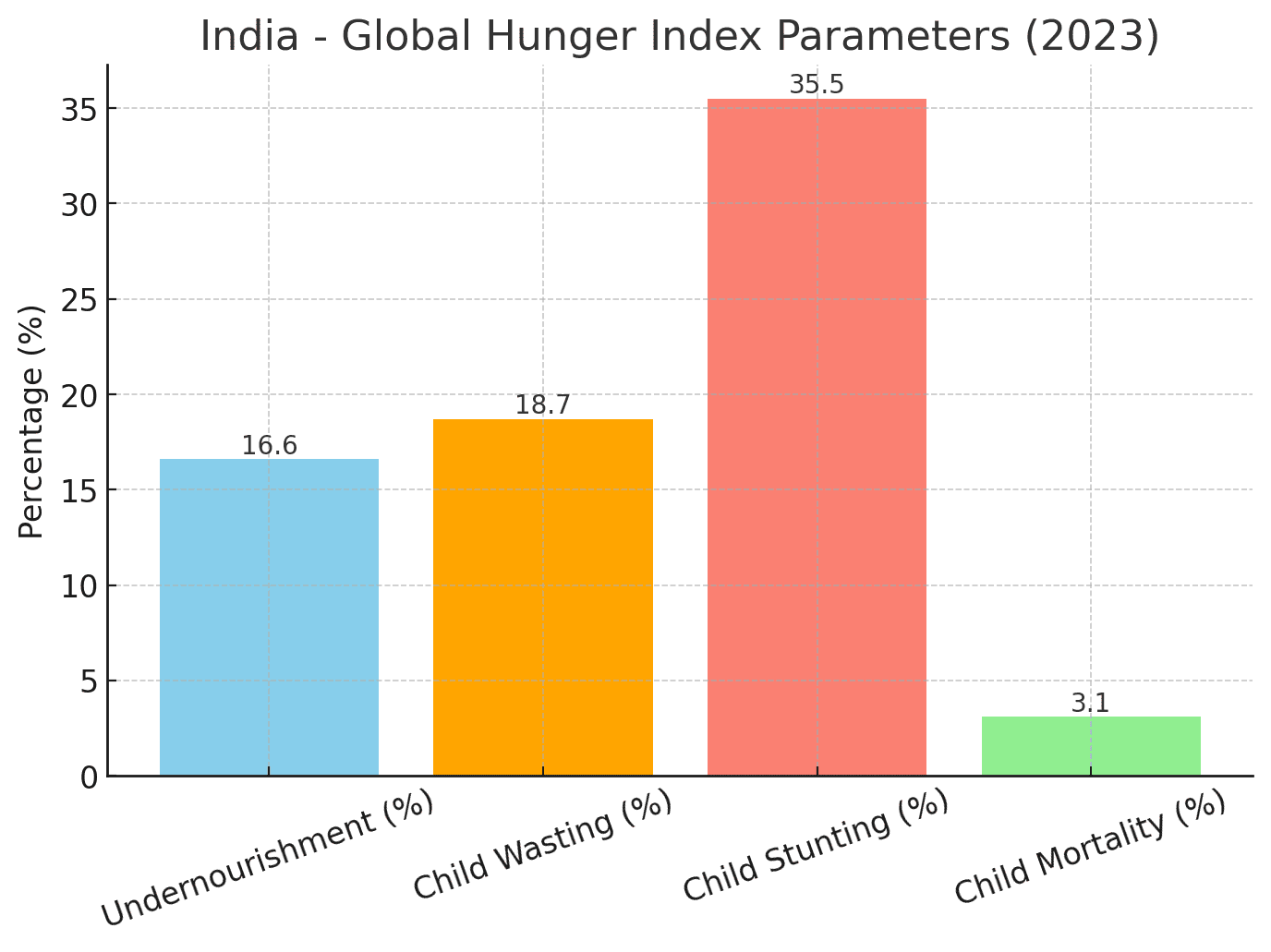
India - Global Hunger Index Parameters (2023).png
Detailed Insights:
- India's focus is shifting from food security to nutritional security, emphasizing foods rich in proteins, antioxidants, and vitamins to meet health goals.
- Functional foods include vitamin-enriched rice and omega-3-fortified milk, utilizing technologies like nutrigenomics and bio-fortification.
- Smart proteins encompass plant-based proteins, fermentation-derived proteins, and cultivated meat, aiming to reduce reliance on conventional production methods.
- Other countries like Singapore (cultivated chicken approval in 2020) and China (prioritizing alternative proteins) are advancing in the smart protein sector.
- A national regulatory framework under FSSAI is needed to provide clarity on definitions, safety evaluation, and labeling for functional and alternative protein products.
- Public-private partnerships can help scale biomanufacturing infrastructure and indigenize critical technologies like precision fermentation.
Key Concepts Involved:
- Functional Foods: Enriched foods promoting health or preventing disease.
- Smart Proteins: Proteins sourced using biotechnology to reduce reliance on conventional production.
- Nutritional Security: Providing food rich in essential nutrients to meet health and developmental goals.
- Biomanufacturing: Using biological systems to produce materials and products on a commercial scale.

SuperKalam is your personal mentor for UPSC preparation, guiding you at every step of the exam journey.
Download the App


STUDY RESOURCES
CONTACT US
ⓒ Snapstack Technologies Private Limited