GS 3: Environment & EcologyGS 2: GovernancePrelims
Pollution monitoring stations on rivers, Pg9
Kerala Pollution Board proposes river monitoring stations, targets full control in two years, with industries adopting new effluent treatment methods.
Practice MCQs
833 Students attempted
Key Highlights:
- The Kerala State Board for Prevention and Control of Water Pollution proposed setting up monitoring stations on major rivers in Kerala to combat massive pollution.
- These stations aimed to gather information for devising effective control programmes to keep rivers clean.
- The Board committed to maintaining a constant watch on the quality of industrial effluents and ensuring compliance with prescribed standards.
- Regular inspection and analysis of effluent treatment installations were planned to ensure efficient operation.
- Industries like Gwalior Rayons (Calicut) and FACT (Cochin division) were cited for their efforts in developing methods to reduce effluent impact.
- The Board expressed determination to achieve full control over water pollution problems in the state within two years.
Water Governance.png
Detailed Insights:
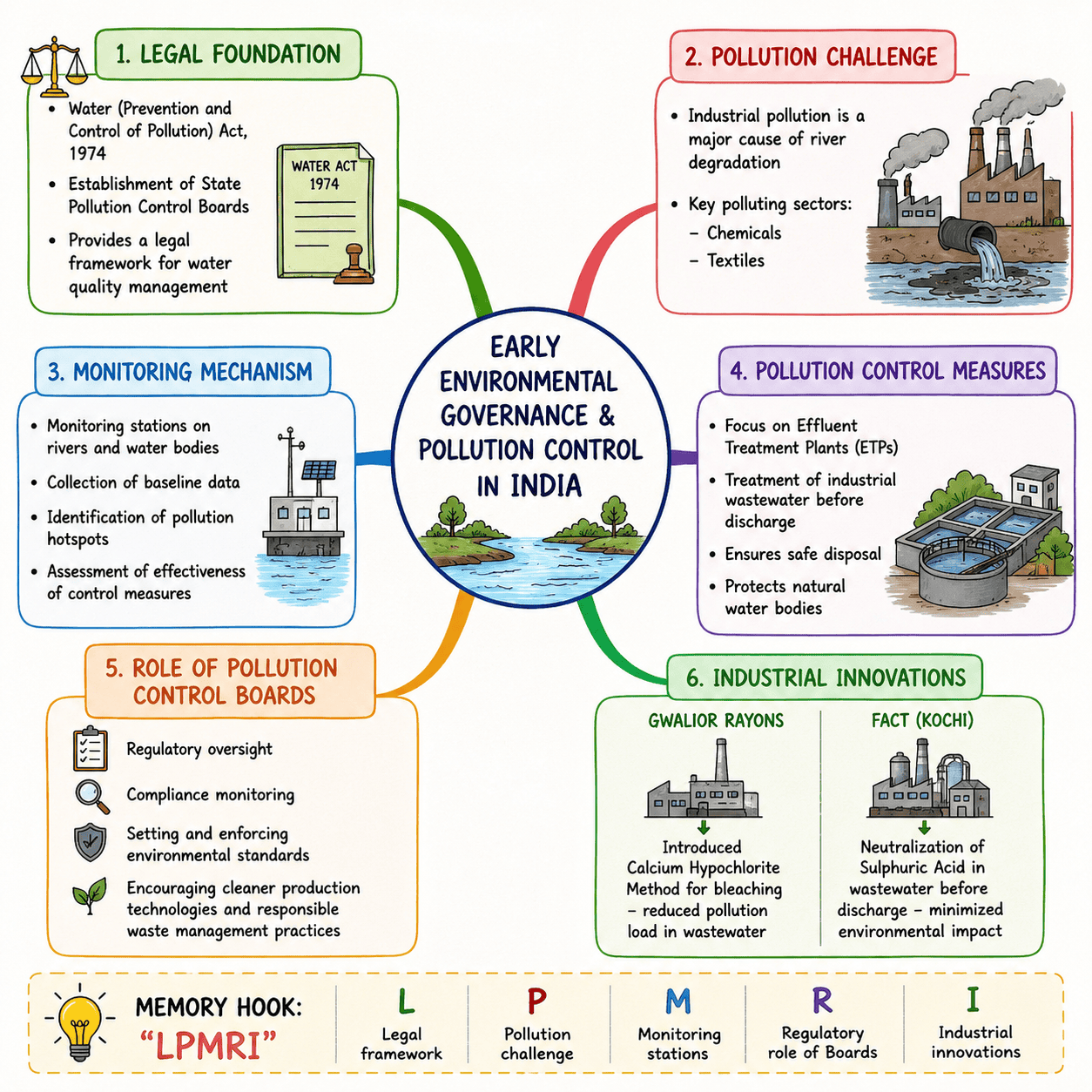
- The initiative highlights early efforts in India towards environmental governance and pollution control at the state level.
- The establishment of such boards was mandated by the Water (Prevention and Control of Pollution) Act, 1974, providing a legal framework for water quality management.
- Industrial pollution, particularly from sectors like chemicals and textiles, has historically been a significant contributor to river degradation.
- Monitoring stations are crucial for collecting baseline data, identifying pollution hotspots, and assessing the effectiveness of control measures.
- The focus on effluent treatment plants (ETPs) underscores the importance of treating industrial wastewater before discharge into natural water bodies.
- The Board's role involves both regulatory oversight and encouraging industries to adopt cleaner production technologies and responsible waste management practices.
- Early examples of industrial innovation, such as Gwalior Rayons' calcium hypochlorite method and FACT's neutralization of sulphuric acid, demonstrate industry's role in addressing environmental challenges.
Key Concepts Involved:
- Water Pollution: Contamination of water bodies, making them unsuitable for designated uses and harming aquatic ecosystems.
- Effluent Treatment: Processes used to remove contaminants from industrial wastewater before its discharge into the environment.
- Pollution Control Board: Statutory bodies established under environmental laws to prevent, control, and abate pollution.

SuperKalam is your personal mentor for UPSC preparation, guiding you at every step of the exam journey.
Download the App


STUDY RESOURCES
CONTACT US
ⓒ Snapstack Technologies Private Limited