GS 1: Physical GeographyGS 3: Disaster ManagementGS 2: Social JusticePrelims
Heat wave in Delhi, Pg9
Intense Delhi heatwave melts Chandni Chowk asphalt, tragically claiming lives of infants and children amidst soaring temperatures.
Practice MCQs
833 Students attempted
Key Highlights:
- Delhi is experiencing a severe heatwave in early June, leading to extreme conditions.
- The intense heat has caused asphalt roads to soften, notably in Chandni Chowk.
- A significant increase in mortality has been reported among infants and children, with some deaths also among adults.
- Traditional cooling methods like khas khaska tatti and electric fans are proving ineffective against the high temperatures.
Heatwave.png
Detailed Insights:
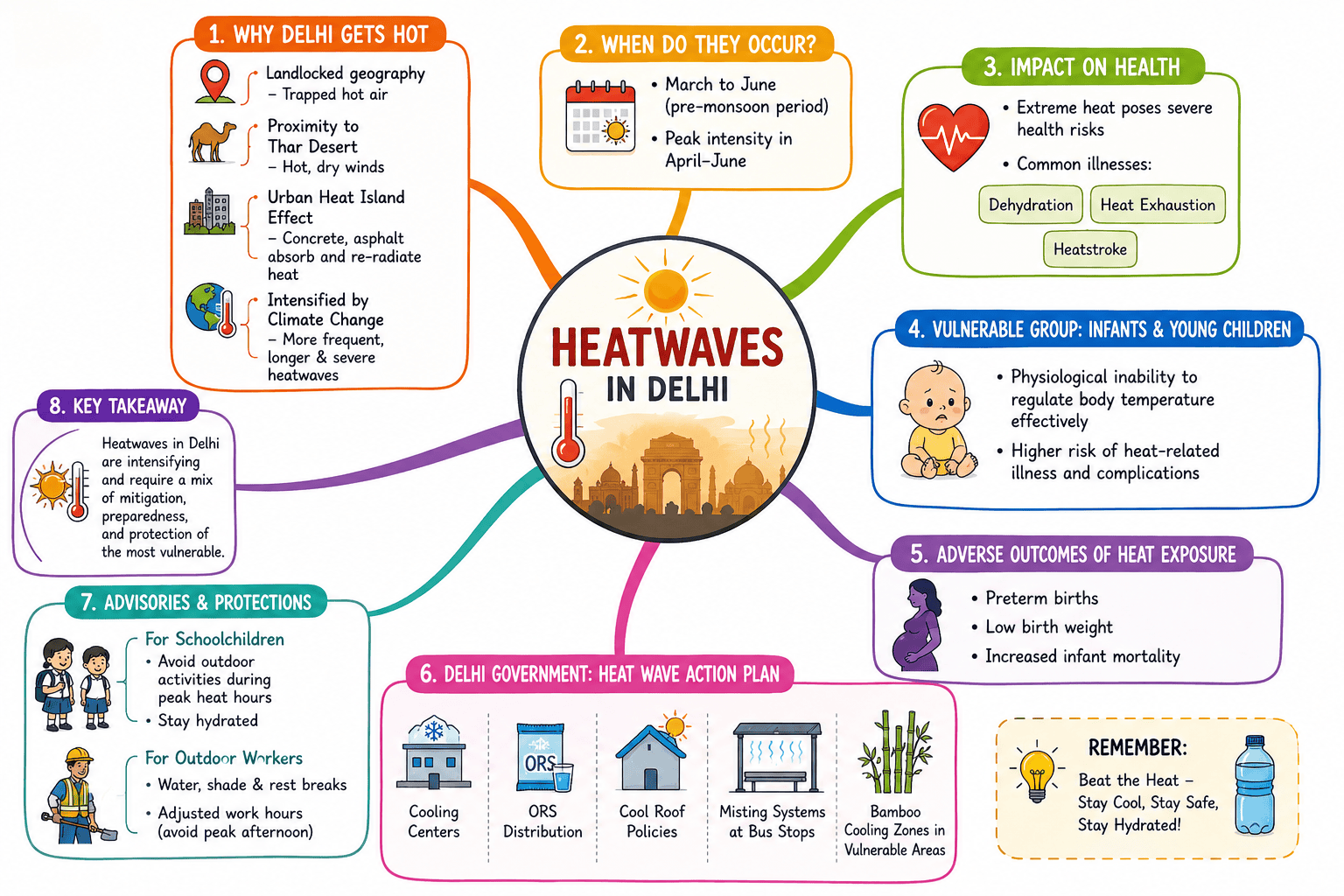
- Heatwaves in Delhi are exacerbated by its landlocked geography, proximity to the Thar Desert, and the Urban Heat Island Effect.
- These conditions typically occur from March to June, preceding the monsoon, and are intensified by climate change.
- Extreme heat poses severe health risks, including dehydration, heat exhaustion, and heatstroke.
- Infants and young children are particularly vulnerable due to their physiological inability to regulate body temperature effectively.
- Heat exposure can lead to adverse outcomes such as preterm births, low birth weight, and increased infant mortality.
- The Delhi government has implemented a Heat Wave Action Plan, including cooling centers, ORS distribution, and cool roof policies.
- Measures also involve installing misting systems at bus stops and establishing bamboo cooling zones in vulnerable areas.
- Advisories are issued for schoolchildren and outdoor workers, with provisions for water, shade, and adjusted work hours.
Key Concepts Involved:
- Heatwave: A period of abnormally high temperatures, significantly above the normal maximum, for a given region.
- Urban Heat Island Effect: A phenomenon where urban areas experience higher temperatures than surrounding rural areas due to human activities and infrastructure.
- Mortality Rate: The number of deaths in a given population over a specific period, often expressed per 1,000 individuals.
- Khas Khaska Tatti: Traditional cooling screens made from vetiver grass, used to cool air when water is passed over them.

SuperKalam is your personal mentor for UPSC preparation, guiding you at every step of the exam journey.
Download the App


STUDY RESOURCES
CONTACT US
ⓒ Snapstack Technologies Private Limited