GS 2: GovernanceGS 2: Social JusticeGS 3: EconomyGS 1: Indian GeographyPrelims
Govt. notifies resettlement census on Nicobar island, Pg14
Andaman administration initiates crucial resettlement census on Great Nicobar Island for the massive ₹92,000 crore port, airport, and township project.
Practice MCQs
833 Students attempted
Key Highlights:
- The Andaman and Nicobar Islands administration has initiated a resettlement and rehabilitation (R&R) census in Great Nicobar Island.
- This census, which began on June 10, is for families affected by the trunk infrastructure development of a ₹92,000 crore mega-project.
- The project includes a container port, airport, and tourist township, with a timeline extending up to 2050.
- Document verification for affected families is being conducted at the recreation hall in Kamal Basti, requiring approximately 24 different types of documents.
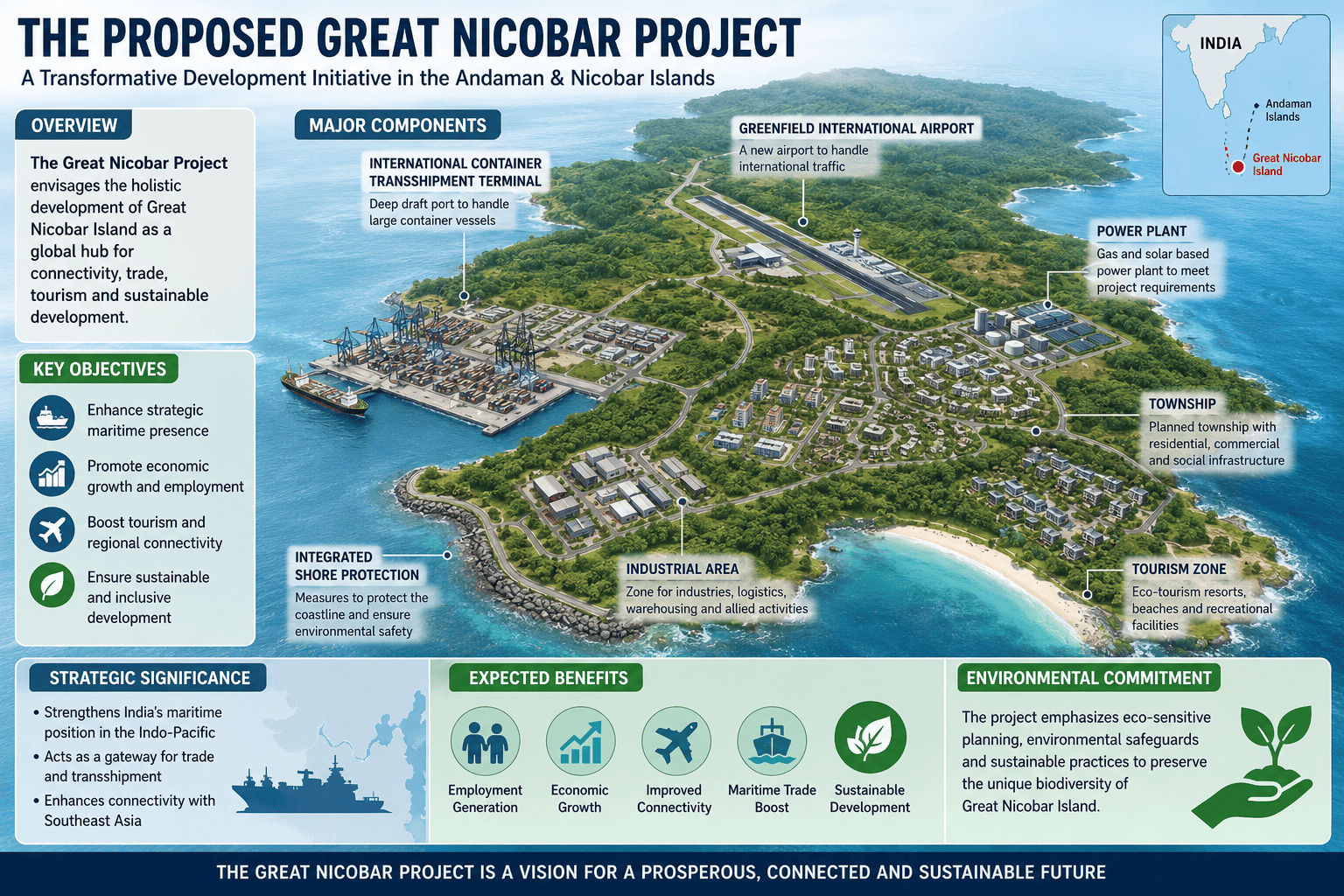
Great Nicobar Project.png
Detailed Insights:
- The mega-infrastructure initiative, officially known as the Holistic Development of Great Nicobar Island, aims to transform the island into a major economic and strategic hub.
- Key components of the project include an International Container Transshipment Terminal (ICTT) at Galathea Bay, a dual-use greenfield airport for civilian and military operations, a 450 MVA hybrid gas-solar power plant, and a modern township.
- The project holds significant strategic importance for India, aiming to strengthen its maritime presence in the Indian Ocean Region (IOR) and reduce reliance on foreign transshipment hubs like Singapore and Colombo.
- It is also intended to enhance India's defense capabilities and aligns with the Act East Policy and Sagarmala initiative.
- Environmental concerns include the diversion of approximately 130 to 166 square kilometers of forest land, potentially leading to the felling of nearly one million trees.
- The project poses a threat to the Great Nicobar Biosphere Reserve, a UNESCO Man and Biosphere (MAB) site, and critical ecosystems such as Galathea Bay, a nesting site for the endangered Giant Leatherback Sea Turtle, as well as coral reefs and mangroves.
- Significant concerns have been raised regarding the impact on indigenous communities, particularly the Shompen, a Particularly Vulnerable Tribal Group (PVTG), and the Nicobarese tribes.
- Critics highlight potential threats of habitat loss, exposure to diseases, and the absence of Free Prior and Informed Consent (FPIC) from these communities.
- The government maintains that the project is a strategic investment, projecting over one lakh direct and indirect employment opportunities, and has planned a ₹2,220 crore conservation package for wildlife and ecosystems.
Key Concepts Involved:
- Resettlement and Rehabilitation (R&R): The process of compensating and relocating individuals and communities displaced due to development projects.
- Trunk Infrastructure: Primary, shared infrastructure networks such as major roads, water supply systems, sewerage, and power grids that serve a broader community or catchment area.
- Particularly Vulnerable Tribal Group (PVTG): A sub-category within Scheduled Tribes, identified by specific criteria indicating a pre-agricultural level of technology, stagnant or declining population, extremely low literacy, and a subsistence economy.

SuperKalam is your personal mentor for UPSC preparation, guiding you at every step of the exam journey.
Download the App


STUDY RESOURCES
CONTACT US
ⓒ Snapstack Technologies Private Limited