GS 2: PolityGS 2: Governance
Winter Session from Dec 1–19; Opposition Targets Govt over 15 Working Days, Pg 8.
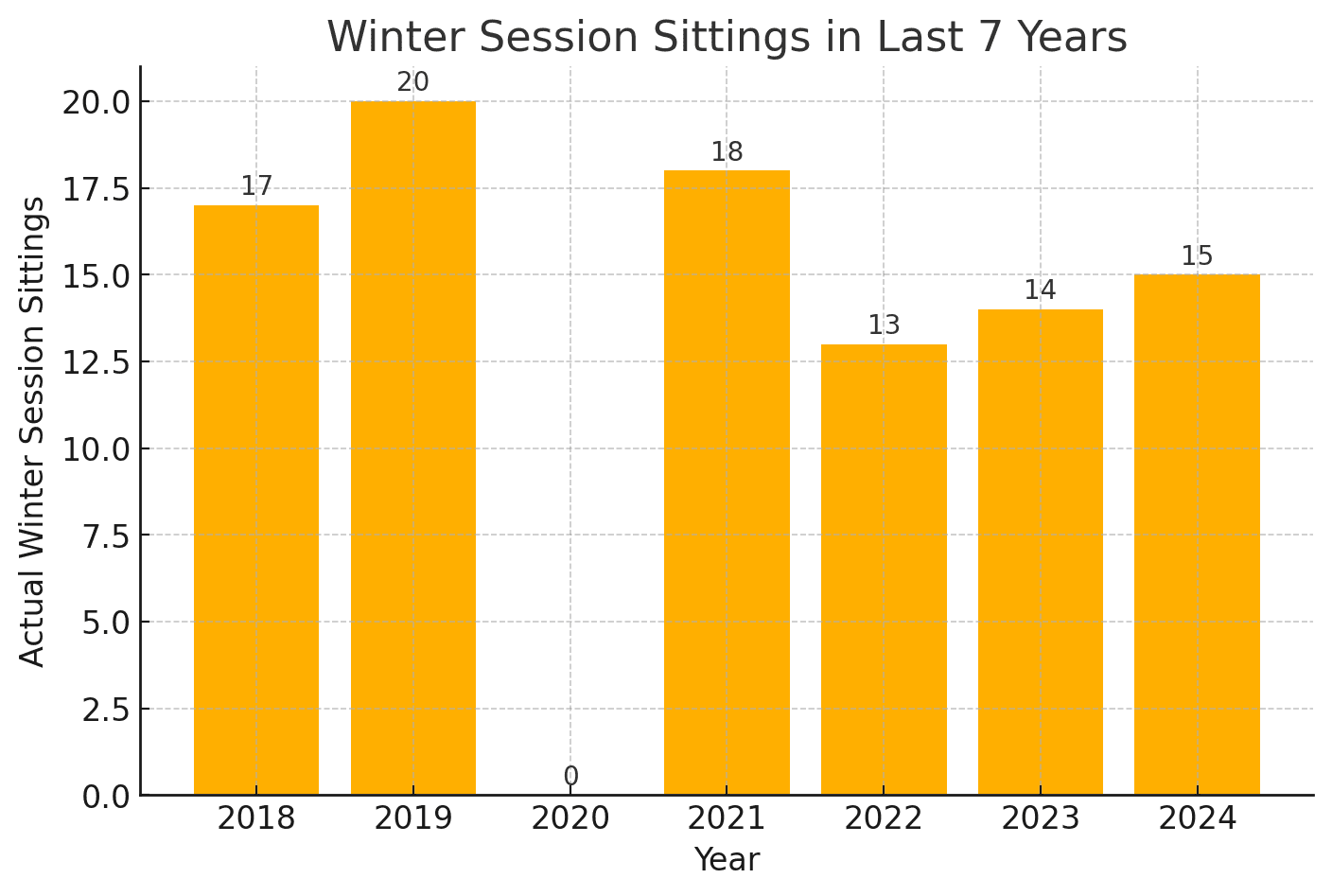
The Government has announced that the Winter Session of Parliament will be held from December 1 to 19, with only 15 working days, prompting criticism from Opposition parties who claim the session is being “truncated” to avoid debate on key issues.
Practice MCQs
855 Students attempted
Key Highlights:
- The session will run from Dec 1–19, subject to exigencies of government business.
- Opposition alleges the short schedule reflects government’s attempt to avoid discussions on critical issues.
- Major issues likely to be raised:
- SIR (Special Investigation Report) and “vote-chori” (electoral malpractice) allegations.
- Centre–State fiscal relations, including dues to states.
- Foreign policy decisions and border issues.
- Congress and INDIA bloc plan to highlight “weakening of federal institutions” and demand accountability on governance issues.
- Parliamentary Affairs Minister Kiren Rijiju dismissed criticism, stating the government is ready for discussion.
Winter Sesson Sittings.png
Detailed Insights:
- Trend of Shorter Sessions:
- Data since 2014 shows a decline in number of sittings in Winter Sessions (barring exceptions).
- 2020 saw no Winter Session due to Covid-19 pandemic.
- Critics argue fewer sittings undermine Parliament’s deliberative and oversight role.
- Opposition’s Strategic Priorities:
- Focus on electoral irregularities, unemployment, inflation, and Centre’s financial dues to states under schemes like MGNREGA.
- Aim to position the INDIA bloc as defender of federalism and institutional checks.
- Government’s Position:
- Claims Opposition is obstructing functioning by disruptions rather than debate.
- Emphasizes legislative priorities may include pending Bills and policy approvals.
- Parliamentary Productivity Context:
- The quality of debate and continuity of sessions are key indicators of democratic strength.
- Shortened sessions reduce time for scrutiny of Bills, increasing risk of hurried legislation.
Scientific/Technical Concepts Involved:
- Parliamentary Calendar: Three main sessions—Budget, Monsoon, and Winter; number and length vary.
- Legislative Scrutiny: Examination of Bills by standing committees to ensure constitutional and administrative soundness.
- Federal Fiscal Transfers: Centre-to-state payments under tax devolution, grants, and centrally sponsored schemes.

SuperKalam is your personal mentor for UPSC preparation, guiding you at every step of the exam journey.
Download the App


STUDY RESOURCES
CONTACT US
ⓒ Snapstack Technologies Private Limited