GS 3: EconomyGS 2: International RelationsPrelims
Russian oil share in India’s imports rises, Pg1
India's Russian oil imports hit 40% share in May 2026, paying premium prices, driving a 66% surge in the overall import bill.
Practice MCQs
833 Students attempted
Key Highlights:
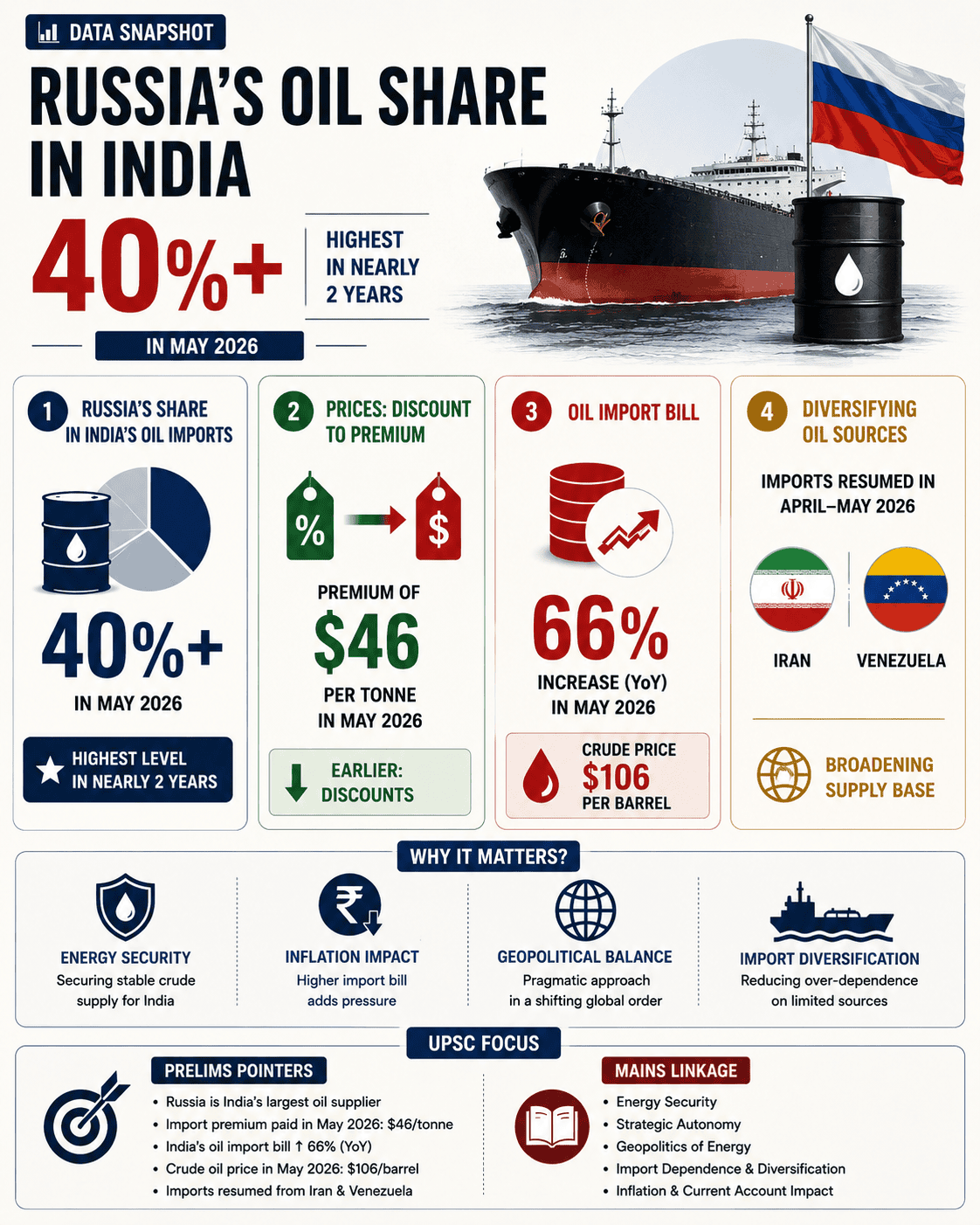
- Russia's share in India's oil imports surpassed 40% in May 2026, marking the highest level in nearly two years.
- India paid a premium of approximately $46 per tonne for Russian oil in May 2026, contrasting with earlier discounts.
- India's total oil import bill rose by 66% in May 2026 compared to the previous year, primarily due to higher global crude prices, which reached $106 per barrel.
- The Ministry of Commerce and Industry data indicates India's efforts to diversify oil sources, resuming imports from Iran and Venezuela in April and May 2026.
- Despite a 2% decrease in volume, the value of oil imports from Russia increased by 83% in May 2026 year-on-year, reflecting the higher prices.
Russia oil Share.png
Detailed Insights:
- The increase in Russia's oil share highlights the evolving dynamics of global energy trade and India's pragmatic approach to securing its energy needs.
- India's strategy involves balancing geopolitical considerations with economic imperatives, such as cost control and inflation management.
- The resumption of oil imports from Iran and Venezuela signifies India's commitment to diversification of energy sources to reduce reliance on any single supplier.
- Higher global oil prices significantly impacted India's import bill, underscoring the nation's vulnerability as the world's third-largest oil importer.
- The Ministry of Petroleum and Natural Gas provides crucial data on oil prices, which directly influence India's economic stability and trade deficit.
- India's refiners prioritize securing competitive crude at favorable rates to maintain refining margins and support domestic fuel production and export revenue.
Key Concepts Involved:
- Energy Security: The uninterrupted availability of energy sources at an affordable price to support a nation's economy and population.
- Diversification of Energy Sources: A strategy to reduce dependence on a limited number of energy suppliers or types, enhancing resilience against supply disruptions and price volatility.

SuperKalam is your personal mentor for UPSC preparation, guiding you at every step of the exam journey.
Download the App


STUDY RESOURCES
CONTACT US
ⓒ Snapstack Technologies Private Limited