GS 2: GovernanceGS 3: EconomyGS 2: Social JusticePrelims
VB-G RAM G Act: Centre yet to fix parameters before roll-out, Pg1
Centre yet to finalize objective parameters for fund allocation under VB-G RAM G Act, 2025, replacing MGNREGA and increasing guaranteed employment days.
Practice MCQs
804 Students attempted
Key Highlights:
- The Viksit Bharat - Guarantee for Rozgar and Ajeevika Mission (Gramin) (VB-G RAM G) Act, 2025 is awaiting implementation, with the Union Rural Development Ministry consulting with State governments.
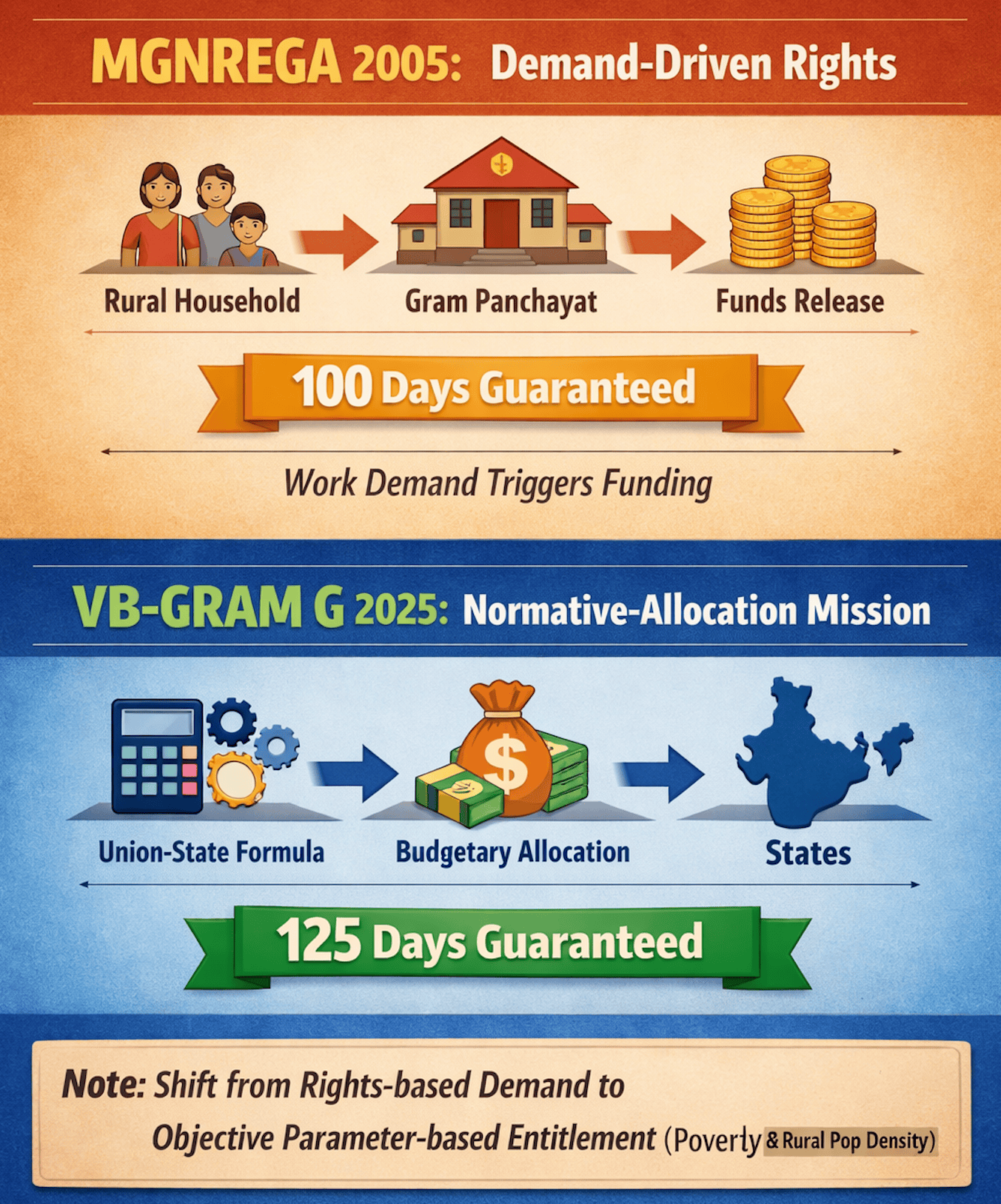
- A key challenge is finalizing the formula for "normative allocation" to States, based on objective parameters yet to be determined by the Union government.
- The Union government needs to frame rules under 11 categories, including social audit of the scheme.
- The VB-G RAM G Act replaces the Mahatma Gandhi National Rural Employment Guarantee Act (MGNREGA), 2005.
- The VB-G RAM G Act, 2025, guarantees up to 125 days of wage employment per financial year, an increase from MGNREGA's 100 days.
Detailed Insights:
- The VB-G RAM G Act, 2025 was passed by Parliament in December of last year, within two days of its introduction.
- The central government will determine state-wise normative allocation for each financial year, based on objective parameters as prescribed.
- A logo design competition for the VB-G RAM G Act is live on the MyGov platform, with a cash prize of ₹50,000 for the winner; the last date for submissions is March 20.
- The VB-G RAM G Act aims to provide a statutory guarantee of up to 125 days of wage employment in a financial year for rural households undertaking unskilled manual work.
- The act replaces MGNREGA, which provided 100 days of guaranteed wage employment.
Key Concepts Involved:
- Normative Allocation: A formula used by the central government to distribute funds to states based on pre-determined criteria.
- Social Audit: A process where scheme implementation is reviewed by stakeholders, especially intended beneficiaries.
- Wage Employment: Employment where individuals are hired and paid for their labor, typically on an hourly or daily basis.
VB- GRAM G

SuperKalam is your personal mentor for UPSC preparation, guiding you at every step of the exam journey.
Download the App


STUDY RESOURCES
CONTACT US
ⓒ Snapstack Technologies Private Limited