GS 3: Environment & EcologyGS 1: Physical GeographyPrelims
Cooling effect: on the wane, PgII
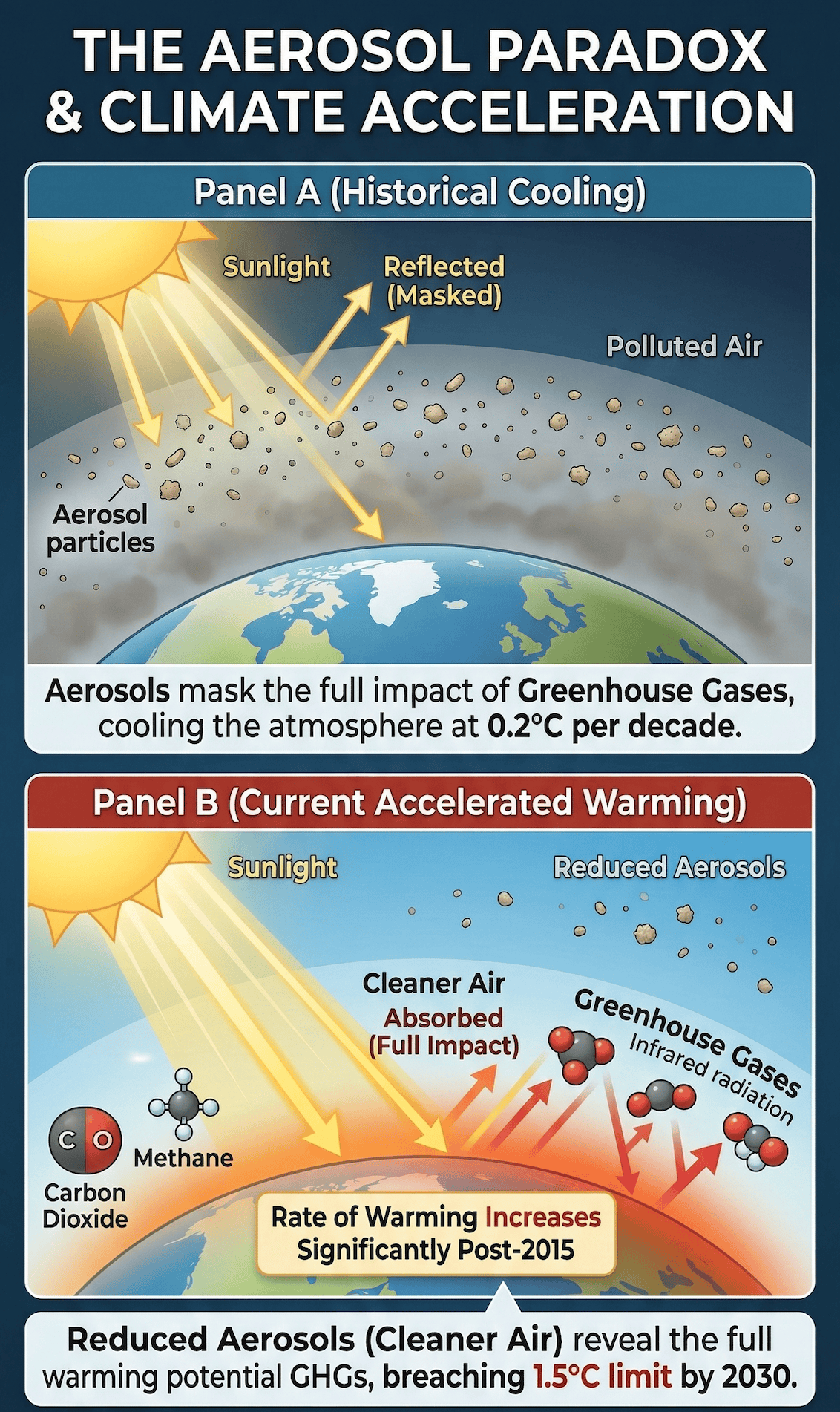
Global warming accelerates significantly post-2015, breaching 1.5°C Paris Agreement limit by 2030 due to decreased aerosol levels.
Practice MCQs
804 Students attempted
Key Highlights:
- A study in Geophysical Research Letters confirms accelerated global warming.
- The rate of warming has increased significantly since around 2015.
- Reduced aerosol levels due to cleaner air are likely contributing to the acceleration.
- The 1.5°C limit set by the Paris Agreement could be breached by 2030 at the current rate.
Detailed Insights:
- For decades, the Earth's temperature increased at a rate of 0.2°C per decade.
- Researchers from the University of Potsdam removed natural factors like volcanic eruptions and solar cycles from temperature datasets.
- The accelerated warming trend is reported with 98% confidence.
- Decreased aerosols, which previously masked warming by reflecting sunlight, are allowing the full impact of greenhouse gases to be felt.
- Current emission reduction efforts may be insufficient to meet the Paris Agreement goals.
- Reaching net-zero emissions more quickly is crucial to reverse the accelerated warming trend.
Key Concepts Involved:
- Aerosols: Tiny particles suspended in the atmosphere that can reflect sunlight and influence climate.
- Global Warming: The long-term heating of Earth's climate system observed since the pre-industrial period.
- Net-Zero Emissions: Achieving an overall balance between greenhouse gas emissions produced and greenhouse gas emissions taken out of the atmosphere.
Aerosol impact
Previous13/13

SuperKalam is your personal mentor for UPSC preparation, guiding you at every step of the exam journey.
Download the App


STUDY RESOURCES
CONTACT US
ⓒ Snapstack Technologies Private Limited