GS 1: Physical GeographyGS 3: Environment & EcologyGS 1: Indian GeographyPrelims
In potential collapse of a key ocean current, consequences for world and India, Pg15
Atlantic Meridional Overturning Circulation (AMOC) slowdown threatens Indian monsoon, El Nino unpredictability, and global weather patterns, potentially collapsing by 2100.
Practice MCQs
811 Students attempted
Key Highlights:
- New research indicates the Atlantic Meridional Overturning Circulation (AMOC) could weaken by up to 59% by 2100.
- A weakened AMOC poses a significant threat to the Indian summer monsoon, impacting agriculture and water supplies for millions.
Detailed Insights:
- The AMOC functions as a global conveyor belt, transporting warm, salty water from the tropics towards Greenland, influencing climate patterns worldwide.
- Climate change is causing Arctic ice to melt, introducing freshwater into the North Atlantic, which hinders the sinking of water and slows down the AMOC.
- A weaker AMOC traps heat in the southern hemisphere, cools the North Pacific, and disrupts the temperature balance that drives El Niño events.
- The weakening AMOC could shift the planet's tropical rain belt south, away from the Indian subcontinent, leading to shorter wet seasons and longer dry spells in India.
- Unpredictable El Niño events, exacerbated by a declining AMOC, would intensify climate risks for Indian farmers, causing extreme droughts and destructive floods.
Key Concepts Involved:
- Atlantic Meridional Overturning Circulation (AMOC): A system of ocean currents that regulates climate across the globe by moving heat.
- Climate Tipping Point: A threshold beyond which a change to a component of the climate system becomes self-perpetuating.
- El Niño: A periodic warming of the Pacific Ocean that disrupts global weather patterns.
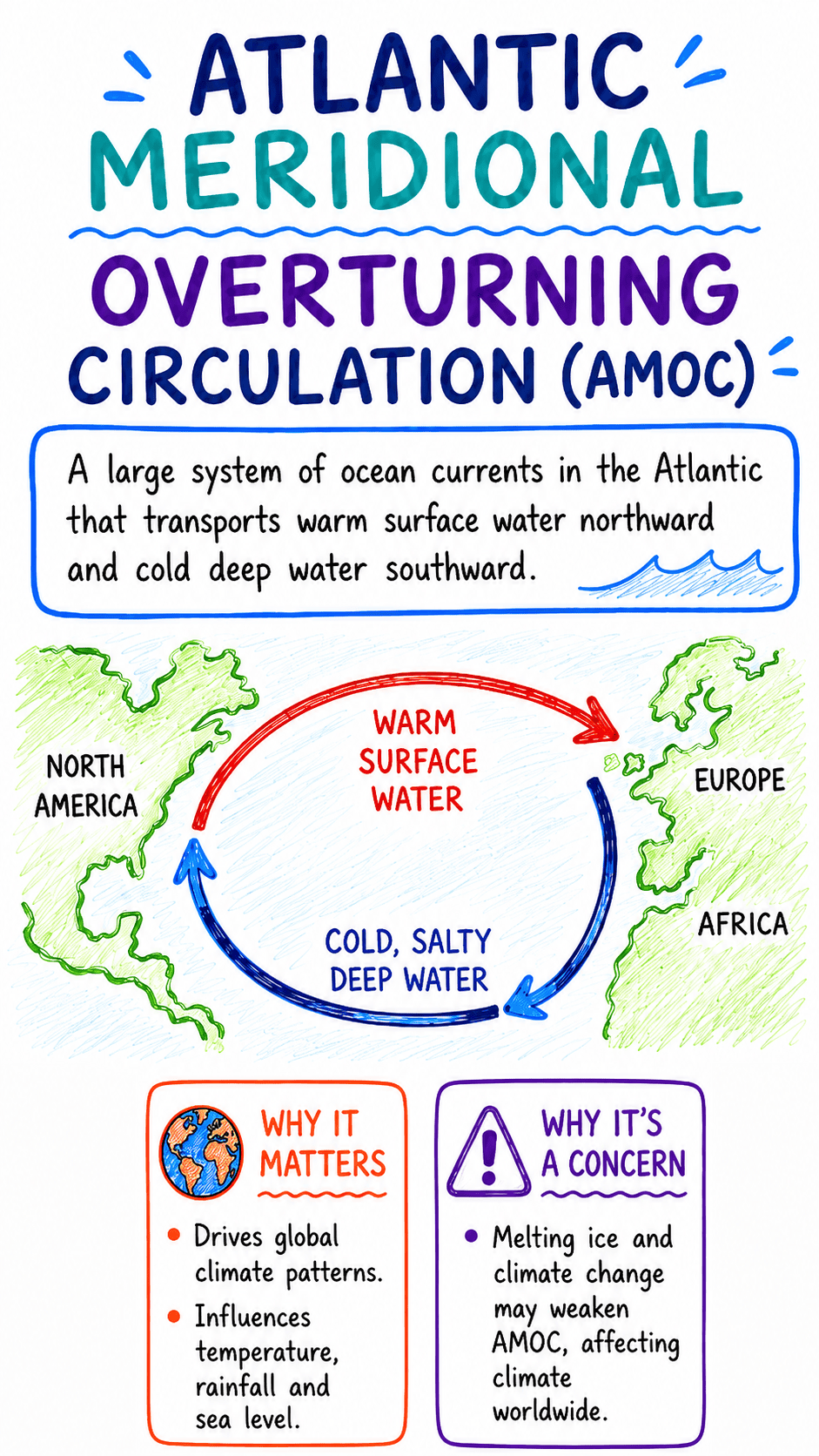
AMOC

SuperKalam is your personal mentor for UPSC preparation, guiding you at every step of the exam journey.
Download the App


STUDY RESOURCES
CONTACT US
ⓒ Snapstack Technologies Private Limited