GS 2: PolityGS 1: Indian SocietyPrelims
Delimitation, women’s reservation, political dynamics, Pg8
Government plans delimitation based on 2011 Census, potentially amending Women's Reservation Act and increasing Lok Sabha seats by 50%.
Practice MCQs
804 Students attempted
Key Highlights:
- The Nari Shakti Vandan Adhiniyam, passed in September 2023, reserves one-third of seats in the Lok Sabha and Vidhan Sabhas for women.
- Implementation was initially deferred until after the next Census and delimitation exercise.
- The government is now considering amending the Act to initiate delimitation based on the 2011 Census.
- A proposed expansion of the Lok Sabha and State Assemblies by nearly 50% is under consideration.
Detailed Insights:
- The government's shift towards using the 2011 Census for delimitation is seen as a way to expedite the implementation of women's reservation.
- Expanding the Lok Sabha aims to reassure southern states by preserving their relative share of seats, addressing concerns about reduced influence due to demographic differences.
- Basing women's reservation on the 2011 Census is problematic due to significant demographic shifts since then, including migration and urbanization.
- The lack of clarity on the rotation of reserved constituencies raises concerns about accountability and constituency development.
- Women's reservation, seat expansion, and delimitation will jointly reshape representation, recalibrate the weight of states, and reconfigure the social composition of legislative bodies.
- The availability of caste data in the upcoming Census could intensify demands for greater representation of disadvantaged caste groups and sub-quotas within women's reservation.
Key Concepts Involved:
- Delimitation: The process of redrawing the boundaries of parliamentary or assembly constituencies to reflect changes in population.
- Census: A periodic count of a country's population, including demographic and socio-economic data.
- Women's Reservation: The policy of reserving a certain percentage of seats in legislative bodies for women.
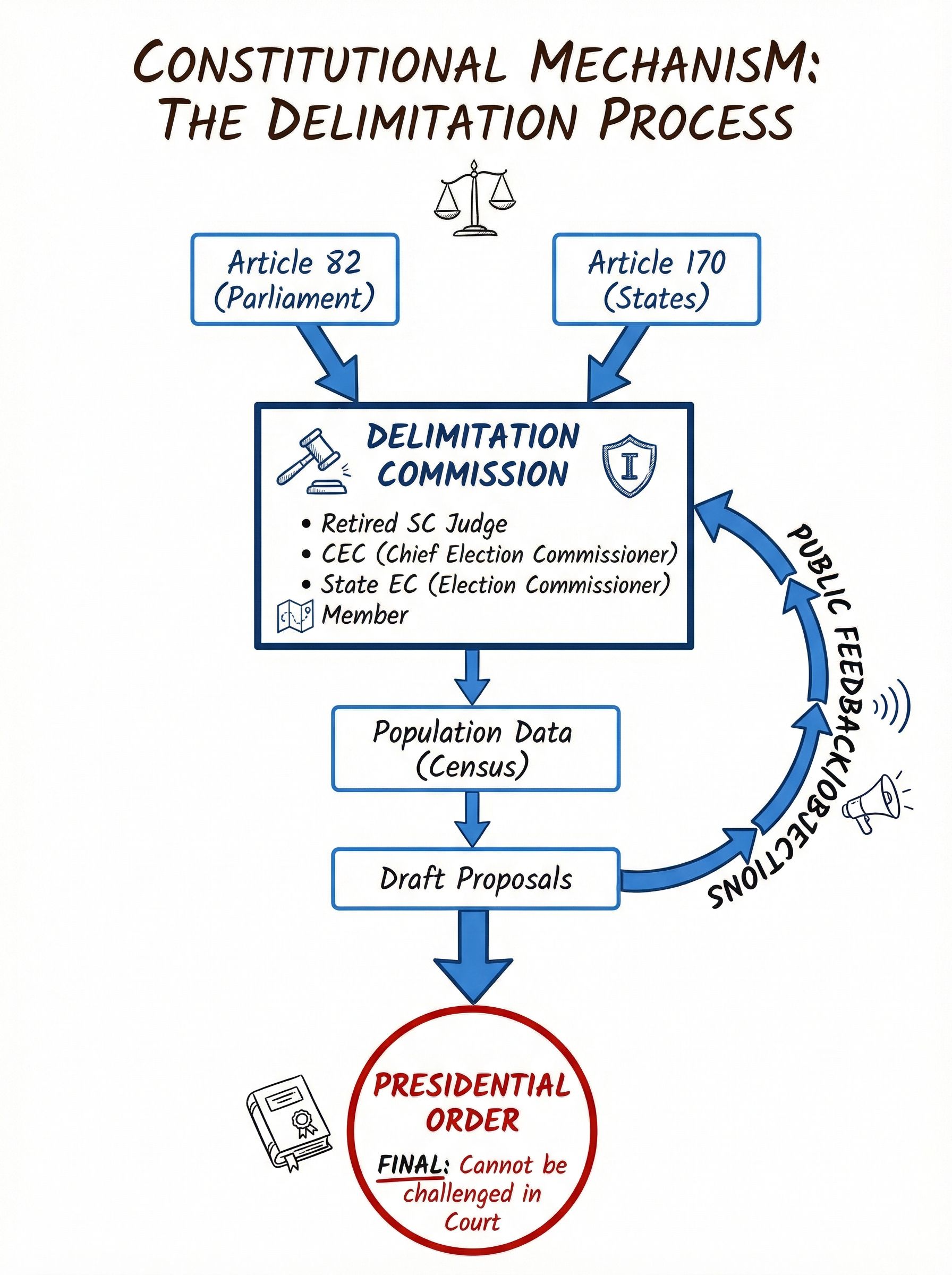
The Delimitation Process

SuperKalam is your personal mentor for UPSC preparation, guiding you at every step of the exam journey.
Download the App


STUDY RESOURCES
CONTACT US
ⓒ Snapstack Technologies Private Limited