GS 3: Environment & EcologyGS 3: Science & TechnologyPrelims
‘Pyramids’ of plastic in earth’s future, first study of its kind finds, Pg14
Plastic waste to outweigh Great Pyramid 2,000 times by 2050, study reveals; only 9% recycled globally.
Practice MCQs
797 Students attempted
Key Highlights:
- A study in Science projects that by 2050, 12,000 million metric tonnes of plastic waste will pollute landfills and the environment if current production and management practices continue.
- The study estimates that of the 8,300 million tonnes of new plastics produced to date, only 9% has been recycled, 12% incinerated, and 79% has ended up in landfills or the environment.
- Global production of resins and fibres increased from 2 million tonnes in 1950 to 380 million tonnes in 2015.
- China accounts for an estimated 28% of global resins and 68% of global acrylic fibre production.
Detailed Insights:
- The research provides the first calculation of the "end-of-life fate" of all plastic ever manufactured worldwide, highlighting the scale of the plastic waste crisis.
- Plastic production has outpaced all other manufactured materials in the last 65 years, increasing from 1% of municipal solid waste in 1960 to over 10% in 2005 in developed countries.
- The most effective way to eliminate plastic waste is through destructive thermal treatment, but recycling, incineration, and landfilling are the current dominant methods.
- Recycling only delays disposal, incineration requires emission control technologies, and landfills pose environmental risks, emphasizing the need to lower plastic consumption.
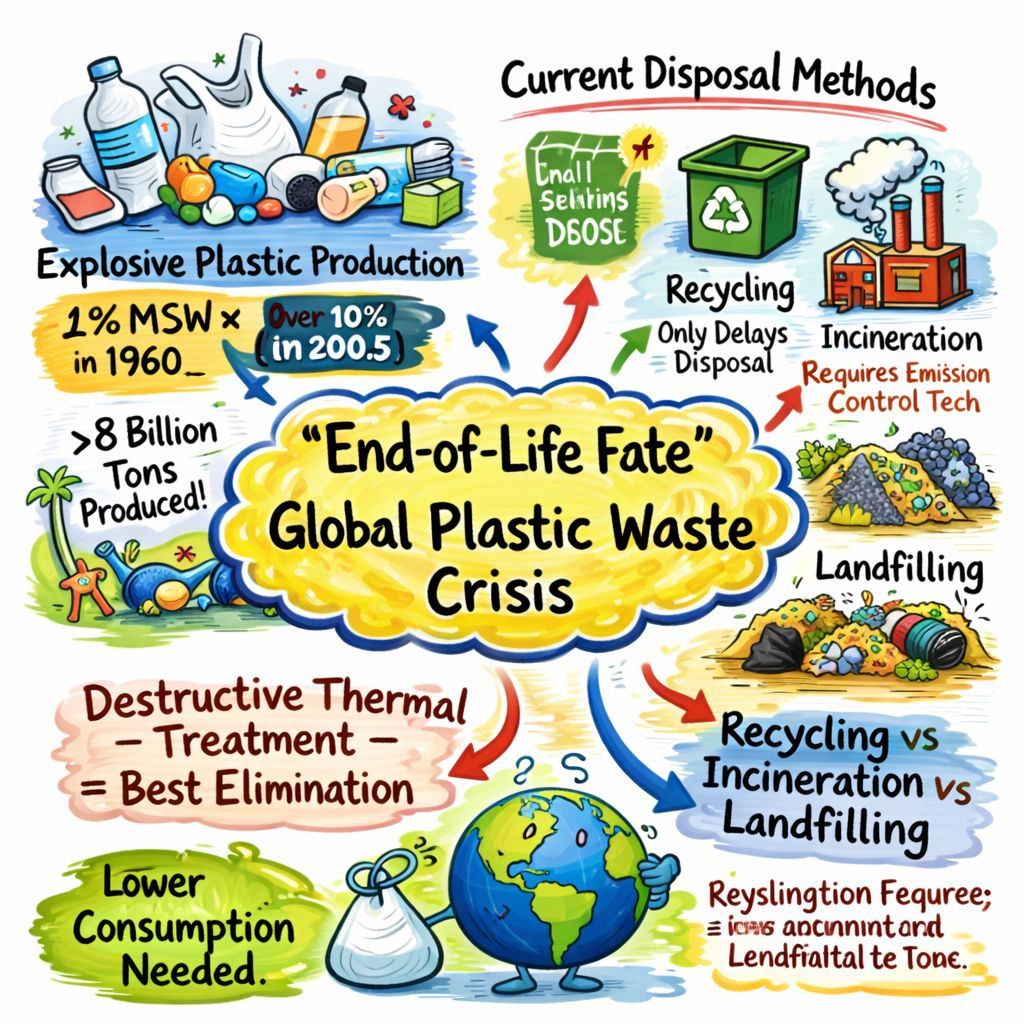
IMAGE 2026-03-08 10:15:37.jpg
Key Concepts Involved:
- Synthetic Organic Polymers: Large molecules made of repeating subunits, forming the basis of plastics.
- Anthropocene Epoch: A proposed geological epoch defined by significant human impact on Earth's geology and ecosystems.
- Thermal Treatment: A waste treatment technology that involves the use of heat to process waste.

SuperKalam is your personal mentor for UPSC preparation, guiding you at every step of the exam journey.
Download the App


STUDY RESOURCES
CONTACT US
ⓒ Snapstack Technologies Private Limited