GS 2: International RelationsGS 3: Economy
India, U.S. unveil framework for deal, Pg1
India and U.S. strike interim trade deal: India to cut tariffs on U.S. goods, U.S. to reduce tariffs on Indian imports.
Practice MCQs
790 Students attempted
Key Highlights:
- India and the U.S. have established a framework for an interim trade agreement, with India set to reduce or eliminate tariffs on U.S. industrial and agricultural goods.
- The U.S. will lower tariffs on Indian imports to 18% from the current 50% by amending an executive order.
- An additional 25% tariff on imports from India, initially imposed in August 2025 due to India's Russian oil imports, has been removed by the U.S..
- India plans to purchase $500 billion worth of U.S. energy products, aircraft, precious metals, technology, and coking coal over the next 5 years.
- The U.S. will eliminate tariffs on a wider range of goods after the interim agreement is officially signed, including generic pharmaceuticals, gems and diamonds, and aircraft parts.
Detailed Insights:
- The interim trade agreement framework signifies a deepening of trust and dynamism in the India-U.S. partnership, potentially strengthening the Make in India initiative.
- India will protect its sensitive agricultural and dairy products, including maize, wheat, rice, poultry, and milk, while reducing tariffs on specific U.S. goods.
- The U.S. will reduce tariffs on Indian textiles, apparel, leather, plastics, organic chemicals, home décor, and certain machinery.
- Both countries can modify their commitments if the other alters agreed tariffs, ensuring a degree of flexibility within the agreement.
- The agreement aims to address non-tariff barriers affecting trade, with India focusing on U.S. medical devices and ICT goods.
- The U.S. will consider lowering tariffs on Indian goods during negotiations for a more comprehensive Bilateral Trade Agreement (BTA).
- Both nations will enhance economic security alignment to improve supply chain resilience and innovation, addressing non-market policies of third parties.
- India and the U.S. will increase trade in technology products like Graphics Processing Units (GPUs) and expand joint technology cooperation.
- The agreement includes commitments to address barriers to digital trade and establish mutually beneficial digital trade rules as part of the BTA.
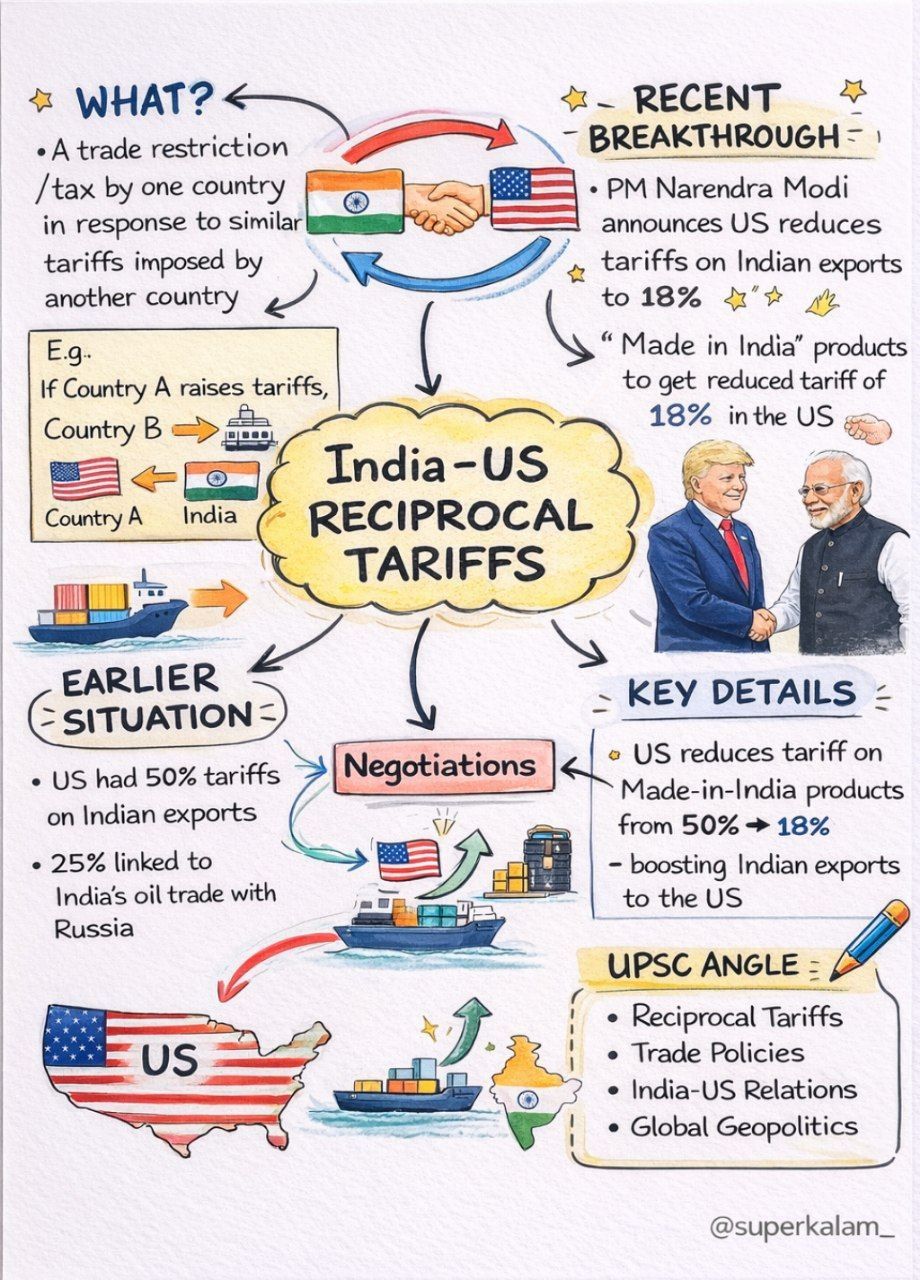
India-US.jpg
Key Concepts Involved:
- Tariff: A tax or duty imposed on goods when they are moved across a political boundary.
- Non-tariff barriers: Trade barriers that restrict imports or exports of goods or services through mechanisms other than the simple imposition of tariffs.
- Bilateral Trade Agreement (BTA): A trade agreement between two countries designed to reduce or eliminate trade barriers.

SuperKalam is your personal mentor for UPSC preparation, guiding you at every step of the exam journey.
Download the App


STUDY RESOURCES
CONTACT US
ⓒ Snapstack Technologies Private Limited