GS 2: PolityGS 2: GovernanceEthicsPrelims
Media's 'public function': Impact of Delhi HC verdict on press freedom, privacy, Pg12
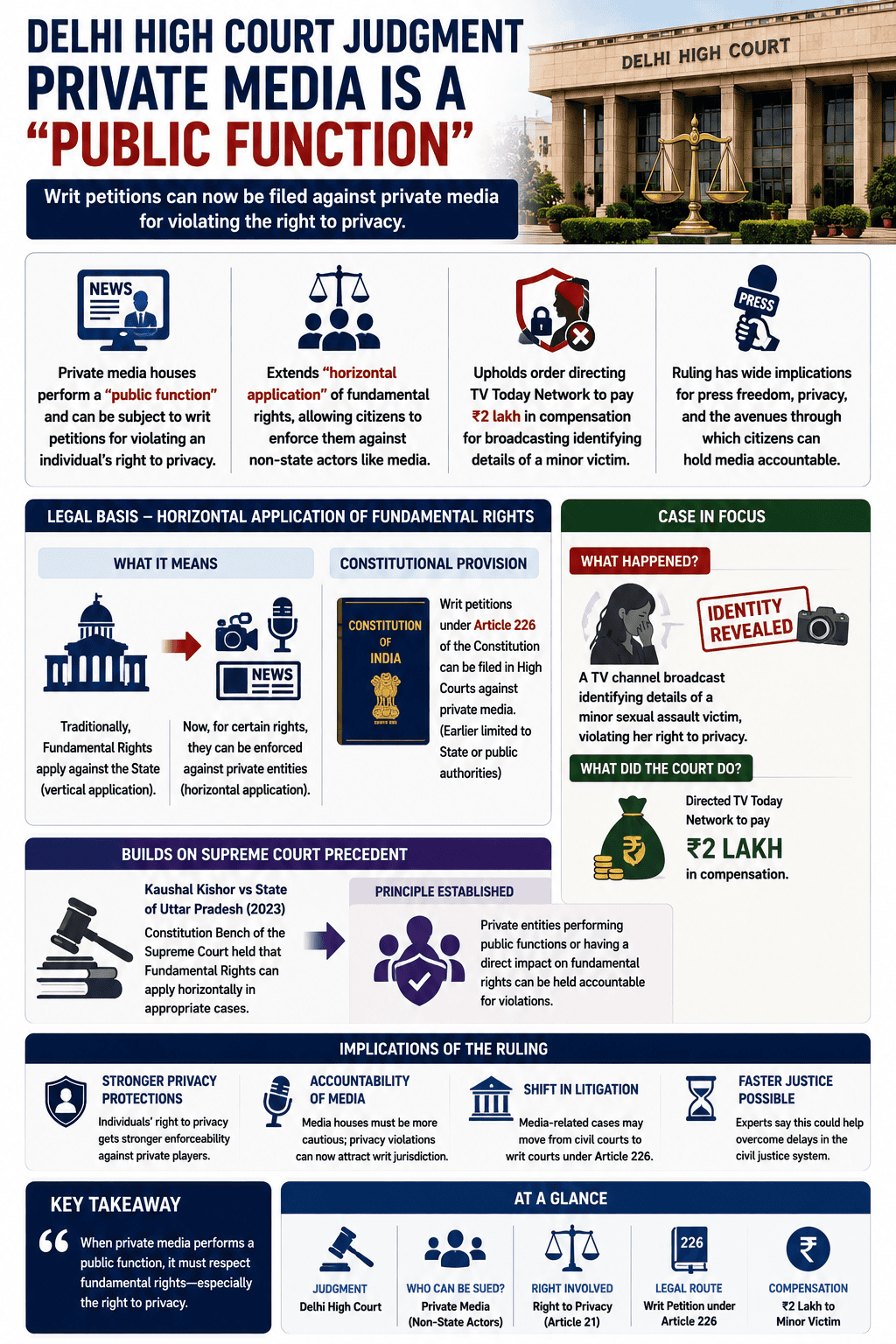
Delhi HC declares private media performs 'public function', allowing writ petitions for privacy violations, raising concerns over press freedom.
Practice MCQs
819 Students attempted
Key Highlights:
- The Delhi High Court ruled that private media houses perform a "public function" and can be subject to writ petitions for violating an individual's right to privacy.
- This judgment extends the "horizontal application" of fundamental rights, allowing citizens to enforce them against non-state actors like private media.
- The court upheld an order directing TV Today Network to pay Rs 2 lakh in compensation for broadcasting identifying details of a minor sexual assault victim.
- The ruling has significant implications for press freedom, privacy, and the avenues through which citizens can sue the media.
Delhi HC.png
Detailed Insights:
- The case originated from Aaj Tak broadcasting details that could identify a minor sexual assault victim, despite the mother's refusal to cooperate.
- The High Court's decision allows writ petitions under Article 226 of the Constitution against private media, traditionally reserved for the State or public authorities.
- The ruling builds upon the Kaushal Kishor judgment (2023) by a Constitution Bench of the Supreme Court, which established the principle of horizontal application for certain fundamental rights.
- Legal experts note this could shift media litigation from civil courts to writ courts, partly due to delays in the civil justice system.
- Concerns include a potential "chilling effect" on journalistic freedom and the weaponization of privacy claims by powerful entities.
- However, experts suggest that genuine investigative journalism in the public interest may still be protected, with courts requiring strict public interest analysis.
Key Concepts Involved:
- Horizontal Application of Fundamental Rights: Enforcement of fundamental rights by citizens against private individuals or non-state entities.
- Writ Petition: A formal written order issued by a High Court or Supreme Court to enforce fundamental rights or other legal rights.
- Right to Privacy: The right of individuals to be free from unwarranted intrusion into their personal life and affairs.
- Chilling Effect: The suppression of legitimate speech or activity due to fear of legal sanctions or other negative consequences.

SuperKalam is your personal mentor for UPSC preparation, guiding you at every step of the exam journey.
Download the App


STUDY RESOURCES
CONTACT US
ⓒ Snapstack Technologies Private Limited