GS 3: Disaster ManagementGS 1: Indian GeographyGS 3: Environment & EcologyGS 2: GovernancePrelims
How to absorb rain: What cities must learn, Pg10
Relentless rains submerge Mumbai, claiming lives and exposing inadequate drainage; experts demand 'Sponge City' solutions and blue-green infrastructure for urban resilience.
Practice MCQs
819 Students attempted
Key Highlights:
- Mumbai has experienced severe flooding due to relentless rainfall, resulting in at least seven fatalities in five days.
- The India Meteorological Department has issued warnings for continued heavy rain, raising concerns about further inundation.
- The city's drainage system, largely gravity-based, struggles with intense downpours, especially when coinciding with high tides.
- Urban expansion has disrupted Mumbai's natural hydrological network, including creeks, salt pans, and wetlands.
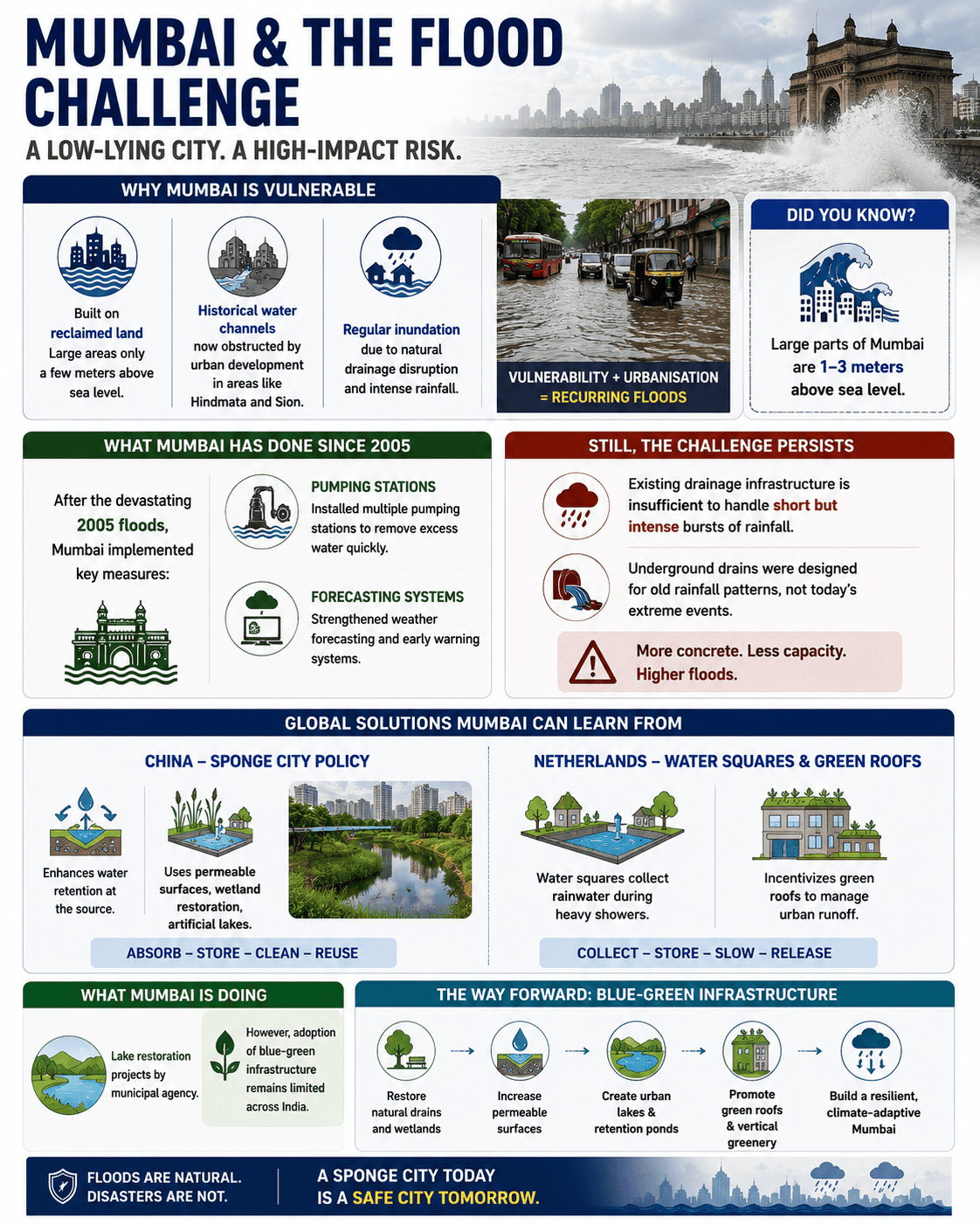
Mumbai flood.png
Detailed Insights:
- Mumbai, built on reclaimed land, has large areas situated only a few meters above sea level, making it vulnerable to flooding.
- The city's historical water channels, now obstructed by urban development, contribute to regular inundation in areas like Hindmata and Sion.
- Following the devastating 2005 floods, Mumbai implemented measures such as installing pumping stations and strengthening forecasting systems.
- Despite upgrades, the existing drainage infrastructure is insufficient to manage short but intense bursts of rainfall.
- Global examples like China's Sponge City policy and the Netherlands' water squares demonstrate innovative approaches to urban water management.
- The Sponge City policy focuses on enhancing water retention through permeable surfaces, wetland restoration, and artificial lakes.
- The Netherlands utilizes water squares for rainwater collection and incentivizes green roofs to manage urban runoff.
- Mumbai's municipal agency has lake restoration projects, but the adoption of blue-green infrastructure remains limited across India.
Key Concepts Involved:
- Sponge City: An urban planning concept that uses natural processes and permeable materials to absorb, store, and purify rainwater.
- Blue-green infrastructure: A network of natural and semi-natural areas, such as parks, wetlands, and green roofs, designed to manage water and provide environmental benefits.
- Hydrological network: The system of natural water bodies and channels, including rivers, creeks, and wetlands, that manage water flow in a region.

SuperKalam is your personal mentor for UPSC preparation, guiding you at every step of the exam journey.
Download the App


STUDY RESOURCES
CONTACT US
ⓒ Snapstack Technologies Private Limited