GS 2: Social JusticeGS 2: PolityEthics
A disturbing step for rights, dignity and mental health, Pg8
Transgender Rights Amendment Bill 2026 sparks outrage, reversing self-identification and mandating medical assessments, threatening dignity and mental health.
Practice MCQs
797 Students attempted
Key Highlights:
- The Transgender Persons (Protection of Rights) Amendment Bill, 2026 reverses the principle of self-identification established in the NALSA vs Union of India judgment.
- The amendment mandates transgender individuals to undergo assessment by a medical board and obtain a certificate from the District Magistrate to be recognized as transgender.
- Concerns arise regarding the potential for arbitrary, invasive examinations by overburdened medical boards, violating dignity and privacy.
- The amendment introduces penalties of up to 15 years of imprisonment for ‘undue influence’ in helping someone identify as transgender.
Detailed Insights:
- The NALSA judgment of 2014 recognized transgender persons' right to self-identification, grounded in constitutional rights like equality, non-discrimination, and personal liberty.
- The 2019 Act, while criticized, aligned with the NALSA judgment on self-identification and aimed to prohibit discrimination and ensure access to education, healthcare, and welfare measures.
- The amendment's requirement for medical and bureaucratic gatekeeping contradicts global medical and healthcare standards that acknowledge gender identity as a deeply personal experience.
- Mental health practitioners fear the amendment will deter them from providing essential care, challenge community organizations, and increase mental distress among transgender persons.
- The amendment's collapsing of distinctions between transgender, intersex, and hijra identities erases cultural, social, and biological differences, further marginalizing trans men.
- Data indicates that transgender individuals already face high rates of social rejection, harassment, violence, and suicide attempts, making additional scrutiny unsafe.
- Instead of improving welfare access, the amendment will likely shrink it, deter individuals from approaching the state, and reintroduce fear and humiliation into an already vulnerable population.
Key Concepts Involved:
- Gender Identity: An individual's internal sense of being male, female, both, or neither, irrespective of their sex assigned at birth.
- Self-identification: The principle that individuals have the right to determine their own gender identity without external verification.
- Cisgender: A person whose gender identity corresponds to the sex they were assigned at birth.
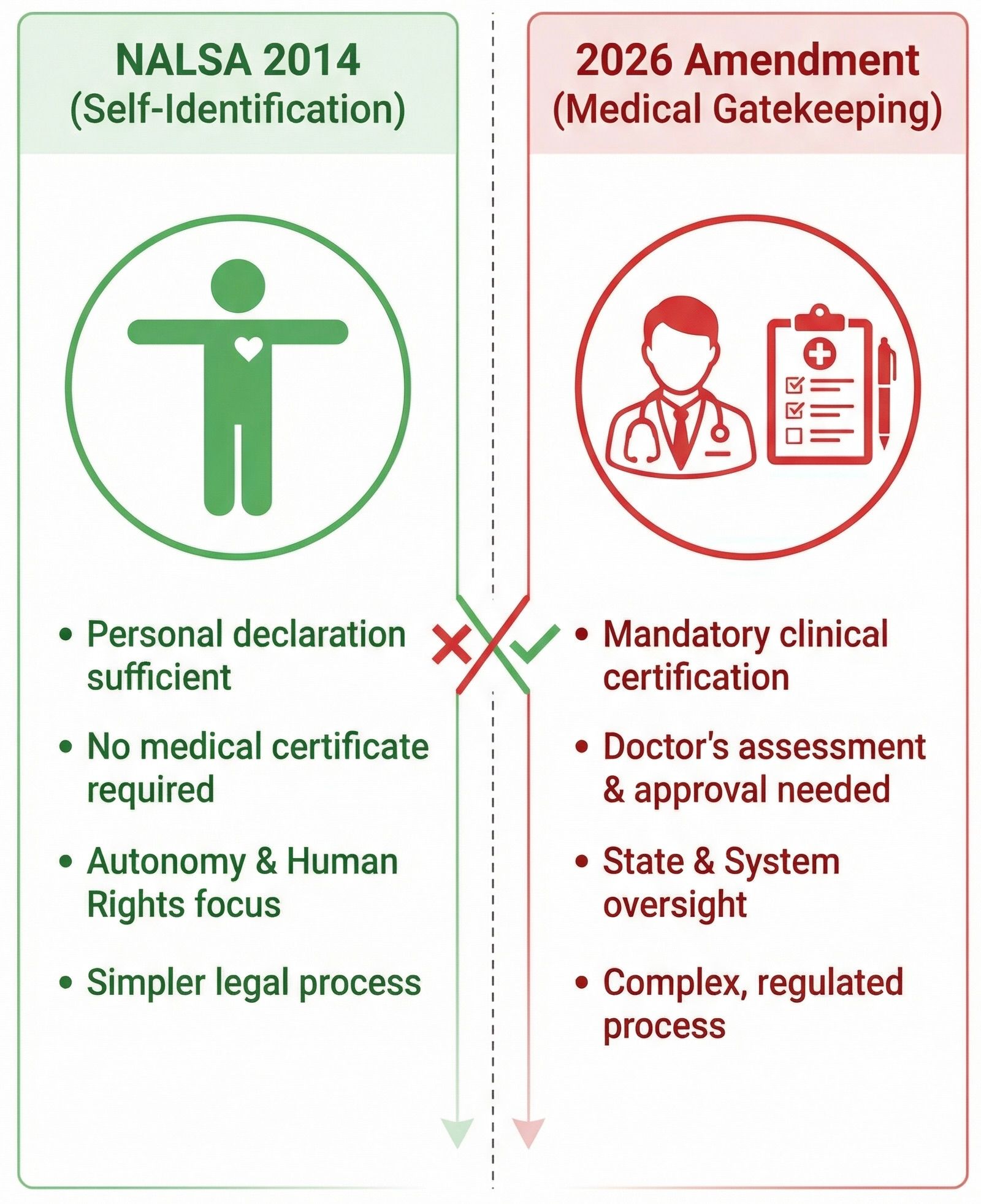
NALSA Judgement

SuperKalam is your personal mentor for UPSC preparation, guiding you at every step of the exam journey.
Download the App


STUDY RESOURCES
CONTACT US
ⓒ Snapstack Technologies Private Limited