GS 3: Science & TechnologyGS 2: International RelationsGS 2: Governance
‘Scientists, diplomats must discuss evolution of quantum computing’, Pg14
Experts advocate for proactive governance frameworks in quantum computing to address cybersecurity threats and foster international collaboration for responsible technological advancement.
Practice MCQs
790 Students attempted
Key Highlights:
- GESDA Director General Marilyne Andersen advocates for early discussions between scientists and diplomats on quantum computing.
- Quantum computing's non-binary architecture can exponentially accelerate calculations but also threaten existing cybersecurity.
- Principal Scientific Advisor Ajay Sood emphasizes that governance choices made in the next decade will determine how technologies serve humanity.
- In 2021, the scientific community anticipated the emergence of something like GPT3, but not its public release.
Detailed Insights:
- Quantum computing is in its early stages, necessitating proactive governance frameworks and international collaboration.
- The conventional reactive cycle of governance is inadequate for the rapid pace of technological change, such as quantum computing and artificial general intelligence.
- Scientists' insights into the development of technologies, gained through funding cycles and participation in cutting-edge conferences, are crucial for governance.
- The unexpected public release of GPT3 highlighted the challenges of anticipating the societal impact of emerging technologies.
Key Concepts Involved:
- Quantum Computing: A type of computing that uses quantum phenomena like superposition and entanglement to perform calculations.
- Artificial General Intelligence (AGI): A hypothetical level of artificial intelligence that can perform any intellectual task that a human being can.
- Governance Gap: The mismatch between the pace of technological advancement and the development of appropriate regulations and policies.
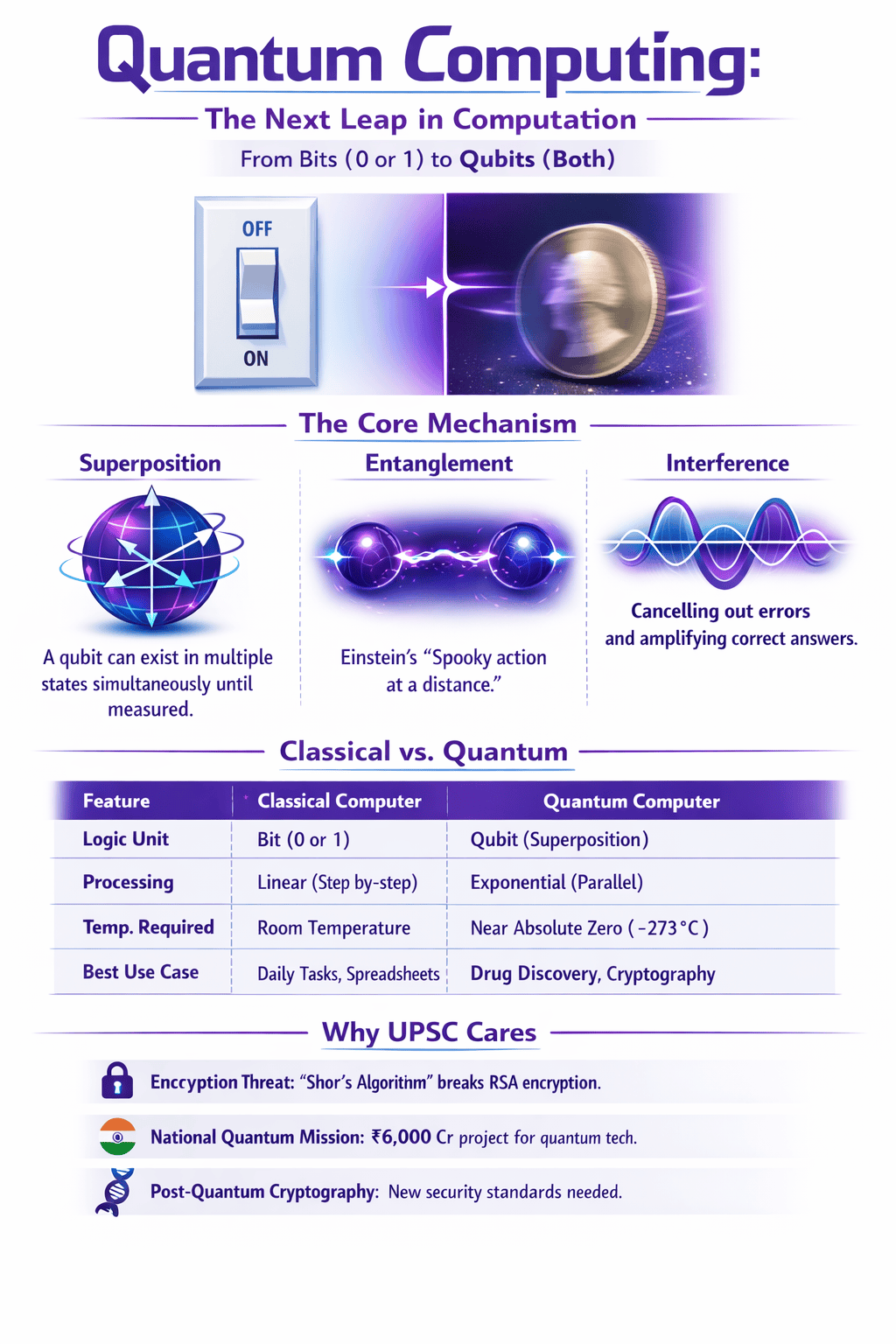
Quantum Computing
Previous8/8

SuperKalam is your personal mentor for UPSC preparation, guiding you at every step of the exam journey.
Download the App


STUDY RESOURCES
CONTACT US
ⓒ Snapstack Technologies Private Limited